
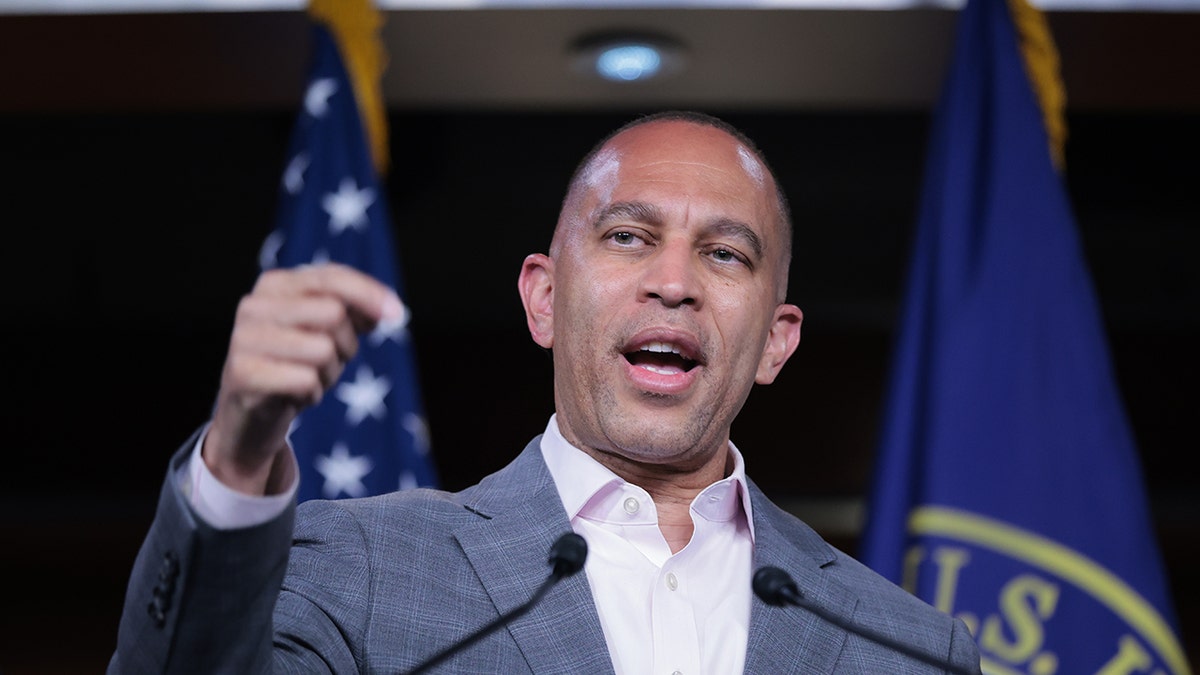
House Democrats are gearing up to govern with a strong 260-member majority in the upcoming Congress. Their main objectives include unifying party members, countering MAGA extremism, and significantly reducing the cost of living for Americans.
Leadership and Unity
House Minority Leader Hakeem Jeffries, D-N.Y., confidently faced opposition from some far-left Democrats during the caucus vote. The majority supported his nomination as the next House speaker. Jeffries emphasized the importance of collaboration among Democrats as they move forward.
Only 11 Democrats voted against Jeffries, including Reps.-elect Darializa Avila Chevalier, Adam Hamawy, Frederick D. Haynes III, Melat Kiros, Donavan McKinney, Chris Rabb, and Claire Valdez.
In a joint statement, these members indicated their ongoing discussions with Jeffries about legislative goals, such as advocating for Medicare-for-all, opposing Immigration and Customs Enforcement (ICE), removing money from politics, and addressing the situation in Gaza.
Diverse Perspectives
Jeffries acknowledged the diverse views within the party and reiterated the commitment to working together for the greater benefit of the American public. He highlighted the necessity of focusing efforts on combating MAGA extremism as a top priority.
Addressing the dissent within the party, Jeffries refrained from committing to the far-left’s policy demands but noted the significance of unity and cooperation.
Role of Incoming Members
Rep.-elect Frederick D. Haynes III, who will replace Rep. Jasmine Crockett, D-Texas, missed the caucus vote due to illness. His office confirmed his intended opposition and his eagerness to work with colleagues and Leader Jeffries.
The Democrats’ agenda involves delivering significant policy changes, especially in healthcare, immigration, and political reform, aligned with the constituents’ mandates.