
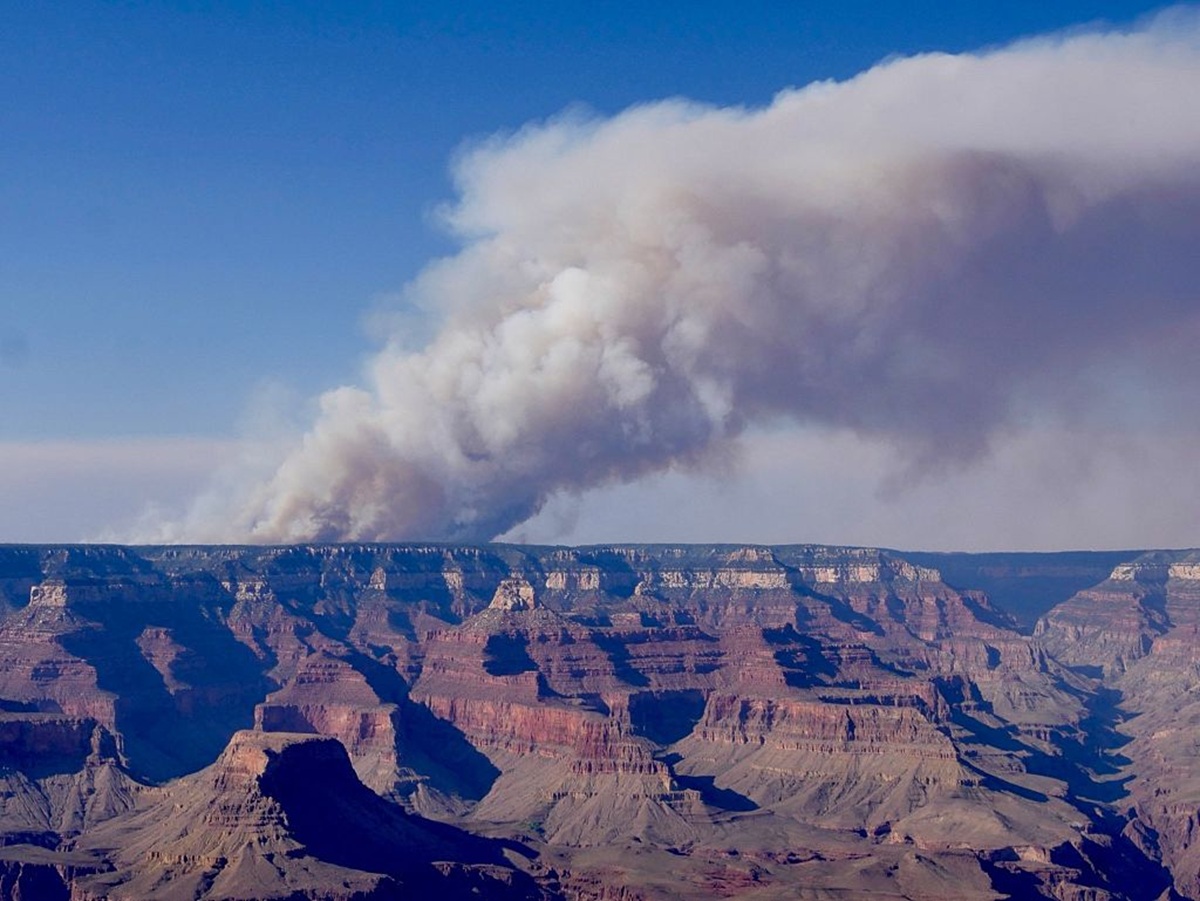
Recent research highlights a significant risk to historic sites on the U.S. National Register of Historic Places due to wildfires. Published in Scientific Reports, the study by researchers at the University of California, Santa Barbara’s National Center for Ecological Analysis and Synthesis (NCEAS) evaluated all mappable sites on the National Register against high-resolution wildfire burn probability models. From the 100,117 sites assessed, 3,446 are facing severe threat.
The report underscores an urgent threat to cultural heritage in the U.S., with over a third of vulnerable sites holding national significance, while the majority are of state or local importance. This research emerges as wildfires continue to destroy culturally significant locations nationwide. Examples include the Palisades Fire in Los Angeles, which destroyed Will Rogers Ranch House, and the Eaton Fire that ravaged Andrew McNally House. In the months following, the Dragon Bravo wildfire devastated the Grand Canyon Lodge, originally built in 1927.
“These places anchor community identity, collective memory, and national heritage,” noted Caitlin Fong, NCEAS researcher, emphasizing the permanence of such losses.
Kevin Feak, a fire protection engineer and NFPA-certified specialist, noted the study’s significance, highlighting the unusual expansion of wildfire threats into areas that have not traditionally considered wildfire a primary hazard.
Permanent Loss of Cultural Heritage
Feak commented that historic structures often face elevated risks due to features like combustible roofs and open eaves, which allow embers to enter and ignite the building. Embers collecting on roofs, entering gaps, or igniting nearby vegetation often pose a greater threat than direct flame contact.
Researchers found that the western United States harbors the majority of high-risk cultural heritage sites, with emerging hotspots also noted in southeastern and south-central states. The distribution aligns with historical patterns of wildfire destruction, particularly in California, Oregon, and Colorado. However, new areas require attention from preservation programs.
Historic buildings and districts make up 90 percent of the listed resources, facing unique challenges due to their immovable nature and original structure-driven significance. The loss of such sites can represent a permanent loss of heritage, necessitating on-site mitigation efforts like vegetation management, structural hardening, and improved suppression capacity.
Climate Change and Escalating Wildfire Risk
The study warns that climate change is likely to intensify wildfire threats to cultural heritage sites. Rising temperatures, frequent droughts, and extreme fire weather could enlarge hazard zones, increasing exposure in both traditionally high-risk and previously lower-risk regions. Researchers stressed that shifting wildfire dynamics mean additional areas may need future preservation and mitigation measures.
Consistent with broader wildfire research, recent studies indicate escalating fire severity in certain ecosystems across North America and global increases in high-severity fires and lengthy fire seasons. Another study in Nature Communications warns about climate change’s influence on wildfire risk, noting altering weather conditions that heighten threats.
For historic sites, the implications of these findings are particularly severe. America’s cherished cultural sites may increasingly face challenges on the frontline of a changing wildfire landscape.
References include Farnisa et al.’s study published in Scientific Reports, Thapa et al.’s review in Environmental Research: Climate, and Haas et al.’s contribution to Nature Communications.