
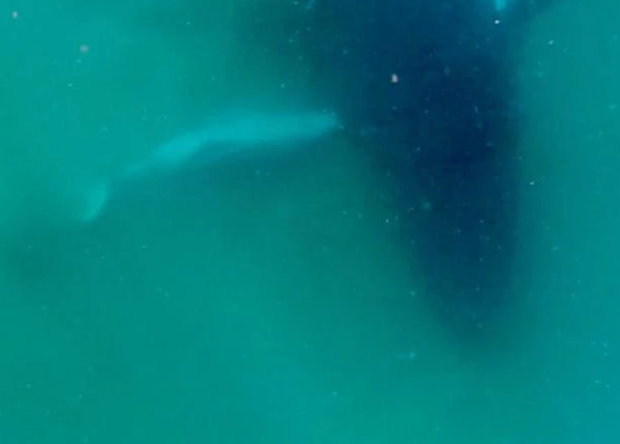
On September 16, 2026, researchers released a study documenting a female humpback whale’s response to a stillborn calf, offering insights into the emotional complexity of marine mammals. Filmed off the Gold Coast of Australia in the previous year, the footage captures the whale staying close to the deceased calf on the seafloor. The whale, accompanied by another, maintains eye contact and gently touches the calf with its head and fin.
Andrew Mulville from the Sea World Foundation first thought he saw two resting whales. However, their behavior was unusual. “It was definitely not what I was expecting to see out at sea that day,” Mulville commented, describing the poignant scene.
Researchers noted that the whale remained with the calf for several hours and potentially days. Olaf Meynecke of Griffith University’s Whales and Climate Research Program remarked on the emotional impact, calling it “pretty heartbreaking” to witness.
The event is a first in documented occurrences of such behavior in humpback whales. The whale’s decision not to bring the calf to the surface suggests an awareness of the calf’s death soon after birth. Researchers believe the observed behavior may indicate a form of grief in humpback whales.
Meynecke emphasized the strong bond between mother and calf, indicative of the emotional stages these socially complex mammals experience after losing offspring. The study appears in Discover Animals.
Other marine species have shown similar behaviors. An orca gained attention in 2018 for carrying her dead calf for over two weeks and was later observed with another deceased newborn. Land mammals such as elephants and apes are more commonly seen exhibiting grief-like behavior.
The footage release followed an Australian photographer’s drone capture of a humpback whale birth—the first known drone-recorded event of its kind. Additionally, researchers in May documented two humpback whales traveling a record distance between breeding grounds, with one sighted off Brazil’s coast and later in Australia’s Hervey Bay, spanning 9,383 miles.