
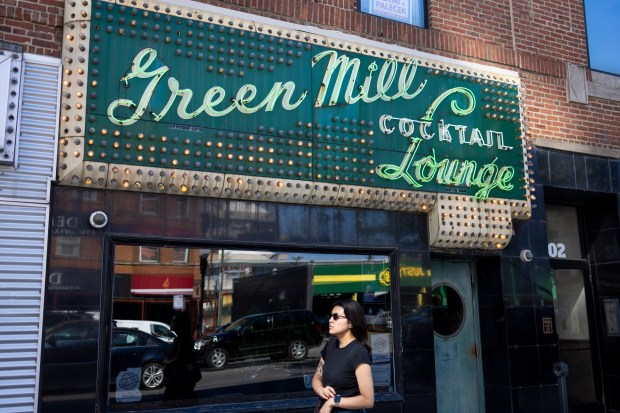
The Green Mill, a cornerstone in the vibrant scene of this city, sits near Lawrence and Broadway. Its neon sign welcomes patrons, guiding them to one of the town’s most iconic venues. On June 19, the Green Mill marks a significant transition celebrating 40 years under the stewardship of Dave Jemilo. Although Jemilo no longer owns it, he has passed the reins to trusted individuals who are like family to him.
“This place has been my life for more than 40 years,” said Jemilo, reflecting on his journey. He recognized it was time to pass on the legacy, citing the demands of running the establishment as a factor. The new owners, Jason Cole and Jill Skintges, are no strangers to the Green Mill. Their familiarity with the establishment helps ease concerns among regular patrons about potential changes.
When Jemilo, who invested $5 million in adjacent retail spaces, announced that the Green Mill was for sale, he received multiple offers. However, he chose Cole and Skintges, who shared his vision and commitment. Cole is a long-standing bartender and manager, while Skintges has a varied background, including being a professional dancer and a math teacher. Their history with the Green Mill provides reassurance to its community.
Cole and Skintges come with strong support systems, both in personal relationships and professionally. Skintges’ daughter also contributes to the venue, maintaining the family atmosphere. The transition required careful planning and involved silent partners, some of whom have long histories with the Green Mill.
The Green Mill’s history runs deep. Jemilo first encountered it as a teenager. His father would point out the venue, rich with stories from the ’30s. Despite its troubled past, Jemilo saw potential where others saw decline. Originally from the South Side, he leveraged his diverse career experiences to revive the Green Mill. He became the fifth owner by gathering funds in creative ways, launching his tenure with its opening night on June 19, 1986.
Critics and visitors alike have celebrated the Green Mill’s comfort and ambiance. It offered accessible entertainment, where people from various backgrounds mingled. Jemilo’s straightforward approach—cash-only, no frills—resonated with many, creating an inviting environment.
Among its key contributions to culture was hosting the Uptown Poetry Slam, initiated by Marc Kelly Smith. This event created a global phenomenon, establishing the Green Mill as a hub for emerging talent. Smith recalls Jemilo’s openness to new ideas and his role in fostering a familial environment.
Musician Joannie Pallatto and others speak highly of Jemilo’s unique vision in curating performances. The venue became a launching pad for artists like Kurt Elling and Patricia Barber. Its storied past, involving figures like Al Capone, adds to its mystique.
Despite stepping away, Jemilo’s influence remains. He has a deep connection to the place, symbolized by a tattoo of a statue within the venue. He now splits his time on his farm in Wisconsin, preparing for new adventures. His legacy continues, with Cole and Skintges poised to uphold the Green Mill’s renowned reputation.