
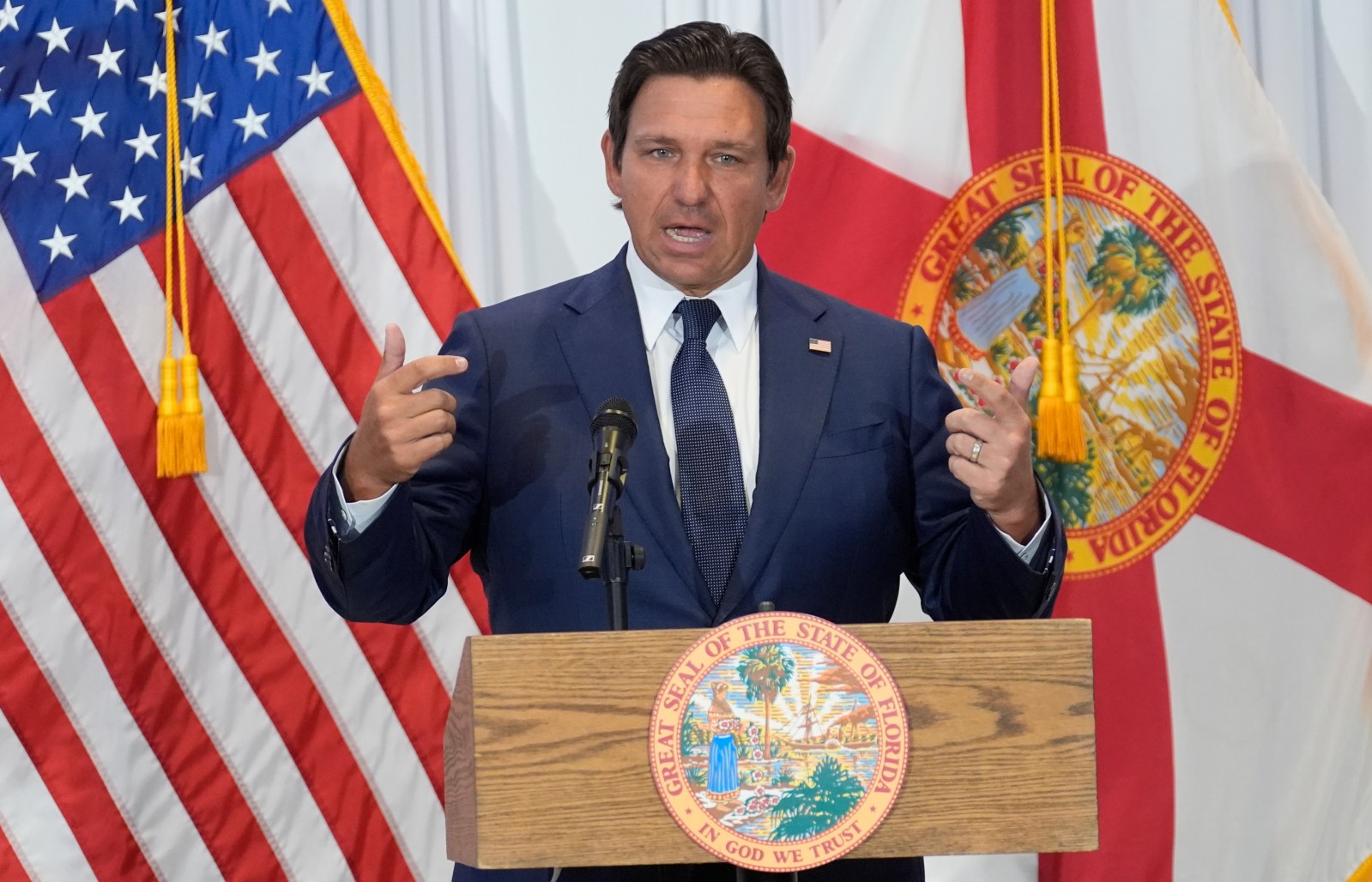
Florida Governor Ron DeSantis stands as a major critic of the fast-growing expansion of AI data centers. He argues that everyday utility customers should not shoulder the financial burden of these energy-intensive facilities. In May, DeSantis signed a law instructing state officials to exclude the costs of AI data centers from residential electricity bills. This makes Florida one of the pioneers in enacting consumer protections against data centers’ demand on the commercial power grid.
At the ceremony, DeSantis declared, You should not, as a hard-working Floridian, have to subsidize some of the wealthiest companies in the history of humanity.
Despite his public opposition, his administration continues to endorse tax incentives that attract these tech companies to Florida. This reflects a national challenge for state leaders to engage in the high-tech economy without placing the financial burden on taxpayers.
Restrictions on Data Centers in Florida
Under Senate Bill 484, large AI data centers must cover their full utility service costs. The law bans utility providers from passing the costs of data center development or electricity to Florida’s residential and small-business customers.
The legislation also makes it clear that local governments manage zoning, permitting, and land use. Municipalities can impose stricter local standards or reject project proposals if necessary. However, during the legislative process, lawmakers weakened the initial drafts by omitting a clause that would have banned non-disclosure agreements between government officials and AI data center developers.
Florida’s Efforts to Attract Tech Infrastructure
Since July 2017, Florida has worked to bring in tech infrastructure by offering tax exemptions for data centers, which began before the recent surge in AI development. The policy removes sales and use taxes on data center infrastructure, equipment, property, and power consumption. Initially set to expire in 2022, the tax break has been extended to 2025.
Recent amendments target bigger projects. From August 2025, qualifying facilities need a cumulative capital investment of $150 million and a critical IT load of at least 100 megawatts, up from a previous 15-megawatt threshold. The revised exemption, with an application deadline of June 30, 2037, still applies to equipment, infrastructure, electricity, and construction materials used solely by data centers.
Republican state Representative Wyman Duggan, who sponsored the amendment, noted that the governor supported this extension. The Tampa Bay Times reported that three companies used the exemption since 2017: Iron Mountain, Metrobloks, and TensorWave, all operating in the Miami area. Iron Mountain stated the tax break encourages local investment and is not a taxpayer-funded incentive.
Future of Florida’s Tech-Energy Policy
DeSantis must leave office by January 2027 due to term limits, leaving Florida’s tech-energy strategy to his successor. Representative Byron Donalds, a frontrunner for the Republican governor nomination, co-sponsored the 2017 data center tax exemption. His spokesperson emphasized that as governor, Donalds plans to enforce strict consumer protections.
The Gallup survey reported that 70 percent of Americans oppose AI data centers in their communities, with 48 percent strongly against them. In Florida, public opinion supports regulatory measures. Nearly 90 percent of voters backed the utility-protection law signed by DeSantis, according to Sachs Media polling.
In response, over a dozen Florida cities and counties have temporarily paused large data center approvals. Concerns over local water supplies, grid capacity, and environmental impacts prompted these actions.