
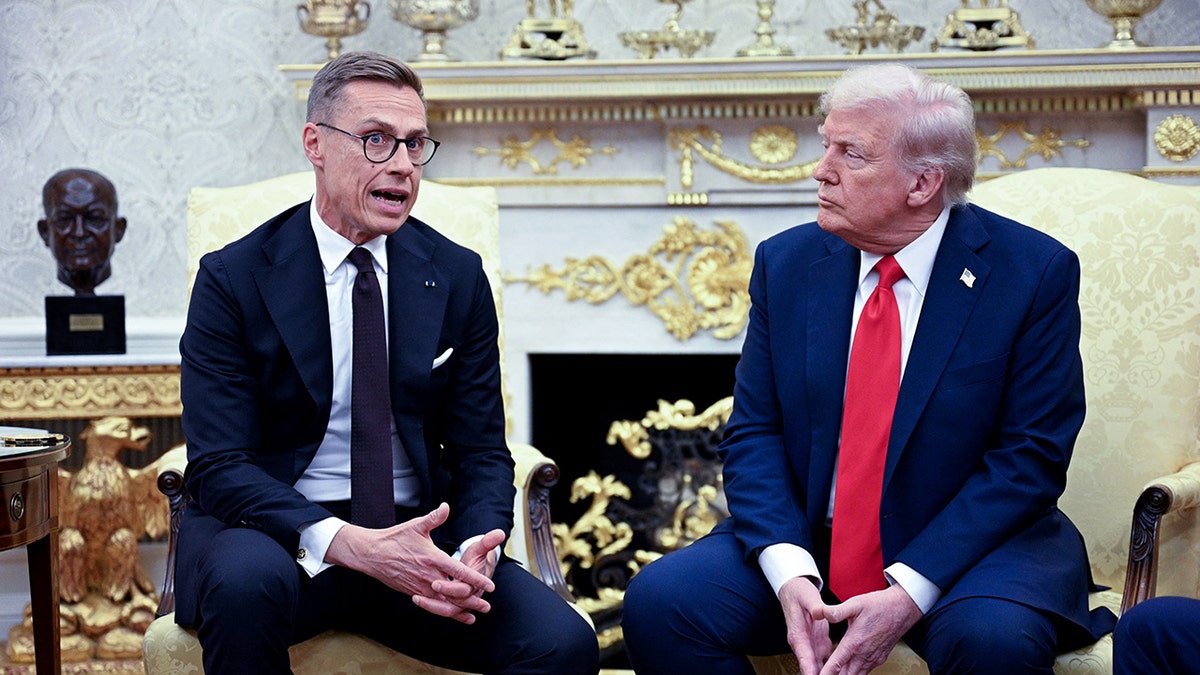
At the United Nations, Finnish President Alexander Stubb offered insights into the ongoing conflict in Ukraine, contrasting starkly with Ukrainian President Volodymyr Zelenskyy’s warnings. While Zelenskyy cautions about potential Russian aggression beyond Ukrainian borders, Stubb maintains a calmer perspective, confident in Finland’s preparations against Moscow.
Stubb highlighted the diplomatic efforts led by former US President Donald Trump, noting his increased push for peace negotiations. He believes the situation has improved since Trump’s involvement, mentioning figures like Steve Witkoff and Jared Kushner among those working towards a resolution.
During the UN General Assembly in New York, Stubb detailed Finland’s readiness for potential Russian threats. He lists mandatory military service, reserve forces, and an extensive network of civilian shelters as key factors. Finland’s military strength stands at 280,000 personnel, bolstered by new F-35A fighter jets, replacing the F/A-18 Hornet fleet.
“The risk of offensive drones, missiles or land operations against countries bordering Russia or Belarus is high,” Zelenskyy warned.
Stubb, however, sees no factual basis for these imminent threats, emphasizing Europe’s need to understand Russia’s strategy extends beyond physical warfare to a ‘hybrid’ campaign involving cyberattacks and sabotage.
“Russia tries to intimidate Europe, scare us, and get into our heads,” Stubb explained. Finland’s calm demeanor stems from decades of preparation, enhancing the nation’s security stance alongside its NATO membership.
Stubb urged continued support for Ukraine during his UNGA address and advocated for Elon Musk’s Starlink expansion to aid Ukrainian forces. He warned of interconnected global crises, mentioning Iran’s involvement in supporting Russian military efforts.
“Every bit of the conflict is linked to another,” Stubb observed, stressing the urgency of resolving these issues.
Trump reiterated the call for Iran’s isolation and prevention of nuclear weapon acquisition, warning of US military action if peace is not achieved.