
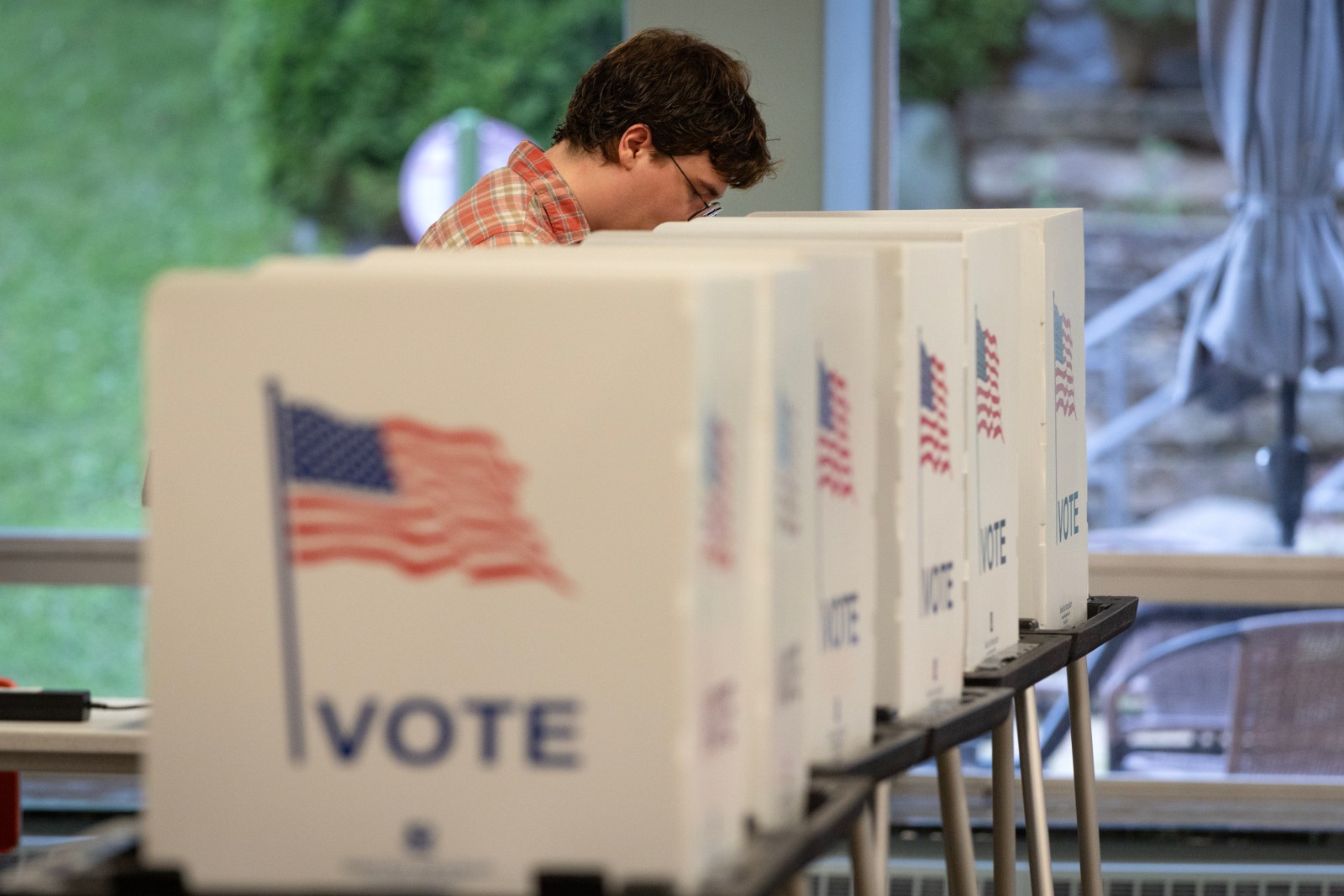
The Department of Homeland Security (DHS) plans to deploy federal agents to examine voter rolls nationwide for signs of ineligible immigrants voting ahead of the midterm elections, as stated in reports reviewed by The New York Times on Wednesday. This strategy involves comparing state-level voter lists with federal data to uncover potential voter fraud.
Currently, it is uncertain how officials will act upon the findings, though a former official suggested the effort might discourage citizens from voting. Some agents are also checking personal details by searching individuals’ names on state election websites.
“If the reporting is correct, this is shocking, and I wouldn’t be surprised to see states running to the local courthouses to try and stop this,” Charles H Stewart III, director of the MIT Election Data and Science Lab, told Newsweek. “This is evidence that the federal government isn’t using highly sophisticated techniques in its investigations.”
President Donald Trump and his administration have frequently claimed a notable presence of immigrant voters—both legal and illegal—in federal elections. Despite this, a significant body of evidence suggests that such instances are rare and have minimal impact.
The administration maintains that addressing these concerns is vital for ensuring fair elections. Critics counter by noting that reallocating agents to this focus detracts from pressing criminal investigations. Tim Harper of the Center for Democracy and Technology noted that moving federal agents from serious crimes like human trafficking and terrorism toward voter fraud investigations is a misuse of resources.
“The surge announced by DHS is the latest step in the administration’s years-long campaign to manufacture a crisis of noncitizen voting, a phenomenon that investigation after investigation has shown to be vanishingly rare,” Harper told Newsweek.
Analyses on Noncitizen Voting
The debate over noncitizen voting balances two perspectives: documented cases occur but remain uncommon compared to overall vote counts. According to the Brennan Center for Justice, noncitizen voting is extremely rare; research after the 2016 election found only 30 suspected cases from 23.5 million votes across 42 jurisdictions. The conservative Heritage Foundation recorded 23 instances from 2003 to 2022.
The Trump administration claims these figures underestimate the issue’s scale. Government officials have bolstered database usage for reviewing voter lists and confirming citizenship status. The Associated Press reported over 67 million voter registration verifications, resulting in tens of thousands of records requiring further evaluation. Civil rights organizations caution that naturalized citizens risk misidentification due to outdated records or database errors.
ProPublica revealed that despite these efforts, few criminal cases emerged, with noncitizen voting prosecutions limited to mere dozens.
Reported Cases Fueling Debate
Several incidents underscore ongoing vulnerabilities in the U.S. electoral system:
- New Jersey Registration Error: In New Jersey, Governor Mikie Sherrill discovered a software error causing around 6,600 noncitizens to register to vote between 2023 and 2024. Fewer than 400 individuals reportedly cast ballots. State officials found no evidence that election outcomes were altered and emphasized bipartisan oversight that uncovered the issue.
- Kansas Mayor’s Guilty Plea: Former Coldwater Mayor Joe Ceballos, a lawful permanent resident from Mexico, pleaded guilty to voting-related misdemeanors, mistakenly believing his eligibility to vote due to his resident status.
- Massachusetts Ballot Fraud: A man allegedly registered another permanent resident as a voter without their knowledge, casting a ballot on their behalf during the 2024 election.
- Philadelphia Man Votes Multiple Times: Mahady Sacko is accused of voting in multiple elections since 2008, despite not holding U.S. citizenship.
- Michigan Review: Michigan officials identified a few alleged noncitizen voters post-2024 elections, serving as evidence of improper voting according to stronger election safeguard advocates.
- Texas Enforcement: Cases arose in Texas of lawful permanent residents voting in elections despite ineligibility.
Controversy Surrounding Federal Efforts
Supporters argue that illegal ballots, though few, threaten electoral confidence. The administration’s measures aim to tighten citizenship verification through executive actions and enlist federal aid for states in identifying unqualified voters.
Opponents fear far-reaching and indiscriminate methods beyond legitimate case resolution. Voting-rights advocates warn of wrongful citizenship denials potentially leading to voter purges and unnecessary scrutiny.
“It is good to know that the agents are being instructed not to go after citizens and to recognize derived citizenship could be the reason someone appears to be a non-citizen on the list,” Stewart remarked. “The problem is that many people whose citizenship was derived from their parents’ naturalization are not known to DHS.”
As the administration intensifies efforts against noncitizen voting ahead of the 2026 midterms, ongoing debates are expected to focus not on whether violations occur but whether the frequency warrants expansive investigations.