
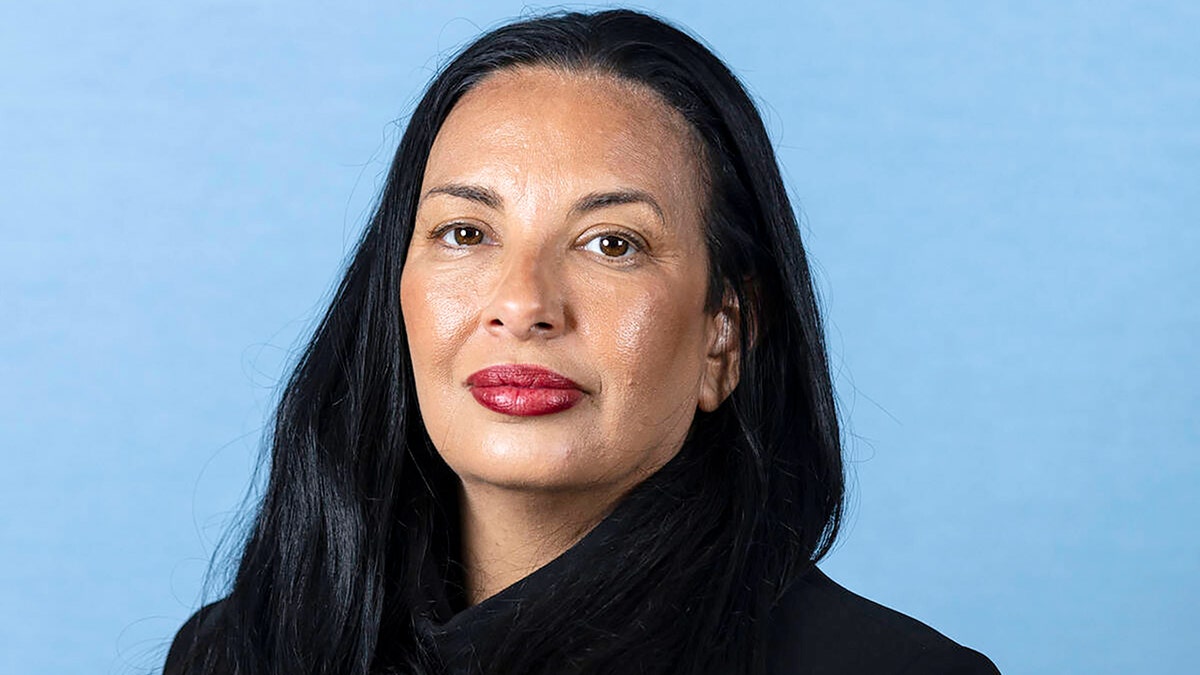
A federal appeals court panel has upheld an order disqualifying Sigal Chattah from serving as the top federal prosecutor in Nevada. The decision found that the Justice Department could not retain her in the role through the appointment and delegation methods used after her interim term expired.
The Ninth U.S. Circuit Court of Appeals, comprised of three judges, affirmed that Chattah was not validly in charge of the U.S. Attorney’s Office for the District of Nevada. This ruling prevents her from supervising prosecutions in three criminal cases.
Chattah, previously a member of Nevada’s Republican National Committee, joined the U.S. Justice Department as interim U.S. attorney on April 1, 2025. Her appointment was for a term of up to 120 days.
“A federal appeals court has upheld the order disqualifying her,” reported Bizuayehu Tesfaye.
As her tenure neared its end in late July of that year, then-Attorney General Pam Bondi reassigned Chattah as the first assistant U.S. attorney shortly before she resigned from the interim role. The Justice Department argued that this designation allowed Chattah to serve as acting U.S. attorney under the Federal Vacancies Reform Act until a permanent replacement was confirmed.
Bondi also appointed Chattah as a special attorney. The DOJ maintained that her role as first assistant, the second-highest position in the office, authorized her to act as U.S. attorney under the Federal Vacancies Reform Act of 1998.
Federal public defenders in Nevada challenged Chattah’s authority in multiple unrelated criminal cases. They argued that her appointment was unlawful and called for the cases’ dismissal.
U.S. District Judge David Campbell ruled in favor of the public defenders in September. The Trump administration appealed the decision. On Monday, the appeals court panel ruled that, according to the Federal Vacancies Reform Act, a first assistant could only become acting U.S. attorney if holding that position when the vacancy occurred.
“The Attorney General cannot create a de facto Acting U.S. Attorney by delegating duties,” Judge Eric Miller wrote.
The three-judge panel included U.S. District Judge Stanley Blumenfeld Jr. and U.S. Circuit Judge Sidney Thomas. The Justice Department argued Chattah’s designation as first assistant allowed her to serve as acting U.S. attorney, and the Attorney General could delegate functions to her. The panel rejected these arguments.
This court decision is part of the administration’s challenge in placing presidential allies in top prosecutorial roles without the Senate’s usual confirmation process.
The controversy comes amid debate over the Senate Judiciary Committee’s “blue slip” tradition, which lets home-state senators impede U.S. attorney nominees. President Trump did not nominate Chattah permanently, instead choosing George Kelesis in February 2026.
In December, the Third U.S. Circuit Court of Appeals found Alina Habba, a former Trump lawyer, was unlawfully serving as acting U.S. attorney in New Jersey and disqualified her from overseeing cases.