
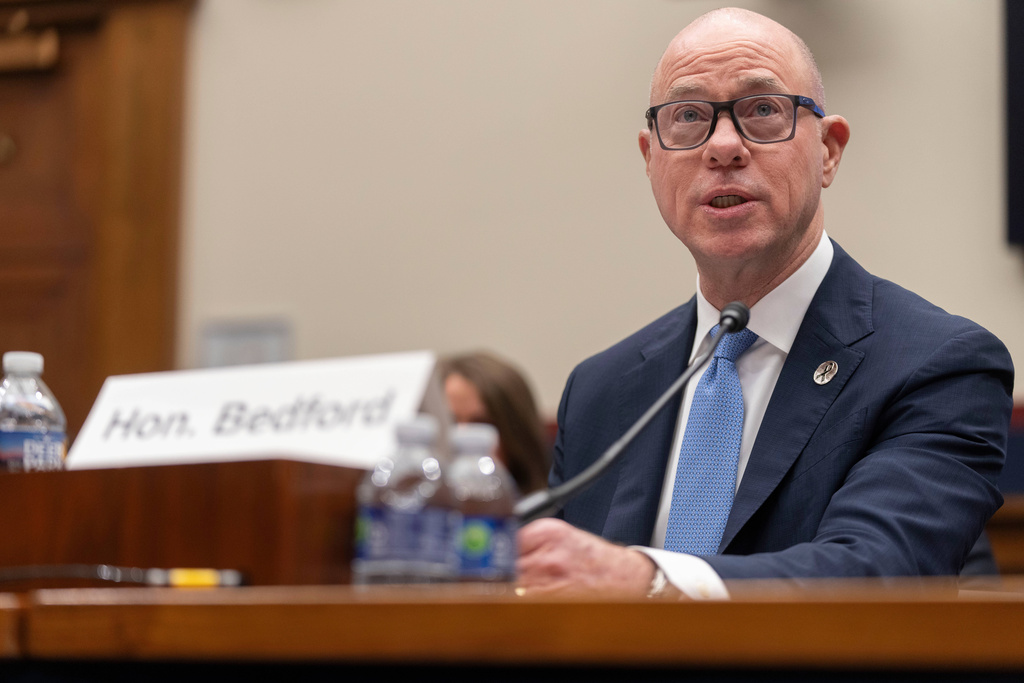
FAA Administrator Bryan Bedford addressed a significant issue during a hearing of the Aviation Subcommittee of the House Transportation and Infrastructure Committee in Washington. On September 21, a critical circuit at the FAA’s Philadelphia TRACON failed. The backup system also failed when a construction crew in New Jersey accidentally cut the fiber cable. This incident led to ground stops at five major Northeast airports: Newark, Teterboro, Philadelphia, LaGuardia, and Kennedy.
Jackson Shedelbower, in a recent op-ed, highlighted this event as a reason for Congress to approve Transportation Secretary Sean Duffy’s $30 billion funding request. As someone with 23 years of experience in FAA air traffic control, I understand the need for modernization. However, Shedelbower’s argument overlooks key points.
Equipment and Infrastructure Challenges
The current equipment is outdated. The failed circuit was already scheduled for replacement. Controllers and technicians expertly manage the system, but need better tools. Congress should support providing these resources. Both the controllers’ union and airlines support this funding.
Shedelbower notes that two-thirds of the old copper has been replaced with fiber or wireless; however, issues persist. The fiber line cut by the construction crew led to the failure. The material of the cable, be it copper or glass, makes no difference when damaged. He mentions a modern air traffic flow management system and AI software as solutions, yet these do not address the physical issues within control facilities.
The Real Problem Lies in Design
Administrator Bedford stressed the problem is a design issue. The system needs separate physical routes and tested backups. Money is needed for these changes, not merely for tools. After Newark outages in early 2025, the FAA laid new fiber between New York and Philadelphia, stating it now had “two separate communications paths.” Despite these changes, a single circuit failure later resulted in another major disruption.
Assessing NextGen and Current Efforts
NextGen, launched in 2003, aimed for modernization but fell short. The Transportation Department inspector general reported that only 16 percent of expected benefits were delivered, despite a $36 billion investment. Causes included lack of firm requirements, overambitious plans, and dependency on timely airline purchases.
The recent congressional provision of $12.5 billion in July 2025 was meant for phase one of modernization. Bedford reported this phase would cost $16 billion. The additional $30 billion request seeks to bring total funding to $42.5 billion. However, only a third of this sum is designated for air traffic control architecture and software. The remaining funds target infrastructure improvements like towers and runways.
The Overlooked Element: Training and Transition
Often missing from these discussions is the training of personnel on new systems. Controllers must manage their workload while integrating new technology. Technicians must maintain old and new systems until full transition occurs. My experience running a facility training program indicates that transition periods are high-risk. The current project has 11,389 separate schedules, lacking a master plan to reduce controller load, which can create new hazards.
Recommendations for Future Implementation
“Shedelbower writes of ‘necessary investment and oversight.’ He focuses on investment. This requires oversight.”
Funding should come with conditions:
- No critical facility should rely on a single physical route; ensure this through testing.
- Release funding in phases, contingent on satisfactory inspector general and GAO reports.
- Include controller training and technician staffing in the funding bill.
- Demand a comprehensive lifecycle cost breakdown before approving funding.
Proper planning, not just financial resources, will prevent future breakdowns. Vincent E. Bianco III, a principal consultant at Marivin Consulting Services LLC, provided these insights based on his 23-year career in FAA air traffic control.