
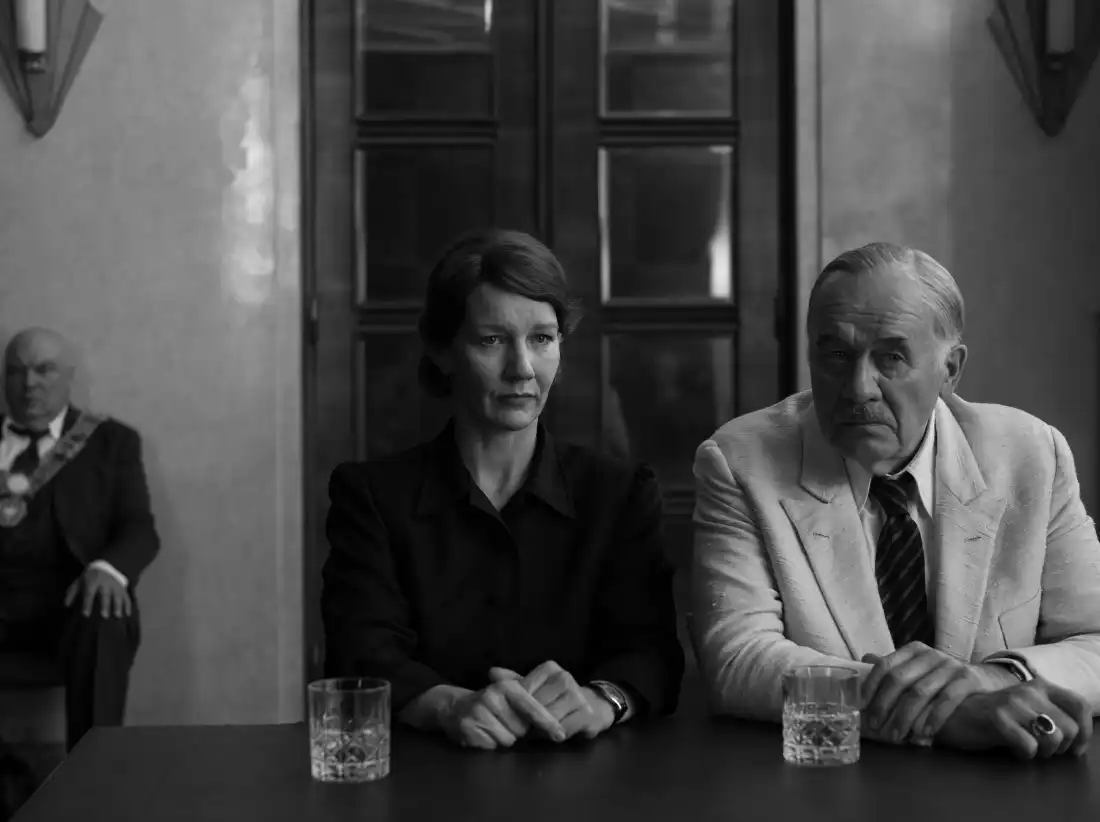
Fatherland stars Sandra Hüller as Erika and Hanns Zischler as Thomas Mann. This film by Paweł Pawlikowski captures Mann’s return to Germany in 1949 after his time in America during World War II. Set in a mid-20th century Mitteleuropa, the movie forms part of Pawlikowski’s trilogy that includes Ida.
The film is 82 minutes long and combines a family narrative with post-war Germany’s portrait, Cold War aspects, and themes of personal and historical guilt. It starts with a conversation between Erika and her brother Klaus, who is a talented yet troubled writer. Erika wants Klaus to accompany their father, who is returning to Germany to receive the Goethe Prize. However, Klaus feels overshadowed by their father.
Thomas Mann, portrayed by Hanns Zischler, embarks on his homeland tour with Erika as his assistant. The film diverges from historical facts, replacing Mann’s wife with Erika to emphasize their dynamic. Erika is portrayed as being trapped within her father’s world. As they travel to Frankfurt and Weimar, both parts of the divided Germany aim to associate Mann with their political ideologies.
In Frankfurt, Mann’s visit is under the watchful eye of a CIA agent as he addresses audiences that include former Nazi supporters. The film artfully blends archival and new footage to show the post-war environment. In the East, Mann’s activities are directed by a general as he speaks to the communist faithful. Mann remains neutral, promoting Goethe’s concept of a positive German culture.
A personal tragedy occurs but Mann remains detached, prioritizing his tour despite Erika’s distress. Her respect for her father wanes as she remembers her own achievements, such as writing anti-Nazi works and reporting during the war. Erika pushes Mann to face family issues, but he chooses to suppress his feelings, finding solace in high culture.
Pawlikowski’s work, showcased in the trilogy, balances strong emotions with aesthetic precision. The meticulous black and white cinematography reflects his artistic control over deeper themes. Although Mann’s novels are extensive, the film’s brevity aligns it with short stories by Chekhov or Joyce. The movie concludes with an epiphany accompanied by Bach’s music, revealing a brief glimpse of the man behind the imposing façade.