
Wildfires Challenge France and Spain
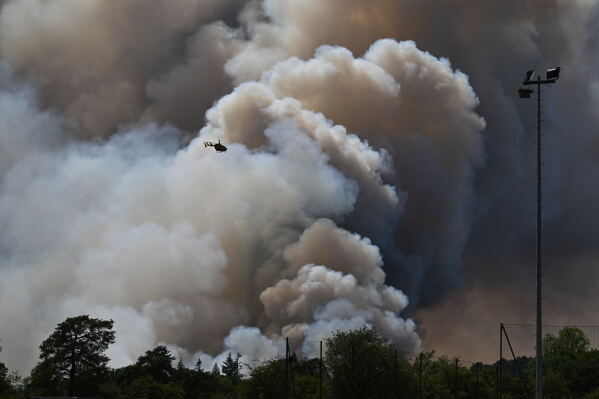
In recent days, hundreds of firefighters have been battling new flare-ups near Blagon, a village in southwestern France. Crews are dealing with wildfires that keep reigniting in the dry woodland. These efforts are a part of a larger struggle against a massive fire, which is reportedly four times the size of Paris. As temperatures are expected to surpass 40 degrees Celsius (104 degrees Fahrenheit) on Wednesday, fire crews worry that these tinderbox conditions may hinder their progress against the blaze. The intense heatwave and forecasted winds could further complicate efforts. Authorities in the Gironde region around Bordeaux reported that 220,000 residents have been forced to evacuate their homes.
Over in Spain, the country is preparing for a fourth heatwave this summer. Several uncontrolled blazes, including the biggest in Spain’s recorded history, are ongoing. However, there is some relief as Spanish officials began lifting evacuation and stay-at-home orders, thanks to advancements achieved by firefighters. The European Union’s Copernicus climate service has pointed out that Europe is warming faster than any other continent, heating at more than twice the worldwide average. This summer, Western Europe recorded its hottest June, with the extreme heat and drought leading to the intensification of fires in countries like France and Spain.
Steps to Keep Indoor Air Clean During Wildfires
Wildfire smoke can blanket cities for days, similar to how fires in Canada affected air quality in parts of the U.S. Health officials suggest staying indoors and taking the following steps to ensure clean air:
- Ensure central air conditioning systems operate with clean, high-efficiency filters.
- Consider portable air filters with HEPA capabilities to trap small pollutant particles, avoiding those generating ozone.
- Seal gaps where outdoor air might enter using towels or tape.
Wildfire smoke exposure might result in shortness of breath, chest tightness, headaches, or a burning sensation in the nose and eyes. Seek emergency care if symptoms worsen.
Uncertain Future for Evacuees
The evacuation has left many with uncertainty regarding the state of their homes. One resident, Elvira Menéndez, has been staying in a makeshift shelter at a sports complex since fleeing her home. Near Madrid, major fires merged, prompting a national fire emergency in Spain for the first time. The fire affected provinces such as Ávila and Toledo, burning a total area of 77,000 hectares. Rocío Domínguez, another evacuee, shared her distress about leaving behind her belongings and memories.
France’s Wildfire Creates a Pyrocumulonimbus
The French wildfire became so intense that its smoke column turned into a thunderstorm, named a pyrocumulonimbus. This type of storm can generate lightning that starts new fires, as seen recently. Such phenomena are rare in Europe. The storm was capable of producing violent and erratic winds, subsequently driving flames in unpredictable directions.
Evacuations Due to Continued Threat
Morgane Bonichot, her daughter, and their pets are also staying at an evacuation center in Bordeaux due to the fires. Her daughter was at the center of the fire’s origin near pine forests and farmland when it began. Regional authorities have preemptively evacuated several towns, prioritizing lives over property. Saint-Jean-d’Illac and other areas between the blaze and Bordeaux were evacuated for safety.
Images of the Wildfires
A photographic series captures the intense fire operations as Europe faces fast-spreading wildfires in both Spain and France. These images spotlight the firefighters’ efforts and the impact on communities and the environment.
Global Burning Trends
Amid the severe blazes in Europe and North America, global burning numbers hit record lows partially because Africa and Asia reduced fires through agricultural and fire management practices. Spain’s wildfire, devastating more than 500 square kilometers, is the nation’s largest on record. In Canada and the U.S., the area affected by wildfires exceeds long-term averages significantly. Yet, according to the European climate center Copernicus, global emissions from fires hit a low in July, reflecting trends in other continents.
Heatwaves Threaten France’s Firefighting Efforts
In southwest France, authorities announced that while the massive fire still rages, the situation remained stable overnight. The fire has not been fully contained a week since its start, and upcoming heat and winds pose a threat of renewed flames. Precautionary evacuations continue, affecting thousands, as part of France’s largest peacetime evacuation effort.