
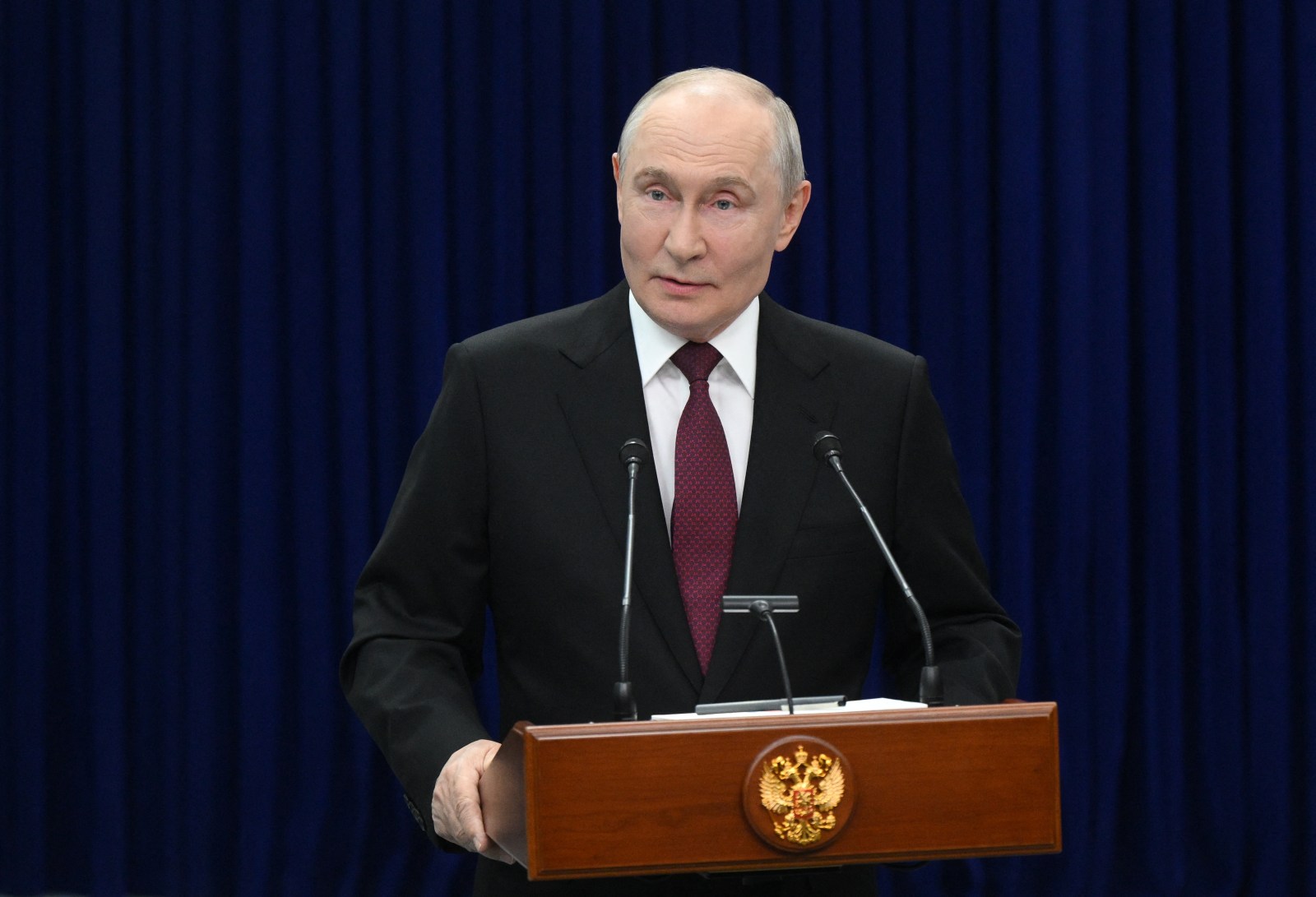
Russian President Vladimir Putin criticized Ukrainian President Volodymyr Zelensky’s statement declaring Russian airspace increasingly unsafe amid rising drone strikes. Zelensky described these strikes as closing Russia’s skies to civilian aviation.
On Tuesday, Zelensky stated, “Although the Russian authorities are not properly informing people about this, Russian airspace will effectively be closing. The war started by Russia is closing its skies. For now, the skies over Russia are for drones—not for civilian aviation.” His remarks highlighted the ongoing conflict’s impact on air travel, as most commercial airlines have avoided Russian airspace since the country’s full-scale invasion of Ukraine in 2022. However, carriers from countries like China, India, and the United Arab Emirates still operate flights over Russia.
Zelensky clarified that “Ukraine does not threaten civilian aviation as such,” but added, “there will simply be drones in Russia’s skies on a scale that has to be taken into account,” according to the BBC.
In response, Putin labeled Zelensky’s warnings as “state terrorism” and reaffirmed Russia’s ongoing military actions against Ukraine. He emphasized, “I’d like to point out that they’re asking us to resume negotiations. They’re asking for personal meetings.” At the Shanghai Cooperation Organization summit in Kyrgyzstan, he remarked, “We don’t negotiate with terrorists.”
These exchanges occur against a backdrop of historical tensions, such as the 2014 downing of Malaysia Airlines Flight 17 over Ukraine. This incident resulted in 298 deaths and investigations have since implicated Russia, despite Moscow’s denial of involvement. Last year, the International Civil Aviation Organization held Russia accountable for the tragedy, following earlier findings by a Dutch-led investigation that cited a Buk missile system supplied by Russia and fired from pro-Moscow separatist-controlled Ukrainian territory.
Adding to the tension, Germany recently accused Russia of attempting a drone attack at Leipzig/Halle Airport last month. The German government found a drone laden with explosives near a Ukrainian plane, prompting measures like the closure of a Russian consulate. Western officials allege that Moscow is conducting sabotage across Europe to undermine Ukraine support and destabilize European nations. In retaliation, Russian Foreign Ministry spokesperson Maria Zakharova dismissed Germany’s accusations as “far-fetched.” Putin accused German leadership of using the incident to divert attention from internal failures.
CIA Director John Ratcliffe’s visit to Moscow last month adds another layer to these developments. During his secretive trip aimed partially at delivering a warning, Ratcliffe urged Moscow not to attack NATO countries and to reduce support for Iran. Kremlin spokesman Dmitry Peskov confirmed meetings with Russian intelligence officials, though not with Putin directly. President Donald Trump expressed hope that Ratcliffe’s initiative might contribute to ending the conflict, commenting on Glenn Beck’s conservative radio show, “We’re working very hard to get that war ended.”
This situation remains fluid and developments continue to unfold.