
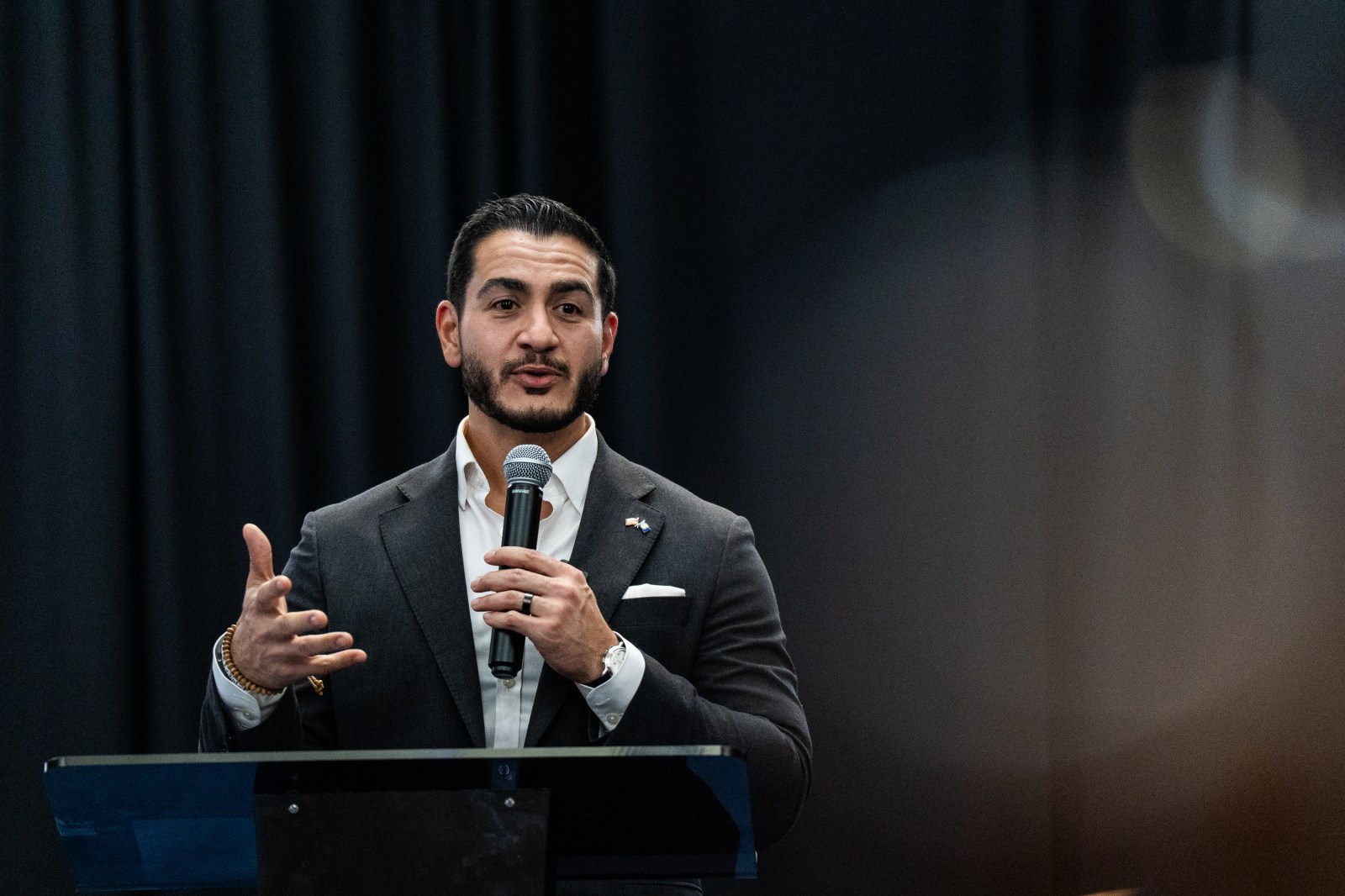
Abdul El-Sayed, a Democratic candidate for the U.S. Senate, acknowledged potential skepticism from Detroit residents during a Sunday night interview. He addressed concerns related to prejudices they may hold based on past experiences with people who resemble him. El-Sayed emphasized the importance of being judged based on his character. The discussion arose shortly after his former rival, Haley Stevens, endorsed Republican Mike Rogers for the Michigan Senate seat.
El-Sayed, who has been consistently criticized by Republicans, has faced attacks on his Muslim faith and characterizations of his political views as extreme. He expressed understanding that Detroit residents might associate people who look like him with negative experiences, but he appealed to their sense of fairness, asking voters to consider his character rather than skin color. He aims to unify communities if elected to the Senate.
Stevens, a House Representative, stated her endorsement of Rogers was not rooted in anti-Muslim sentiment. Rather, she cited differences with El-Sayed on Israel’s military actions in Gaza. Gaza health officials report significant casualties from these actions.
“For too many people in the city of Detroit, their interactions with people who look like me aren’t very good,” said El-Sayed. “But I’m asking to be judged by the content of my character.”
Michigan has a large Muslim population, notably around Wayne County and metro Detroit. The area includes many residents of Middle Eastern descent, particularly in Dearborn. This demographic has historical ties to the auto industry with newer arrivals from regions like Iraq and Yemen.
In past elections, Dearborn leaned heavily Democratic. Yet, shifting dynamics, such as opposition to U.S. support for Israel’s Gaza operations, have altered voter tendencies, influencing outcomes like the 2024 election.
El-Sayed faces concurrent challenges regarding his stance on Israel, which he has described as genocide, opposing U.S. military aid to the country. While some Jewish groups criticize his views, he denounces antisemitism and Hamas, stressing that critiques of Israel’s policies should not be viewed as anti-Jewish.
Stevens’ recent endorsement change came amid criticisms of El-Sayed, sparking debate within the Democratic Party. Stevens insists her move is not a shift away from being a loyal Democrat. Despite her new stance, El-Sayed directed focus to his statewide agenda, criticizing Rogers’ alignment with Trump and urging Democratic voters to prioritize democracy.
“Mike Rogers is going to be a vote for Donald Trump,” El-Sayed stated. “I’m asking folks what are your priorities?”
Stevens told CNN that her endorsement of Rogers was driven by frustrations with El-Sayed’s approach and associations. Trump publicly praised Stevens’ endorsement, expressing a desire for her shift to the GOP.
Despite challenges, El-Sayed leads in the polls. A New York Times/Siena survey shows him ahead by 11 points over Rogers. Another YouGov poll puts the margin closer. Democrats must secure Michigan’s seat to regain Senate control, targeting additional seats in states like Texas and Maine.
The situation highlights the multifaceted factors influencing Michigan’s Senate race, with cultural demographics, political endorsements, and policy stances playing key roles in voter decision-making.