
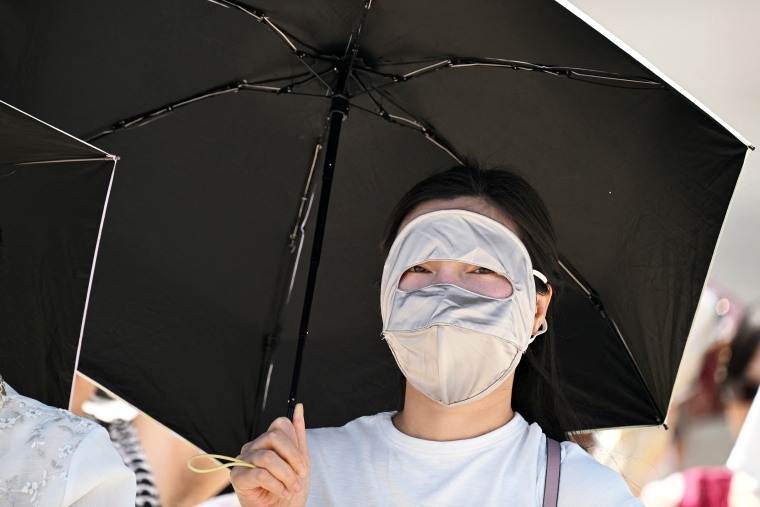
East Asia is enduring an unprecedented heat wave, setting temperature records in South Korea and complicating earthquake recovery efforts in Japan. South Korea recorded its highest temperatures in 122 years, with the southeastern city of Yangsan reaching 42.5 degrees Celsius (108 Fahrenheit). Since mid-May, the extreme heat has led to 19 deaths, prompting President Lee Jae Myung to declare it a national disaster and call for a fundamental overhaul of the national crisis management system.
On Tuesday, the Korea Meteorological Administration issued a new “severe” heat wave warning for all of Seoul for the first time, as temperatures spread northward from the south. This warning is triggered when maximum perceived temperatures reach at least 38 degrees Celsius (100.4 Fahrenheit). Seoul’s metropolitan area, home to more than 26 million people, advised residents to stay indoors, hydrate, and monitor vulnerable groups.
North Korea is also experiencing soaring temperatures. State newspaper Rodong Sinmun advised residents to limit outdoor activities and urged farmers to protect their produce from the heat. Meanwhile, in Japan, intense heat is complicating disaster relief efforts following a 7.1-magnitude earthquake in Kumamoto prefecture. Temperatures there have exceeded 100 degrees Fahrenheit.
As of Sunday, Japanese authorities reported that more than 40,000 households are still without water, and thousands remain in emergency shelters or sleep in cars due to ongoing tremors. Tragically, a woman in her 70s died of suspected heat stroke in her car, increasing the death toll to 38. Kumamoto Governor Takashi Kimura urged evacuees to use air-conditioning in cars or move to air-conditioned centers. Prime Minister Sanae Takaichi assured continual water and repair efforts.
Elsewhere in Japan, the ongoing heat wave has severely affected wildlife. Officials at the Tama Zoological Park reported the deaths of three lions suspected to be heat-related. Efforts continue to stabilize the remaining lions, with four showing signs of recovery.
The Japan Meteorological Agency introduced the term “kokushobi,” meaning “cruelly hot day,” for days above 40 degrees Celsius (104 Fahrenheit) to increase public awareness about the dangers of extreme heat. Last month saw five consecutive kokushobi, adding urgency to discussions on weather-related safety measures across the region. The highest temperature recorded in Japan occurred last August in Isesaki, reaching 41.8 degrees Celsius (107.2 Fahrenheit).