
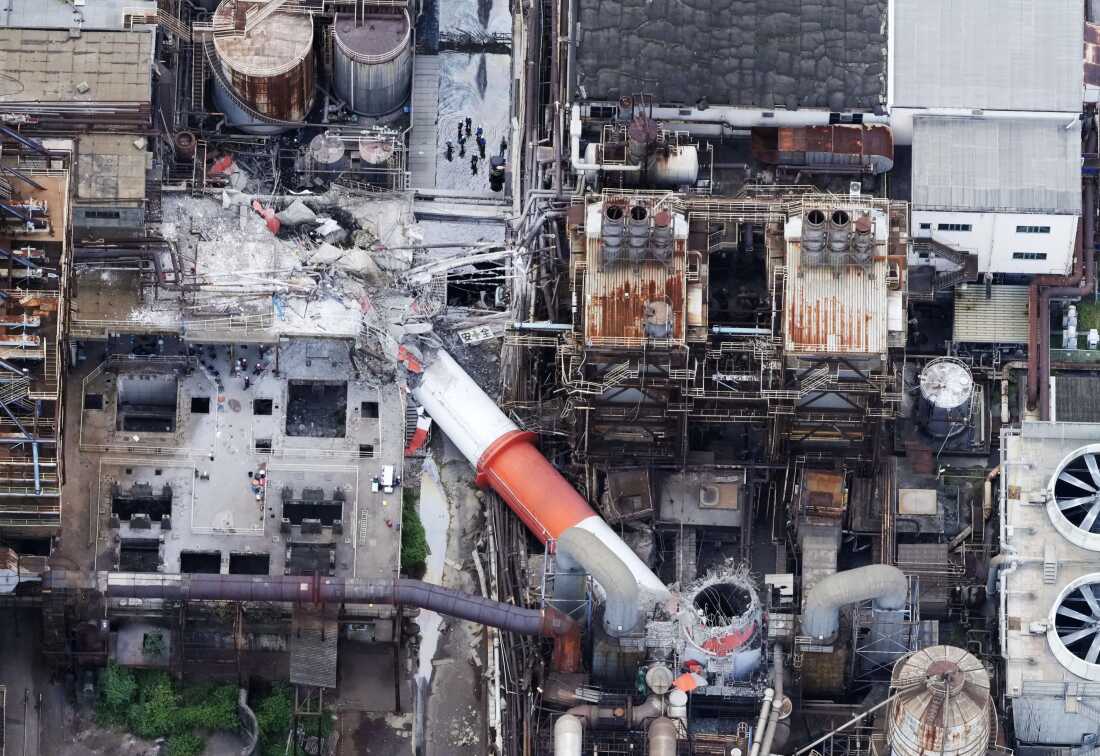
A significant earthquake hit Yatsushiro in Kumamoto Prefecture, causing severe damage to properties and infrastructure. The Nippon Paper Industries Co.’s Yatsushiro factory sustained damage, including a collapsed chimney. The incident in Kumamoto led to emergency situations, with soldiers and rescue workers urgently searching for survivors in collapsed structures on Wednesday, July 29, 2026.
The powerful 7.1 magnitude earthquake resulted in at least 13 fatalities, with many individuals reported missing in southwestern Japan. Bullet train services and several airport operations were halted as authorities assessed the damage on Kyushu, Japan’s southern main island.
Prime Minister Sanae Takaichi stated, ‘There are people who are still waiting to be rescued, and it’s a race against time. We will go all out to find and rescue as many people as we can.’
The earthquake left approximately 36,900 homes without electricity and 9,500 homes without gas. Communications were disrupted in various locations, according to Minoru Kihara, the chief government spokesperson. Over 9,000 residents sought refuge in more than 500 shelters, and additional power sources were provided to accommodate air conditioning needs amid Japan’s ongoing heat wave, with temperatures expected to exceed 32 degrees Celsius (90 Fahrenheit).
Japan’s Self Defense Forces participated in rescue efforts, focusing on the heavily damaged Aeon Mall in Kashima. The mall’s second floor had collapsed due to a suspected gas leak explosion, trapping an unknown number of people inside. Additionally, a collapsed chimney at the Nippon Paper Industries Co. facility in Yatsushiro buried individuals underneath, with seven people feared trapped as of Wednesday. Two survivors and two bodies have been extracted from the site.
Prime Minister Takaichi assured that the federal government was ready to deliver essential supplies to the most affected areas. She expressed condolences to the victims and urged those impacted by the quake to stay safe in the harsh weather conditions.
Infrastructural disruptions included the suspension of the Kyushu Shinkansen bullet train as well as temporary closures at Aso Kumamoto Airport, which has since started reopening. Travelers were warned of potential flight cancellations.
Kumamoto Castle, a historic tourist attraction already under restoration since the 2016 earthquake, suffered further damage. ‘The shaking reminded me of the Kumamoto quake (10 years ago) and I was frightened,’ commented Hiroki Shimoda, a Mifune town hall official, after witnessing roof tiles falling from nearby buildings.
The 2016 Kumamoto earthquake caused at least 50 fatalities, marking a tragic memory for the region. Authorities continue to work on search and rescue operations, addressing urgent needs and restoring normalcy to the affected communities.