
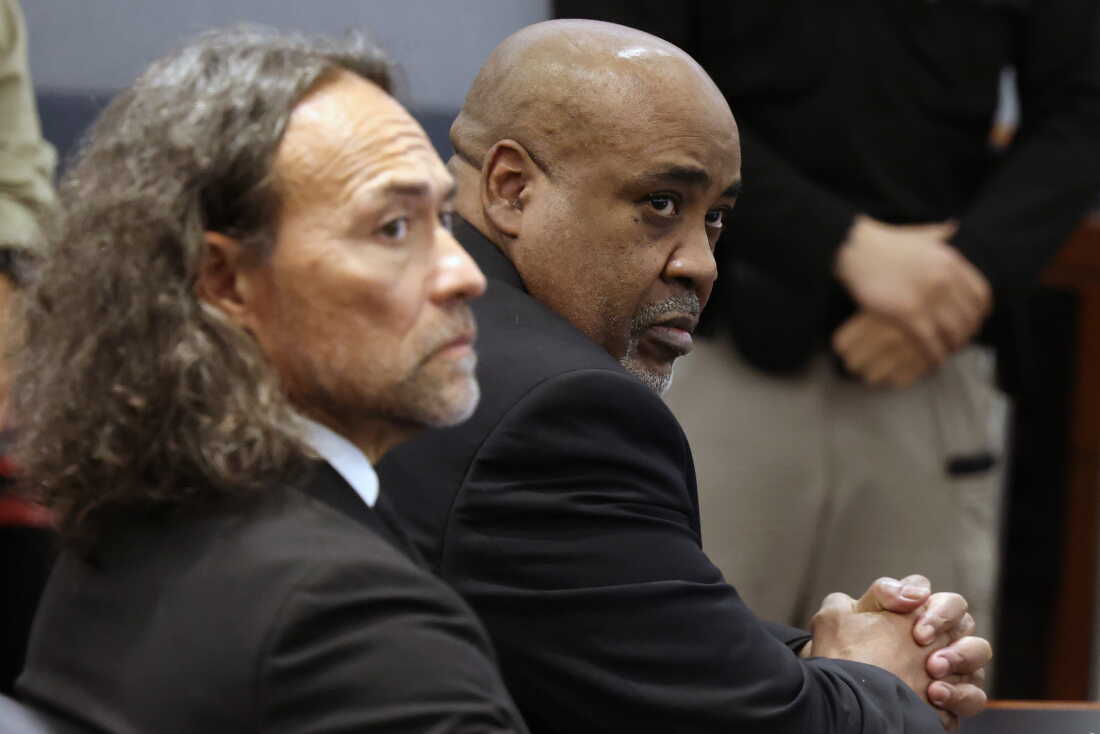
Duane Davis, known as “Keffe D,” was found guilty of first-degree murder in connection with the 1996 killing of rapper Tupac Shakur. The verdict was delivered at the Clark County District Court Regional Justice Center in Las Vegas, bringing some resolution to a case that had intrigued hip-hop fans for decades. The 63-year-old Davis now faces a potential life sentence.
The jury took less than three hours of deliberation following a trial that spanned weeks. The trial concluded with emotional scenes in the courtroom. Shakur’s sister, Sekyiwa Shakur, wept and embraced the prosecutors. Meanwhile, Davis’ son appeared distressed, covering his face.
Prosecution’s Case Against Davis
Chief Deputy District Attorney Binu Palal told jurors that Davis secured a firearm and sought out Shakur and Marion “Suge” Knight after a conflict involving Davis’ nephew. Palal informed the jury that Davis did not directly fire the weapon; however, he orchestrated the attack as the leader of the group present in the white Cadillac from which shots were fired.
The prosecution presented Davis’ varying accounts over the years. Despite these changes, Davis placed himself in the Cadillac at the time of the shooting. They argued his influence as a gang leader made him culpable for initiating the gunfire.
Defense’s Argument for Davis
Defense attorney Michael Sanft challenged the evidence, questioning whether Davis had ever authorized such an act before or after the incident. Sanft emphasized the lack of physical evidence linking Davis to the crime, particularly stressing the absence of phone records from September 7, 1996, the night of Shakur’s murder.
Sanft described Davis’ public statements and memoir as exaggerated narratives intended for financial gain, not truthful accounts. He consistently questioned the foundation of the prosecution’s case throughout the trial.
Reactions and Context
Prosecutors used Davis’ memoir, “Compton Street Legend,” to reinforce their position. They maintained that despite disclaimers indicating altered facts, the essence of the account remained unchanged. Prosecutor Marc DiGiacomo highlighted Davis’ scrapbook of articles about Shakur as another piece of incriminating evidence.
The trial highlighted the longstanding conflict between Los Angeles gang sects and their affiliations with rival music labels. Witnesses detailed the animosity between these gangs and connected them to the power struggles within the music industry, particularly between Death Row Records and Bad Boy Records.
The unresolved murder of the Notorious B.I.G., occurring six months after Shakur’s death, also surfaced during the trial, adding to the complex history surrounding these events.