
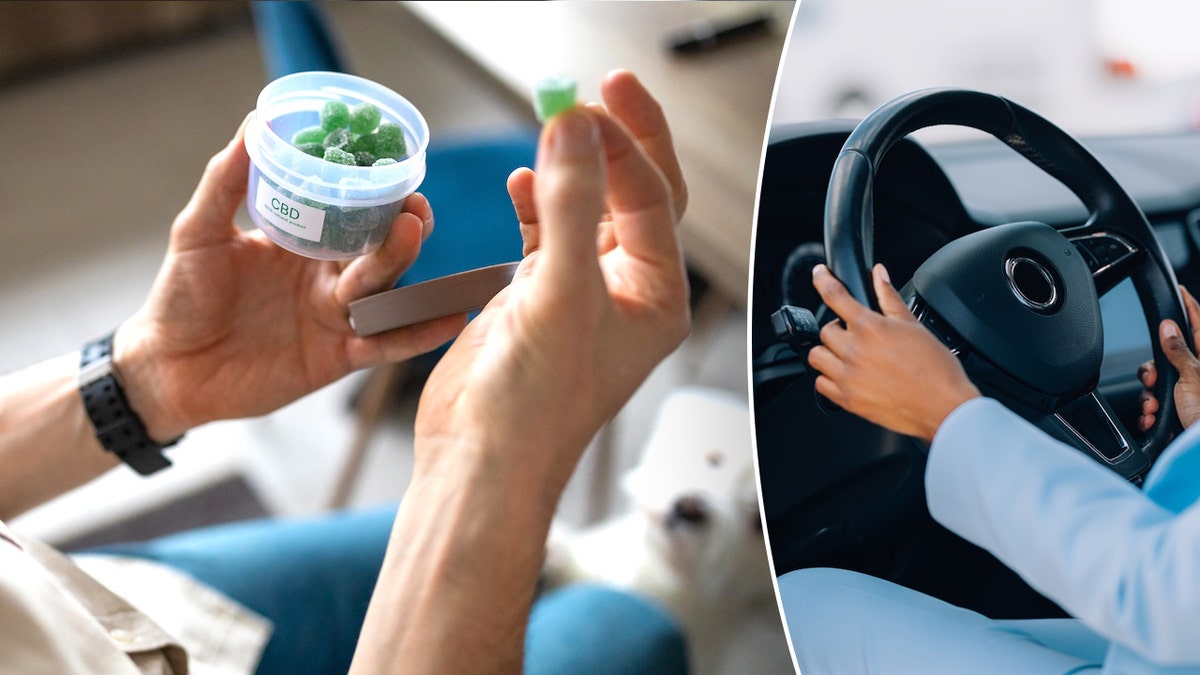
A study published in JAMA Network Open has issued a warning regarding the effects of cannabis edibles on driving abilities. Researchers found that consuming these edibles can significantly impair road performance and reaction times, even when blood tests show THC levels far below legal limits. This finding presents enforcement challenges for impaired-driving in Canada and some U.S. jurisdictions.
Prior studies on cannabis-driving typically focused on smoked or inhaled marijuana, which elevates THC levels in the bloodstream more rapidly. In contrast, edibles take longer to absorb and can cause driving impairment despite low blood THC concentrations.
During experiments, drivers who took higher doses of edible THC exhibited difficulty with lane control, slower reactions, and inconsistent speed. Yet, their blood tests remained below the legal cutoff used during traffic stops. The study measured lane adherence, speed maintenance, and response times to road events.
Researchers at the Centre for Addiction and Mental Health in Toronto conducted trials with 40 adult volunteers who regularly consume cannabis. They attended four sessions, consuming soft-chew gummies with varied THC doses: 0, 2, 10, and 20 milligrams.
Driving performance was evaluated using a simulator at two, five, and 24 hours post-consumption. Besides lane positioning and speed control, researchers collected blood samples and self-reported intoxication levels. Participants acknowledged their limitations, expressing lower willingness and confidence in driving after consuming gummies.
The study recorded driving impairments at two and five hours post-consumption of 10- and 20-milligram doses. Compared to placebo, these doses caused more lane variability, with the 20-milligram dose also resulting in slower reaction times and speed inconsistency.
The average peak blood THC concentrations were measured at 1.6 ng/mL after 10-milligrams and 3.4 ng/mL after 20-milligrams, under the standard 5-ng/mL threshold. Despite some individual samples exceeding this limit, THC thresholds vary across jurisdictions.
Comparatively, previous studies on smoked cannabis showed similar impairment with average THC blood levels peaking at 30.3 ng/mL, nearly ten times higher than the 20-milligram edible study.
The study’s limitations include the use of driving simulators, eliminating real-world physical risks, and exclusively involving regular cannabis users. Effects on occasional users remain uncertain.
After 24 hours, minimal residual effects were noted. Although maximum speed remained higher among those who consumed 10- and 20-milligram doses, participants’ feelings of intoxication had subsided.
According to Dr. José Ignacio Nazif-Munoz from Université de Sherbrooke, these biological differences pose challenges for law enforcement. Slow absorption of edibles through the digestive system may lead blood tests to miss unsafe drivers, prompting a need for more reliable roadside tools.
Dr. José highlighted that the delayed absorption and prolonged effects of edibles complicate comparing biological measures with smoked or inhaled cannabis.
Khloe Quill at Fox News Digital writes lifestyle content, covering topics like food, drink, travel, and health.