
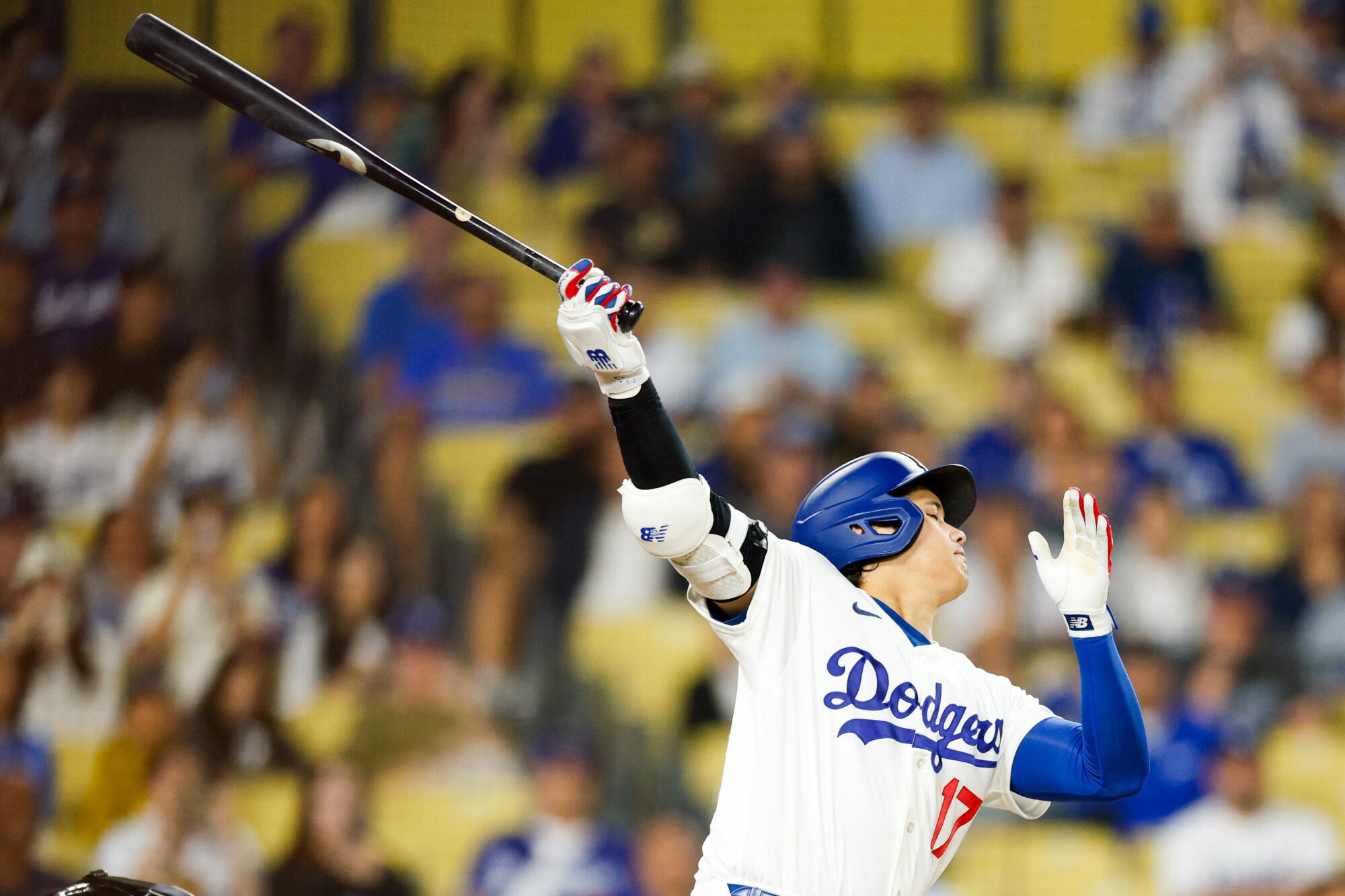
Dodgers manager Dave Roberts recently informed Shohei Ohtani via text message that he wouldn’t be in the lineup for Thursday’s series finale against the Cardinals. Ohtani responded with a salute emoji. Roberts stated, “At the end of the day, he wants to be in there. But I’m not going to put him in there because of the name on the back of his jersey.”
This decision reflects ongoing challenges as Ohtani deals with persistent pain in his right biceps and left knee. Although Roberts indicated that an injured list stint is “unlikely,” the uncertainty regarding Ohtani’s health raises questions about the team’s plans. His situation complicates the setup of the Dodgers’ rotation, and the offense is hindered until Ohtani can overcome his slump, marked by only two hits in his last six games and a .241 batting average in August.
Roberts explained, “Great players always feel that their percentage is better than the next person, and they want to be available.” He noted the importance of balancing player input with medical advice, a method learned from handling star pitcher Clayton Kershaw’s situations. Ohtani’s feedback is considered alongside training staff recommendations.
Ohtani has not given any interviews for over two weeks, avoiding media requests for comments through the team’s spokesperson. The main issue affecting his return to pitching has been the knee injury. After receiving an injection for swelling and soreness, his throwing program stalled twice post-July 3 pitching start. On Wednesday night, Ohtani reported discomfort from his biceps to his neck, causing him to continually shake out his arm.
General manager Brandon Gomes described Ohtani’s biceps issue as an “ebb-and-flow” problem, acknowledging its recurrence during the season. Gomes stated, “It’s hard to recover in August and September. It’s crucial to know if he needs a day here and there and have those conversations. Ohtani is unique and requires individual treatment.”
Despite the biceps and knee issues persisting for months, Ohtani has yet to miss two consecutive games or join the injured list. Gomes commented, “It’s tough to say, ‘hey, we’re going to resolve this in X amount of days.’ Yet, leaving Ohtani out of the lineup for extended periods isn’t preferable and hasn’t been considered.”
Gomes also addressed assumptions linking Ohtani’s hitting woes with his physical ailments. “The season has natural ebbs and flows, and attributing them is difficult,” Gomes said. He assured there’s no indication Ohtani is unfit for play and recognized the unavoidable expectations accompanying Ohtani’s high performance.
If Ohtani isn’t placed on the injured list, consecutive days off could be beneficial. Roberts will decide Friday after talks with Ohtani and the training staff. Furthermore, the team has delayed deciding if Ohtani should pitch again this season. Roberts considers the recent development as “part of the math.”
Gomes stated, “Assessing Ohtani’s feelings is vital. If the risks overshadow the benefits, we’ll shut down his pitching. We won’t compromise his offensive role.” Ohtani’s throwing progress restarted with catch play on August 8. In 23 games since, his performance has dipped to a .704 OPS, marking his worst offensive run this season.
The trade deadline acquisition of left-hander Tarik Skubal reduced the pressure for Ohtani’s pitching return. Roberts noted, “Our team recognized the opportunity, and securing Skubal alleviates some expectations on Ohtani. We’re fortunate to have him positively influencing our players.”