
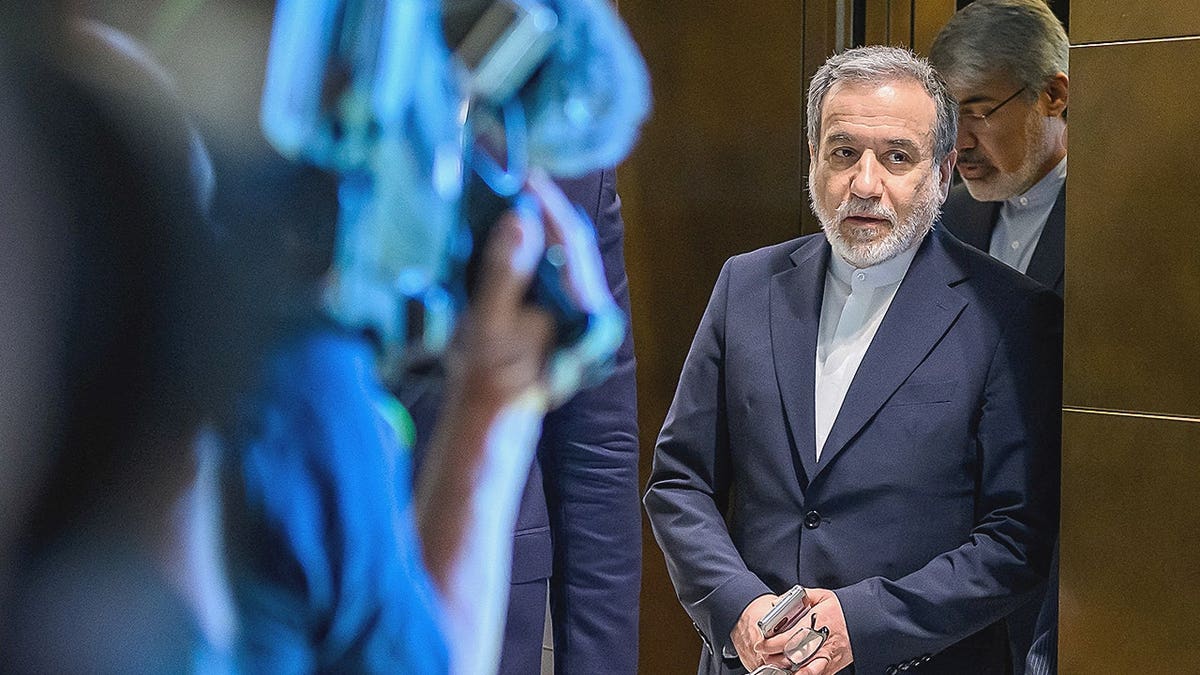
Negotiators from the U.S. and Iran met in Switzerland on Sunday to address a disagreement over billions in potentially unfrozen Iranian assets. This issue tests an interim agreement signed on June 17, with discussions held at Bürgenstock, near Lucerne, Switzerland.
Iranian expectations were highlighted by President Masoud Pezeshkian early Sunday. He stated, “$6 billion of our funds in Qatar will be returned,” referencing former President Trump’s acknowledgment in a recent speech.
“We have taken their money, it isn’t our money, it is their money, and we froze it,” former President Trump stated. He acknowledged that returning the funds is inevitable but stressed conditional access. Trump noted Iran would receive “not ten cents” during the 60-day negotiation period without commitments.
Alex Vatanka, a senior fellow at the Middle East Institute, explained the political significance of releasing frozen assets. He noted it as a major test of trust between Tehran and Washington.
The Memorandum of Understanding (MOU) specifies that U.S. commitments involve making Iranian funds available. Yet, releasing these funds ties to compliance, not immediate access.
The U.S. delegation, including Steve Witkoff, JD Vance, and Jared Kushner, arrived in Switzerland on Sunday.
Vatanka highlights ongoing uncertainty over the exact total of Iranian assets frozen abroad, with Iranian officials citing over $100 billion, while Western estimates vary. Immediate negotiations seek access to $24 billion to $25 billion as a starting point.
Iran’s assets, estimated at $100 billion to $120 billion, remain frozen under multiple sanctions in countries such as China, India, Iraq, and South Korea.
The dispute extends beyond payout size. Vatanka points out the importance of control over funds. Iranian officials emphasize sovereignty, while the U.S. aims to attach usage conditions.
Qatar’s Foreign Ministry stated that talks aim for a comprehensive agreement. Technical teams are negotiating, while oversight will monitor implementation.
The U.S. and Qatar explore channels for $6 billion toward humanitarian efforts, like food and medicine. Concerns persist that funds could support regional conflicts. Reuters reported that Iran might increase backing for Hezbollah if financial conditions improve.
Vatanka noted a regional dimension, with Iran pledging funds for its weakened proxy network in Lebanon. The U.S. insists that assets not fund terrorism, warning of revoked access if Iran breaches agreement terms.
The discussions reflect a divide in the agreement’s purpose. Tehran presents $25 billion as gradual investments in infrastructure, covering roads and airports. Washington, in contrast, focuses on controlled release for humanitarian purchases.