
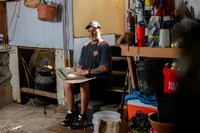
While organizing his garage for Halloween, Jason Hurdle uncovered a concealed crawl space that contained a forgotten box of files. Initially, these papers seemed mundane, yet a breeze revealed the word ‘SECRET’ on one of the covers, halting his discard plans. Hurdle, a mechanic in Waterloo, New York, found himself holding 80-year-old onionskin pages with firsthand accounts from American POWs in German captivity during World War II. These pages described cramped, unsanitary conditions and scarce resources. The nearly 300 pages detailed experiences of over 120 soldiers.
In July, the National Archives announced the recovery of these documents through its Archival Recovery Program, which retrieves misplaced or stolen federal records. The program has also recovered Apollo mission records and historic documents, such as a presidential pardon by Franklin Pierce. Despite the significance, news of this discovery has not widely circulated.
Kimberly Guise from the National World War II Museum emphasized the rarity of such extensive firsthand accounts and acknowledged the importance of their preservation. Hurdle’s find was unexpected, considering his familiarity with his home, owned by his wife’s family for generations. Once he realized the value of the documents, he contacted the National Archives, which confirmed their historical importance.
“This stuff was stuff that you don’t learn in history books,” Hurdle said. “You actually see this and read this – that to me is special.”
The discovery of these documents highlights untold stories of American POWs held prisoner during WWII. The initial document Hurdle read was a report by Army Air Forces Col. Darr H. Alkire, detailing violations of the Geneva Conventions by German camps. Preserved in College Park, Maryland, the documents remain declassified and are set to be digitized for public access.
Everyday Horrors of POW Camps
The records recount the traumatic experiences faced by POWs, with soldiers like Julian G. Candelaria documenting inhumane conditions and forced marches. The accounts include disturbing testimonies of killings and beatings witnessed by the prisoners.
Stories like that of Henry Daly, captured at the Battle of the Bulge, illustrate the hardships endured in captivity. Daly described forced labor in Kitzingen and the psychological impact of these experiences. His family, as well as many others, were not entirely aware of his wartime ordeals until reviewing Hurdle’s find.
Details such as food scarcity and exposure to air raids were common in these narratives. Many soldiers, like Emilio M. Membrila, lived through ‘POOR SANITARY conditions,’ highlighting the dire living environments they faced. Such firsthand insights reveal a stark reality often missing from official records or family lore.
Legacy and Preservation
The significance of these recovered documents extends beyond historical preservation; they provide families with memories and perspectives otherwise lost to history. Pete Dimas, whose father was a POW, sees value in these revelations for understanding personal and shared pasts.
The National Archives’ efforts in preserving these documents ensure that such stories remain accessible for future generations, offering invaluable insights into the trials and resilience of American POWs during WWII.