
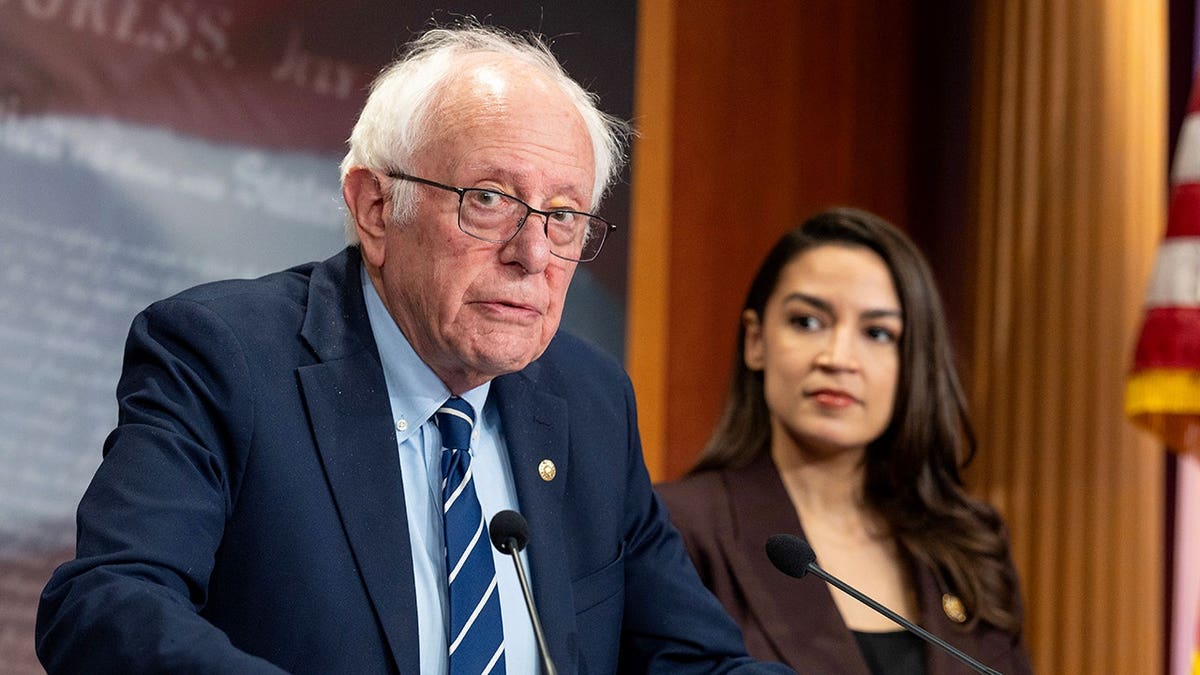
In the past months, prominent Democrats like Senator Bernie Sanders of Vermont have expressed concerns about artificial intelligence (AI) and its potential impact on the job market. Sanders, who collaborates with Senate Democrats, has urged for government measures to address AI’s implications. At a press conference in April, he questioned the future for millions who might lose their jobs without proper planning.
Despite these apprehensions, the U.S. job market has experienced growth. Since AI chatbots were introduced in late 2022, total employment has risen, while unemployment rates have remained historically low, according to the Bureau of Labor Statistics. This situation highlights a contrast between free-market viewpoints and those favoring centralized planning.
“How the hell do you go forward and throw millions of people out on the street without planning what’s going to happen?” – Bernie Sanders
Richard Stern, an economist at the conservative think tank Advancing American Freedom, views this debate as a reflection of differing worldviews. He questions whether being human means simply performing assigned tasks or creating new value. Stern notes that innovation has often displaced jobs but also spurred new ventures and services.
Historically, technological advances have shifted industries. In the 1820s, the Jacquard loom, with its early punch-card system, revolutionized the weaving industry by automating pattern replication.
Since 2022, despite the introduction of AI, non-farm payrolls have grown annually, and unemployment has stayed below 4.5%. Companies have started reevaluating AI’s role, with reports indicating they realize AI isn’t replacing junior workers.
Democrats continue to advocate for government intervention to manage AI’s effects. Sanders asserts that AI, being a transformative technology, could jeopardize many jobs. He references a Stanford study indicating a 16% employment drop among younger workers in roles susceptible to AI, such as programming and customer service.
Other Democrats like Rep. Greg Casar have echoed similar concerns, criticizing the government’s perceived inaction. Casar criticized a failed legislative effort to regulate AI introduced during Trump’s administration, warning that AI would benefit the few at the expense of many.
Former Trump administration deputy chief of staff Taylor Budowich countered these claims. He argues that AI would enhance American worker productivity and employability.
Figures like Rep. Alexandria Ocasio-Cortez and Sen. Elizabeth Warren have also voiced concerns about AI’s workforce impact. Warren emphasized the need to proactively address potential job losses, while Ocasio-Cortez highlighted public anxiety about job displacement.
“If AI could disrupt half the workforce, we can’t wait until people lose their jobs to act.” – Elizabeth Warren
Stern emphasizes that trust is a key issue, whether it’s trusting market forces or governmental intervention. He likens the trust in government to the expectations placed on AI technology, pointing out the human element within government processes.
“Do you trust a million nameless, faceless entrepreneurs and innovators? Or do you trust the government?” – Richard Stern