
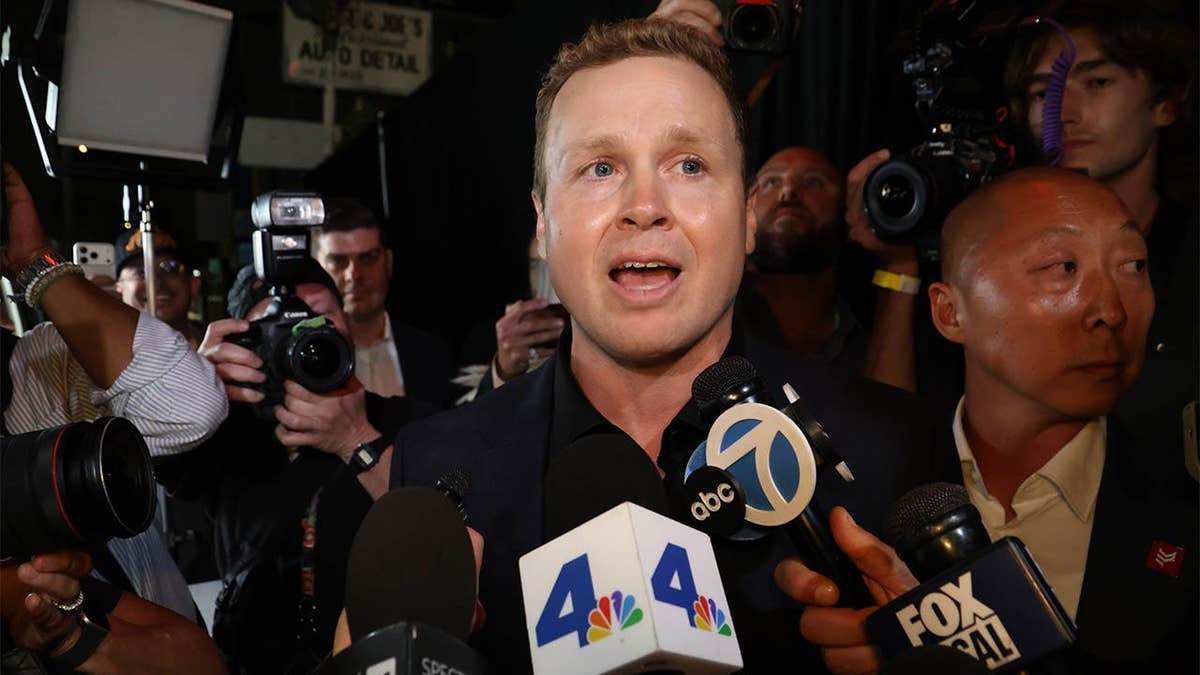
Former reality TV star and California politician Spencer Pratt responded strongly after actor Ryan Reynolds criticized nostalgia for the 1980s. Reynolds faced backlash after calling the decade ‘brutal’ and a ‘mess’ while promoting his Cold-War era movie ‘Mayday.’ His comments raised questions about the contrast between this view and the nostalgia-driven theme of his new film.
Reynolds, in an interview with Variety, remarked on the tendency to romanticize past eras, saying, ‘When you get far enough away from a time period that’s quite distinct, there’s always a lovely feeling associated with it.’ He argued the 80s were a difficult time that people often forget.
Pratt countered, suggesting that the 1980s provided cultural sanity compared to today’s complexities. He emphasized the clear ideals of good versus evil that existed then.
Spencer Pratt criticized Reynolds, stating, ‘In 80s movies, bad guys were villains. Today, the bad guys are the heroes. Hollywood now bends over backwards to redeem wickedness and mental illness.’ He urged careful consideration of cultural paths.
Reynolds is known for playing the Marvel anti-hero Deadpool, who challenges traditional superhero norms. Pratt highlighted his broader concerns about American culture’s empathy for anti-heroes and villains.
Film critic Christian Toto discussed the cultural implications, noting a possible real-world impact from pop culture’s fascination with anti-heroes. He pointed to films and shows like ‘Bullet Train,’ ‘John Wick,’ and ‘Emily the Criminal’ as examples of villainous characters becoming quasi-heroes.
Toto remarked on the shift towards celebrating villains and queried whether this trend negatively affects society.
Pratt’s critique of Reynolds’ comments also acknowledged imperfections in the 1980s. Though the decade faced challenges such as the AIDS crisis and nuclear tensions, it offered enduring pop culture contributions and a simpler social climate.
Theo Wold, a former White House deputy assistant, added a political perspective. He credited the 1980s with greater social cohesion and individual freedoms, arguing Reynolds should have considered these aspects before criticizing the decade. Wold attributed differences in perception to Reynolds’ Canadian upbringing.
Overall, the discussion between Pratt and Reynolds brought attention to varying views on past and present cultural dynamics. It highlighted the complex role of nostalgia and its influence on people’s perceptions of bygone eras.