
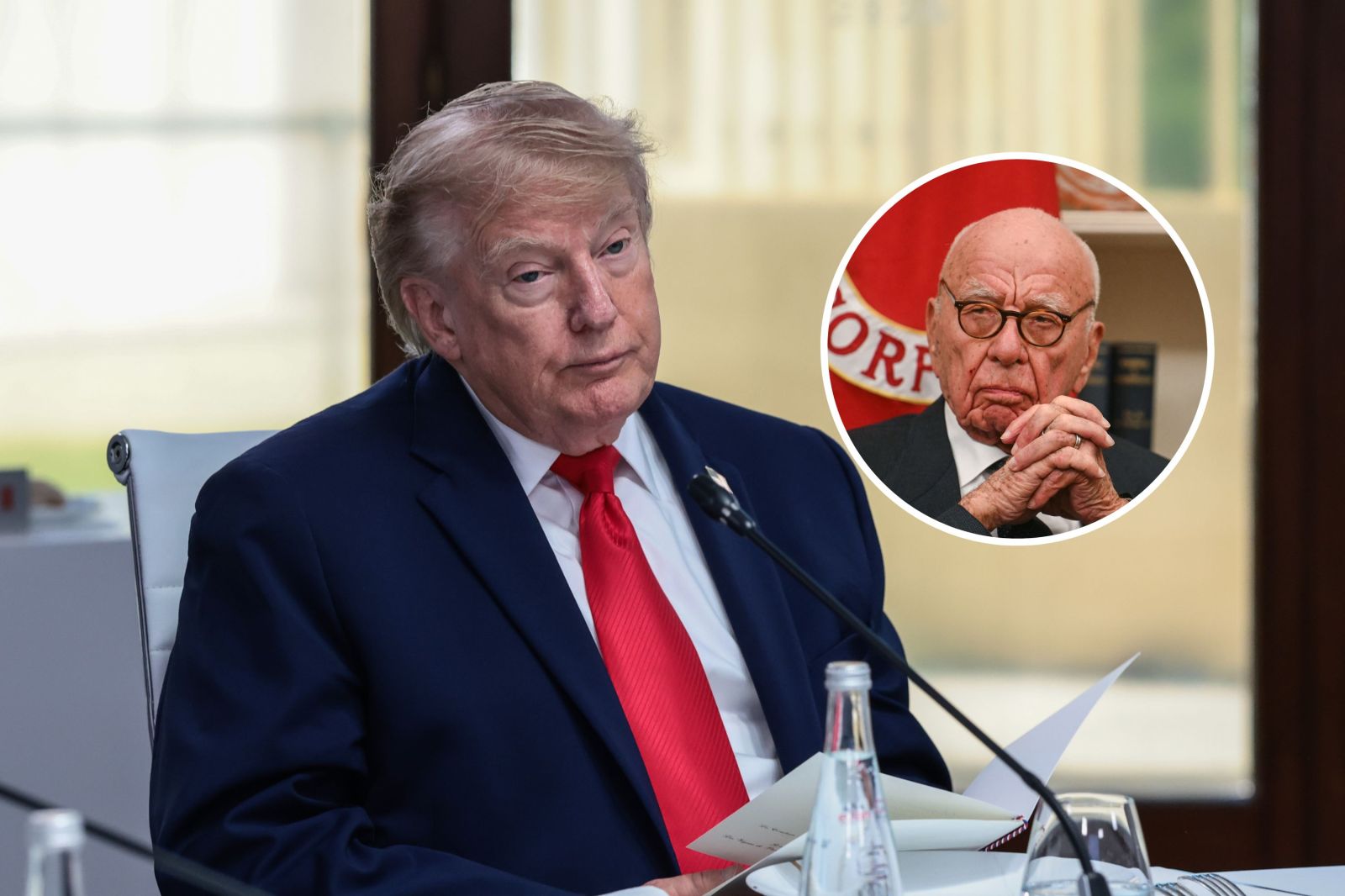
President Donald Trump’s Iran deal is facing critical examination across Washington. Notably, conservative media linked to Rupert Murdoch are questioning the deal’s terms and strategic intentions. Fox News, The Wall Street Journal, and the New York Post are expressing their concerns. These outlets have long influenced conservative politics and often aligned with Trump’s agenda, making their criticism significant.
A report from Bloomberg on March 21 highlighted that Murdoch urged Trump to act against Tehran. As voices from his media outlets initially adopted a hawkish tone, those same voices now express skepticism regarding the deal intended to conclude the conflict. This raises concerns about whether Trump achieved the results he had previously promised.
Fox News Criticism Grows
Fox News is prominently voicing opposition to the deal. Brian Kilmeade, co-host of Fox & Friends, labeled the memorandum of understanding (MOU) as “vague and concerning,” emphasizing unclear language in the agreement. He questioned the enforcement of provisions requiring Iran’s “best efforts.” Kilmeade doubted that the administration’s goal was achieved, noting the deal “doesn’t look like Iran has been brought to its knees,” countering prior claims of U.S. pressure on Tehran.
Other Fox News figures echoed these concerns. Host Trey Gowdy suggested that the deal might leave Iran “a richer country” despite its loss in the war, citing potential benefits from financial provisions and sanctions relief. Retired General Jack Keane told Sean Hannity that while diplomacy was pursued, the regime’s behavior remained unchanged. Keane criticized proposals for Iran’s $300 billion recovery, arguing that such funding would strengthen Iran’s leadership.
“Who cares where the money comes from?…when we recovered Germany and Japan, the Nazis weren’t in charge, the Japanese imperialists weren’t in charge.” —Jack Keane
Olivia Wales, a White House spokeswoman, defended the deal in Newsweek. She highlighted Operation Epic Fury’s success and the deal’s advantages: ending conflict, reopening the Strait of Hormuz, lowering energy prices, and forcing Iran to abandon nuclear ambitions.
Mark Levin Breaks With Trump
Fox News host Mark Levin’s response to the Iran deal drew attention. A staunch Trump supporter in foreign policy, Levin criticized the agreement upon release. He detailed his criticisms in an analysis posted on X, arguing that the deal weakened U.S. leverage by halting military action. Levin deemed it “unthinkable” to waive the force threat before Iran fulfilled terms. He reiterated that Iran often used negotiations for its objectives.
Broadly, Levin said the U.S. curtailed a campaign damaging Iran’s military. He warned about continued conflict unless negotiations significantly strengthened terms.
Wall Street Journal, New York Post Reaction
The Wall Street Journal and New York Post voiced similar concerns. They questioned if economic or diplomatic concessions were premature. Commentary focused on the risk of benefits to Iran from reconstruction funding or sanctions relief, without resolving tougher issues like nuclear limits.
A Wall Street Journal op-ed highlighted the small concession for safe passage of commercial vessels without charge, critiquing it as “desperate” to end conflict. They described the deal as potentially formalizing “extortion into a new, worse status quo.” A New York Post column criticized the agreement as favoring Iran, yielding little to the U.S.
Republican Pushback Expands
Prominent Republicans mirror conservative media skepticism. Former Vice President Mike Pence likened the deal to “appeasement,” noting weak commitments on Iran’s nuclear program and regional proxies support. On Capitol Hill, GOP senators questioned the deal’s concessions and strategic gains.
The alignment of media criticisms with Republican concerns underscores broader party unease.
Trump-Murdoch Relationship History
This instance reflects Trump’s complex relationship with Murdoch’s media outlets. During his 2016 campaign, Murdoch’s outlets were divided on Trump. Though some Fox News figures were critical, others became allies. As he won the presidency, Fox News aligned more with his messaging.
The Wall Street Journal frequently criticized Trump’s trade, deficit, and foreign policy. The New York Post showed varying support. Tensions arose, notably when Fox News called Arizona for Joe Biden in 2020, inciting backlash from Trump supporters. Murdoch’s outlets, influential among conservatives, often align with Trump’s politics.
Blame Shifts and Internal Debate
Within Fox News and conservative commentary, some blame negotiators, rather than Trump, for the deal’s shortcomings. This pattern in pro-Trump media separates policy criticism from presidential criticism. But as details emerge, maintaining that separation could become challenging, especially with figures like Levin addressing the deal’s substance.
Trump’s dynamic with Murdoch’s media empire shows fluidity. While support is frequent, it is not automatic. As negotiations continue, these media reactions will gauge conservative politics’ reception. Trump will need to convince skeptical allies about the deal’s merits.