
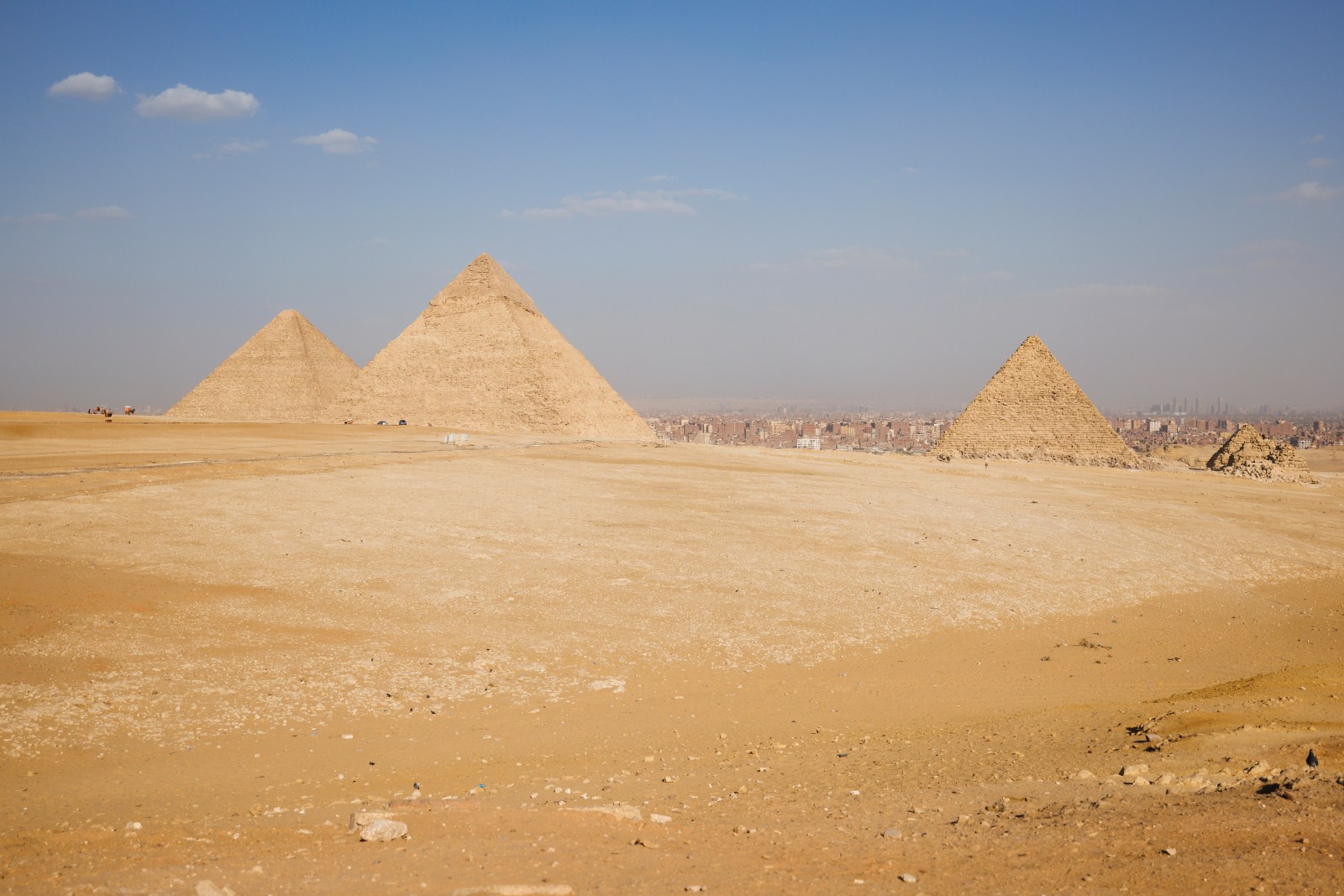
A study that suggested satellite radar could uncover hidden structures within the Great Pyramid of Giza has been retracted due to significant methodological and statistical errors. This study initially offered a scientific basis for wild speculations about potential secrets hidden in one of the most renowned archaeological sites globally.
The Original Study
In 2022, Italian researchers Filippo Biondi and Corrado Malanga published a paper in the journal Remote Sensing. The paper claimed that synthetic aperture radar Doppler tomography could detect slight radar signal changes, suggesting hidden structures within the Great Pyramid of Giza, also known as the Pyramid of Khufu.
The authors argued that this technology could uncover unknown rooms and corridors without entering the pyramid physically. They believed that satellite data could map these features.
The Investigation and Retraction
Remote Sensing began investigating the study after a reader raised concerns. The article was retracted on August 10, following confirmation of methodological flaws and statistical errors.
Biondi and Malanga later claimed to have scanned massive shafts, chambers, and tunnels beneath the nearby Pyramid of Khafre, prompting speculation about an ‘underground city.’ This drew significant public and media interest, including attention from YouTuber MrBeast.
Biondi and Malanga challenged the retraction, according to the journal’s notice. Retraction Watch reported the researchers chose not to respond to requests for comment, while Newsweek sought the authors’ input.
How Pyramid Claims Gained Attention
The study claimed to identify 20 hidden features within the Great Pyramid, including corridors and the previously known ‘Big Void.’ Researchers suggested their radar technique detected pyramid movements caused by environmental factors, producing images of non-visible structures.
In March 2025, researchers expanded their method to the Pyramid of Khafre, announcing the discovery of five structures and eight shafts at a news conference. The presentation linked these findings to ancient Egyptian underworld myths, further fueling online speculation.
Controversy and Criticism
The study faced critique for lacking peer-reviewed verification and fieldwork confirmation. Reports claimed tiny surface movements detected by satellite may not reliably indicate structures deep underground.
Noteworthy critics included Zahi Hawass, a leading Egyptologist, who pointed out the lack of scientific evidence and authorization from Egypt’s Supreme Council of Antiquities.
Expert Lawrence Conyers disputed the researchers’ methodology. He suggested that radar could only measure visible elements and that the hypothesized vibrations were likely too faint for satellite detection. The researchers acknowledged that direct field confirmation was necessary to validate their findings.
Despite these critiques, no excavation corroborated the research’s sharply detailed reconstructions.
The Journal’s Conclusion
Nearly four years post-publication, Remote Sensing found the study unreliable due to methodological flaws and statistical errors. While the journal did not specify the errors, it noted no fabrication or misconduct. The retraction affects the 2022 article concerning the Pyramid of Khufu, excluding subsequent claims about Khafre.
Despite the retraction, Biondi continued sharing project information. He posted about alleged pyramid structures on August 25 and mentioned plans for noninvasive fieldwork submitted to Egypt’s Ministry of Tourism and Antiquities for approval.