
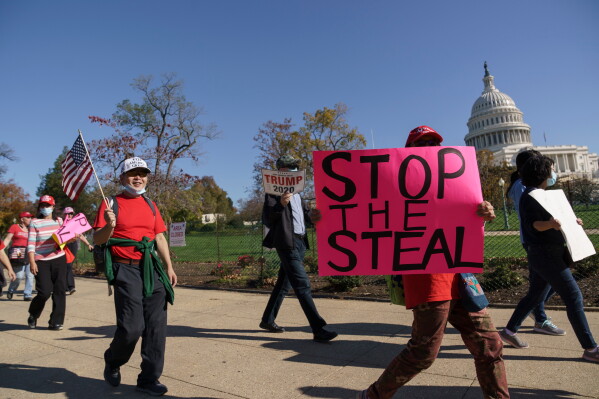
In 2020, after the presidential election loss of Donald Trump to Joe Biden, various officials appointed by Trump at the Department of Justice, cybersecurity agencies, and intelligence departments asserted that the election was fair and legitimate. They found no significant fraud or foreign interference.
During his tenure, Trump has attempted to change the accepted narrative. He is expected to do so again during a planned national address. Loyalists who support his unfounded claims of a stolen election now have key positions within his administration, reflecting the importance Trump places on allegiance to this narrative.
A demonstration of this loyalty is clear in the behavior of nominees, such as Jay Clayton, proposed as the next national intelligence director. At his confirmation hearing, Clayton managed to avoid directly stating who won the 2020 election, merely acknowledging Biden’s victory. Such responses indicate how allegiance to these false claims has become essential.
Trump’s assertions about election fraud have led to legal troubles for his allies. On the eve of his speech, expectations of further unsupported claims have election experts concerned. Victoria Bassetti from States United highlighted that extensive reviews have shown the absence of foreign interference and the security of voting systems.
Reviews of the 2020 election have been numerous. Trump and his allies suffered losses in court cases challenging results. Various audits, recounts, and investigations, including Republican-led ones, found no major issues with the voting process. Former Attorney General William Barr and Chris Krebs, who led the cyber defense agency, confirmed no significant fraud, earning Trump’s disfavor.
Despite intelligence reports and Trump’s own signed federal documents confirming the lack of foreign interference, Trump has poured taxpayer resources into revisiting the 2020 election. High-profile counties like Fulton in Georgia and Maricopa in Arizona have been targets for federal agents due to prior conspiracy theories.
Conspiracy theories have resulted in significant libel settlements for media outlets like Fox News and voting machine companies. A notable case involved Mike Lindell, endorsed by Trump, who defamed a voting machine company employee. Despite substantial public claims, these theories fail to hold up in court due to lack of evidence.
David Becker from the Center for Election Integrity & Research emphasizes that allegations such as Trump’s should meet the rigorous standards of proof required in courts. The ongoing pattern of conspiracy theories since 2020 highlights the need for careful scrutiny of new claims.