
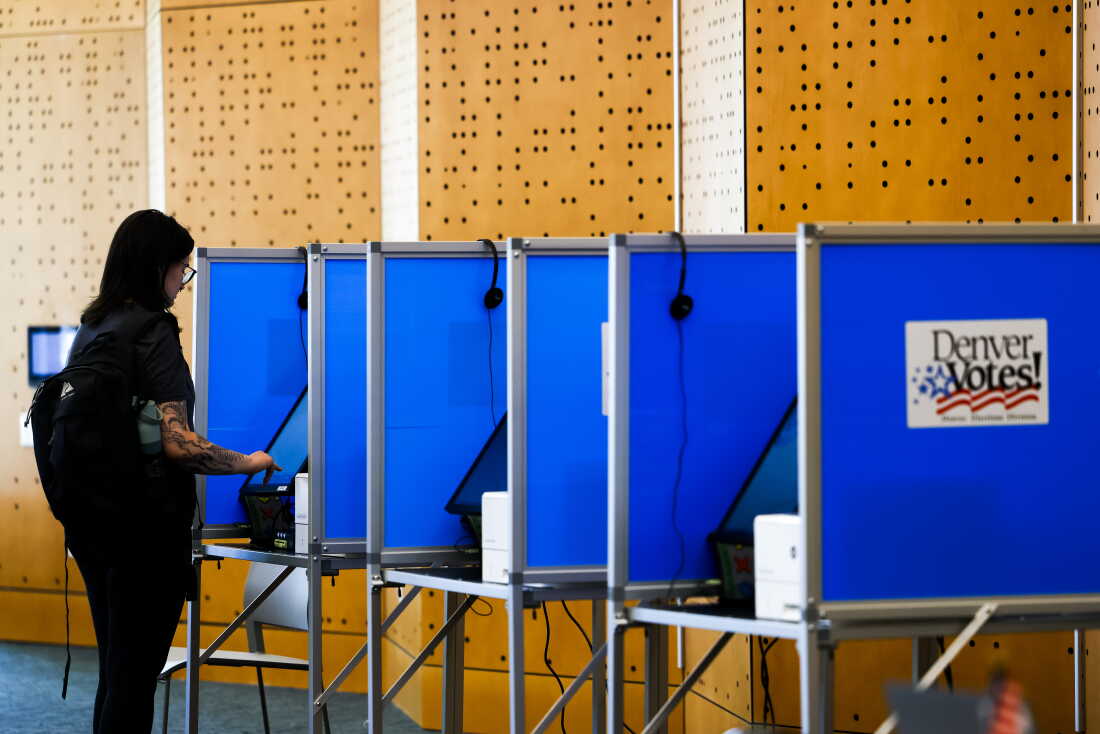
In Denver, during Colorado’s primary election, a voter cast her ballot at the Central Library, highlighting growing concerns about federal presence at polling stations. Paul López, Denver’s clerk and recorder, notes that this worry is new for many voters this year.
López has observed that voters at every meeting ask, “What should we do if federal agents show up at the polls?” Federal law prohibits such interference. Nonetheless, López and other officials have been preparing to counter any such possibility, especially after signals from the Trump administration about deploying federal officers at polling places.
López is part of a lawsuit filed last week by a coalition seeking to block federal officers from polling locations. Another coalition filed a similar lawsuit with NPR being the first to report it, which was initiated by civil rights groups and unions. President Trump had previously expressed willingness to use federal agents to secure “honest” elections.
This month, DHS Secretary Markwayne Mullin suggested that Immigration and Customs Enforcement (ICE) agents might serve warrants at voting venues. Tom Homan, a border czar, assured Fox News that agents would not raid polling places, but earlier remarks raised concerns about federal presence at such sites.
A statement from DHS reassured that ICE has no operations planned targeting voting locations. However, it indicated that should there be a public safety threat, targeted enforcement actions could occur. DHS emphasized that law-abiding individuals should not fear such actions. FBI Director Kash Patel, during a congressional hearing, declined to exclude the possibility of FBI agents at polls but confirmed laws would be followed.
In various states, reports during primary elections mentioned federal law enforcement activities near voting sites. As elections approach, DHS has increased resources to identify non-U.S. citizens on voter rolls, despite audits finding this rare.
Surprisingly, a University of California San Diego poll revealed that about 40% of voters expect ICE presence at their polling places. The survey highlighted that voters of color were more prone to fearing questioning by immigration officers, raising concerns among election officials about potential suppressed turnout.
López reassured voters that any federal presence intended to intimidate voters would be met with arrest, emphasizing preparedness to protect the voting process. The lawsuit he joined argues that federal officers’ presence at polling sites breaches a Civil War era law.
Brian Netter, legal director of Democracy Forward, argued the Trump administration’s statements deviate alarmingly from established law. Filed in Washington, D.C., the lawsuit states such federal presence would infringe on the 1965 Voting Rights Act by intimidating voters.
The lawsuit claims that the administration’s search for noncitizen voters uses flawed data, potentially leading to the unlawful detention of citizens, particularly from communities of color. A whistleblower report suggests DHS’s Unlawful Voter Initiative may be compromising citizen rights through hasty, unreliable methods.
DHS, while denying racial profiling allegations, has continued to charge individuals with suspected illegal voting. The lawsuit contends that the administration’s rhetoric, alongside heightened immigration enforcement, creates an intimidating atmosphere, especially for voters of color.
Bethany Li, of the Asian American Legal Defense and Education Fund, views current issues as reminiscent of civil rights-era voter intimidation, which the Voting Rights Act aimed to prevent. The lawsuit’s backers encourage voters to remain undeterred, emphasize understanding rights, voting plans, and amplifying their voices. Héctor Sánchez Barba of Mi Familia en Acción stresses the importance of knowing one’s voting rights and voting.