
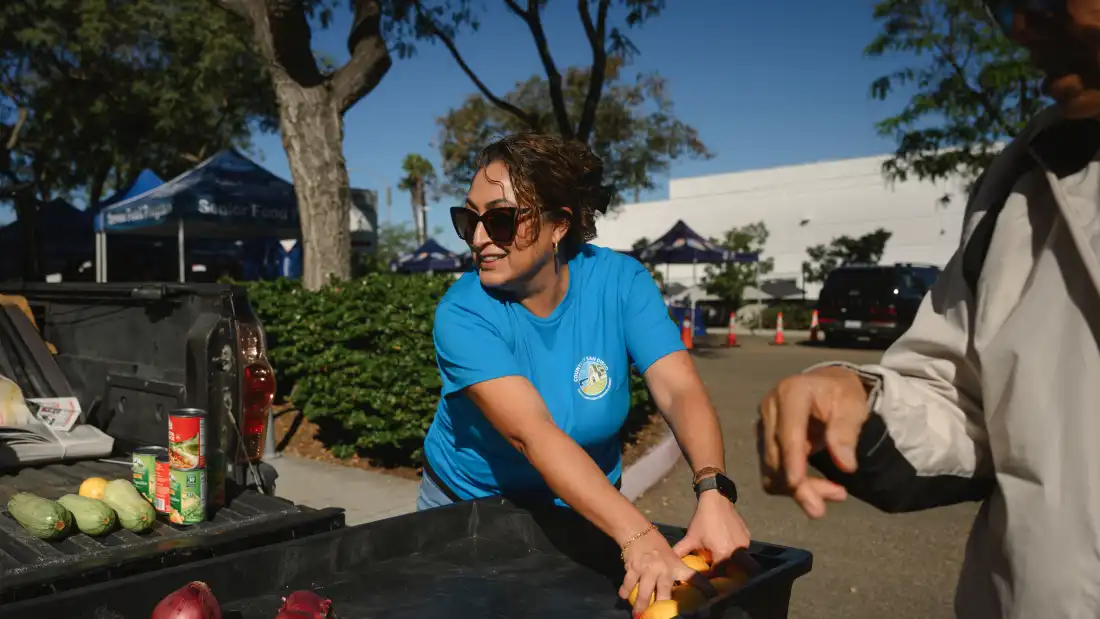
Rosa Rodarte, a human services specialist for San Diego County, dedicated her Saturday to helping residents load groceries into their vehicles at a local food distribution event in Kearny Mesa. Although not part of her official duties, Rodarte assists with food distribution to ensure that residents receive support without feeling judged. Sacks of red onions and oranges lined up, ready for distribution, highlighted the event’s focus on addressing local food insecurity.
The Supplemental Nutrition Assistance Program (SNAP) is experiencing a significant decline in participation across the nation. Following the passage of the One Big Beautiful Bill, five million people lost federal food benefits. This legislation reduced SNAP funding, tightened eligibility, and excluded most asylum seekers and refugees. These changes have also increased the burden on government workers, demanding more documentation processing amid growing financial pressures.
In San Diego County, the SNAP program saw a reduction of 36,000 participants since the legislation’s enactment. To combat this, the county collaborated with local food banks to distribute free groceries at social service offices. Though temporary, these initiatives reflect the county’s commitment to aiding hungry residents.
Nina Olivas, who oversees San Diego’s Access Customer Service Call Center, noted the emotional challenges of supporting individuals facing food insecurity. “The emotional toll comes when you can’t immediately provide the help people need,” she stated. Her office aids residents in accessing crucial programs like SNAP and Medicaid.
Recent policy changes added work requirements for various groups, leading to more paperwork for social service workers. Despite these challenges, many recipients are already employed, but must now document their working hours.
Between January and October, San Diego processed over 830,000 more documents than the previous year. This increase primarily involved mailed documents, which comprise about one-third of all incoming paperwork.
“You’re helping someone put food on the table. You’re helping someone pay rent. You’re helping someone buy diapers.”
San Diego County took proactive measures to mitigate SNAP funding reductions, allocating $15.8 million and hiring 122 new social service workers to maintain service levels. Other states have also responded to federal changes. Illinois provided a one-time $400 benefit for those removed from SNAP, while Phoenix offered $600 utility bill payments for affected residents. Maine launched a state-funded food assistance program for certain noncitizens.
In contrast, Texas experienced a substantial backlog, with pending SNAP applications rising from 3,700 in January to 175,000 by September. The state’s SNAP rolls fell by over 700,000 since July 2025. Similarly, Arizona’s SNAP enrollment halved within the same period, the steepest decline nationwide. Louisiana saw a SNAP enrollment drop of 154,000, primarily due to procedural issues.
The food distribution events outside San Diego’s social service offices began following a restless night for Monica Montgomery Steppe, vice chair of the County Board of Supervisors. Troubled by the projected loss of benefits for many residents, she initiated these events with the help of community partners.
Since August, the county has distributed nearly 70,000 pounds of food to over 5,200 people with assistance from Feeding San Diego and the San Diego Food Bank. During one event, a line formed 90 minutes before its start, with attendees seeking not only food but also answers to questions about federal changes.
Ambar Santiago, one participant, required assistance after her benefits were delayed. After collecting groceries, she worked with a social service employee to address her case. Back home, Santiago used the distributed ingredients to prepare a meal, expressing gratitude for the support she received in San Diego.