
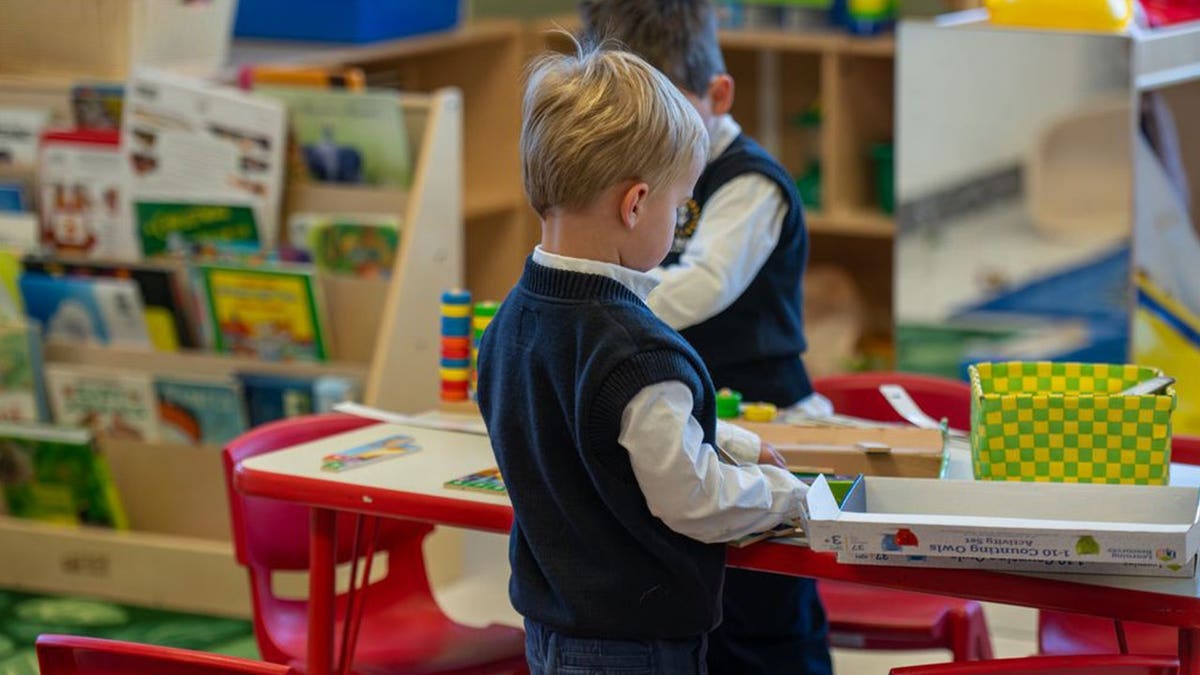
A father in Colorado finances a Catholic preschool out of pocket, while taxes cover preschool funding for others. One child in his family has spina bifida, prompting them to stay in Colorado due to Medicaid providing better support. An additional $6,000 would significantly assist with her care.
A mother working at a lumber company and married to a house painter, experiencing slower work in winter, has six children and a seventh arriving soon. She previously believed Catholic education was exclusive to affluent families.
Another mother launched a florist business to afford tuition. Three of her children are enrolled in a Catholic school in Denver, but she couldn’t fund preschool for her youngest at the same school, who now attends a Lutheran preschool through the state program. She feels punished for selecting a faith-based education.
A fourth parent accepted a lower-paying role at the parish school for tuition discounts, witnessing families leave due to pre-K costs.
An amicus brief was filed with the Supreme Court, supporting Catholic families in St. Mary Catholic Parish v. Roy, set for hearing on Nov. 3. The Sheleys, with seven children—five attending St. Mary’s—have expended thousands on a faith-based preschool education without state funding assistance.
Colorado’s preschool initiative aimed to help families like them but falls short due to a clause requiring participating schools to promise “equal opportunity,” covering sexual orientation and gender identity. Catholic schools can’t comply without compromising church teachings. Colorado regulations effectively exclude Catholic schools without explicitly naming them.
Historically, this echoes the Blaine amendments. In 1875, anti-Catholic sentiment led to an amendment blocking public funds for sectarian schools, targeting Catholic immigrants. Although the measure passed the House, the Senate narrowly rejected it. Many states adopted similar provisions, covertly targeting Catholic schools.
Colorado’s program provides $6,000 annual benefits for eligible 4-year-olds at chosen schools, conditional upon agreement to the “equal opportunity” clause, which Catholic schools reject.
Recent Supreme Court rulings have started reversing Blaine amendment effects. Decisions like Trinity Lutheran (2017), Espinoza (2020), and Carson (2022) prohibited states from excluding faith-based institutions from public benefits. Colorado’s current mandate mirrors past discriminatory practices.
Catholic schools face restrictions that others do not. While allowances exist for schools serving specific communities, like those with disabilities or low-income students, Catholic preschools lack similar flexibility, despite lawmakers anticipating their inclusion.
Exclusion impacts are notable. Approximately 1,500 children across 30 schools are affected, with Catholic preschool enrollment dropping by 20%, leading to closures.
The Supreme Court case presents a narrow request: allowing room in the program for Catholic faculties. Past cases like Masterpiece Cakeshop (2018) and 303 Creative (2023) criticized Colorado’s intolerance towards religious perspectives. The current situation demands reaffirmation that constitutional guarantees withstand ideological pressures, ensuring access for Catholic-focused institutions.
The Blaine amendments marked a blemish in U.S. law, reiterating the need for inclusive policies for faith-based schools.