
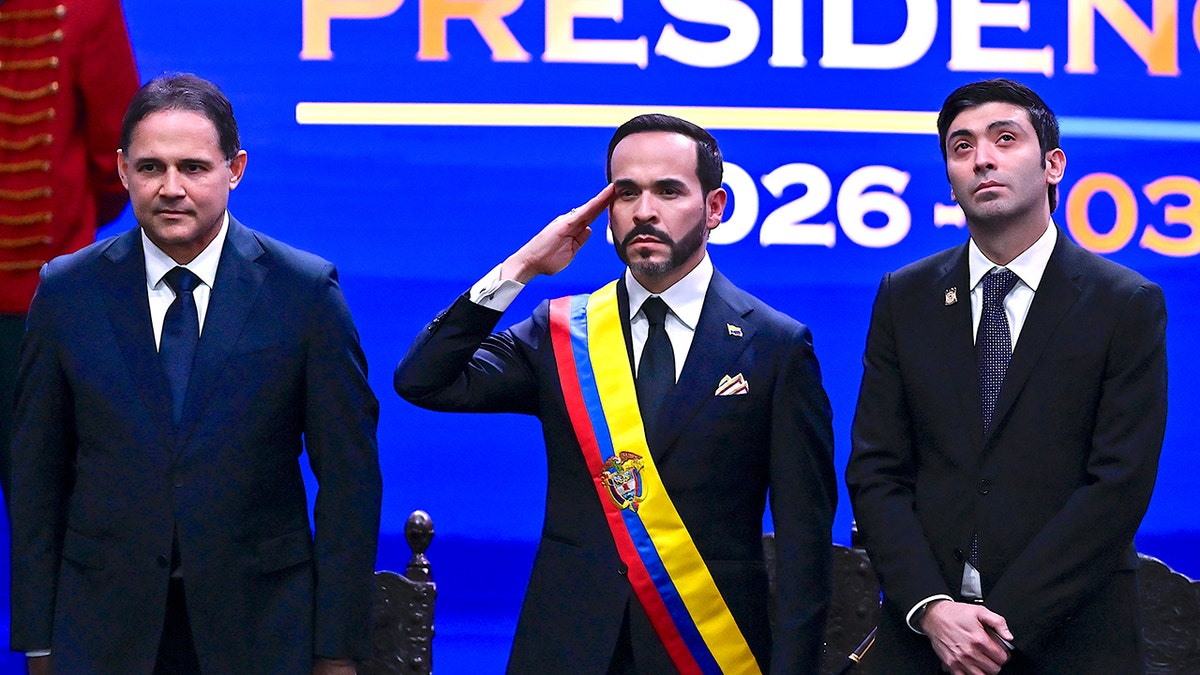
Colombia has entered a new political chapter as President Abelardo de la Espriella took office. Known as ‘El Tigre,’ he promises to reverse former President Gustavo Petro’s policies, focusing on stronger security, economic changes, and better relations with the United States.
His inauguration represents a significant shift in Latin American politics. Colombia now turns from Gustavo Petro’s socialist strategies, marked by increased coca growth and tense U.S. relations, to de la Espriella’s approach. The new president faces the task of transforming campaign promises into actionable governance.
“I have come to close a long chapter of national resignation and, together with the people, embark on the most profound transformation of our destiny,”
de la Espriella stated during his speech at the Pichincha Battalion military base in Cali. He emphasized the restoration of order, authority, and freedom.
At his inauguration were several conservative leaders from the region, including Argentina’s Javier Milei, Ecuador’s Daniel Noboa, and Chile’s José Antonio Kast. The U.S. delegation included Acting Attorney General Todd Blanche, with Spain’s King Felipe VI and FIFA President Gianni Infantino also present.
President de la Espriella’s first act was joining the Shield of the Americas, established by President Trump. This aligns with his commitment to enhancing Colombia’s strategic ties with the U.S., bolstering relations with Israel, and maintaining a firm stance on Venezuela, Cuba, and Nicaragua.
However, fulfilling these commitments depends on limited resources. Camilo Guzmán, executive director of Libertank, points out that Colombia’s fiscal situation is a major hurdle. The country’s deficit is around 6.5–6.7% of GDP, with a financing gap nearing $34 billion. Immediate financial adjustments are essential before implementing significant policies.
The International Monetary Fund projects Colombia’s economy will grow by only 2.3% this year with persistent inflation, restricting financial options for new initiatives without spending cuts or new revenue streams.
Security challenges are similarly pressing. Violence remains high, driven by expanding criminal and guerrilla group activities. The first half of 2026 saw record homicide rates, and these threats require rebuilding security over time. Initial actions are expected within the first 100 days, though lasting solutions will take longer.
De la Espriella’s legislative success depends on a fragmented Congress. Despite winning the presidency, his party holds only five Senate seats, making collaboration with other parties crucial for passing any major reforms.
Analysts warn against expecting immediate results. The true measure of initial success will be the establishment of credibility, a capable team, and a coherent strategy. According to Guzmán, the new president’s first 100 days should focus on signaling intentions through appointments, decrees, spending cuts, and initial legislative efforts.
Key areas for early attention include deciding on former negotiations with the ELN, policies on coca fumigation, strengthening intelligence and security ties with Washington, and pursuing a credible fiscal plan. These moves will demonstrate whether de la Espriella can deliver on reversing Petro’s era or need to adjust his agenda due to Colombia’s fiscal and political realities.