
Overview of Bed Alarms
Bed alarms provide peace of mind for caregivers who cannot always physically monitor patients. These devices vary in form and features, offering assurance that the patient remains safe. Among the numerous options available, the Smart Caregiver Wireless Bed Alarm System stands out.
Types of Bed Alarms
Understanding the types of bed alarms helps determine which works best for your situation. They include:
- Clip Alarms: These attach to the patient’s clothing, triggering if disconnected. They are affordable and basic but depend on patient compliance.
- Motion Alarms: These detect movement in specified areas, like bed edges. They are more expensive and activate if the sensor detects anything passing by.
- Pad Alarms: Popular for ease of use, a sensor mat under the patient triggers an alert when pressure is removed. However, they might be uncomfortable.
Power Source Considerations
Most bed alarms use batteries, thus eliminating cords that pose tripping hazards and continue operating during power outages.
Features to Look for in a Quality Bed Alarm
- Sensitivity: Choose an alarm with appropriate sensitivity for the patient’s movements.
- Alarm Delay: Ideal for mobile patients, delays trigger alarms after a few seconds, reducing false alerts.
- Wireless Functionality: Prefer alarms with no cords to prevent tripping, and ensure the range suits your needs.
- Volume and Tone Options: Adjustability assures patient comfort while keeping caregivers informed.
- Call Functionality: Some alarms feature call buttons to alert need or facilitate communication.
- Waterproofing: Essential for patients prone to spills or incontinence, especially with pad alarms.
- Status Lights: Useful lights indicate low battery or triggered alarms, ensuring readiness.
Cost Expectations
Bed alarms range from $20 to over $200. Affordable options generally cost up to $50, while those with more features range between $50-$100. Premium models start at $150.
Durability and Safety Considerations
The longevity of a bed alarm varies, with pad alarms lasting about a year. For patients with pacemakers, ensure the chosen alarm avoids magnetic components.
Top Bed Alarm Recommendations
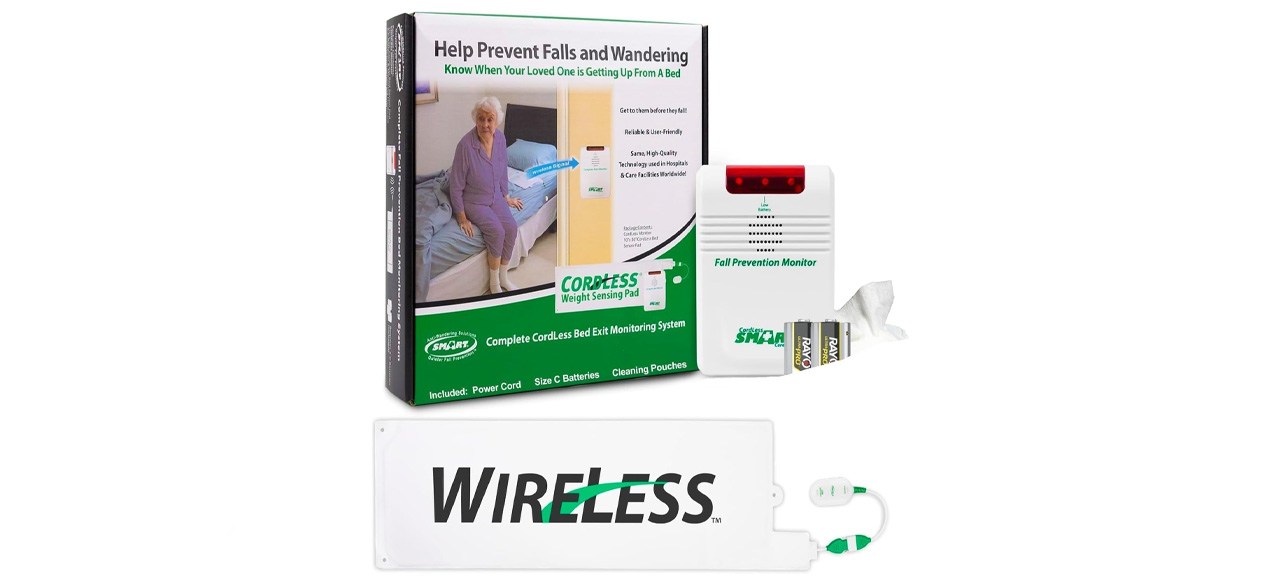
Smart Caregiver Wireless Bed Alarm System
This system keeps alarms out of the patient’s room, minimizing disturbance. The weight-sensitive pad, 10 by 30 inches, has a sealed battery for protection against spills and incontinence. It boasts a one-year life span.
Considerations include setup difficulties reported by some users and possibly receiving pre-activated pads, reducing longevity.
Patterson Medical Sammons Preston Magnet Bed Alarm
This affordable clip-based alarm offers simplicity. Its small size and adjustable cord up to 30 inches suit budget users. The red light indicator shows trigger and battery status.
However, some users find the alarm too quiet or challenging to change the battery.
Secure Bed Exit Alarm Set
A solid mid-range option with beneficial features, this alarm includes a short delay to prevent false alarms and deactivates upon patient return. The pad, 12 by 30 inches, has a fluid-proof, latex-free cover.
Some users report the alarm’s volume as uncomfortably loud, and it cannot be disabled without removing the battery.
Prices may vary, reflecting the publication date. For current offers, visit BestReviews for daily deals and sign up for the newsletter for shopping insights and sales alerts. BestReviews dedicates extensive hours to researching and testing products, offering top picks based on consumer needs. Partner revenues may result from purchases through links.