
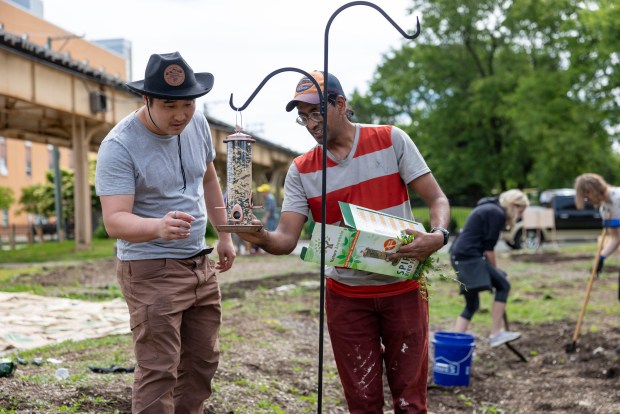
David Bippes, inspired by his service project roots, recently showcased a small piece of land in Englewood to his parents. As an Eagle Scout, Bippes has long held a passion for community gardens that began in Missouri. Now, he spearheads Litter Caterpillars, a Chicago volunteer cleanup group. Bippes and fellow leaders acquired a vacant city lot with plans to create a neighborhood green space.
The group transformed the 6,000-square-foot area into a park. It features mulch, raised garden beds for tomatoes, and native Illinois plants. They celebrated its opening on April 12. Unfortunately, a week later, Bippes and his parents discovered piles of debris dumped on the property, obstructing pathways. This incident, the origins of which remain unknown, complicates the group’s objective of building community trust and investment.
Illegal dumping continues to challenge their efforts. The organizers, not residents of Englewood, face struggles in integrating their privately owned park into the local community. Bippes and his group had purchased the lots at 6316 and 6318 S. Sangamon St. for $10,000 at a citywide auction. They invested an additional $10,000 on enhancements.
Caterpillar Park aligns with their mission of transforming urban spaces, inspired by the concept of self-renewal. Over five years, Litter Caterpillars organized cleanups with over 100 volunteers across South and West Chicago. For Bippes, investing in land offered a chance to create something lasting. “I aim to make Chicago better,” he remarked, especially in underfunded areas like Englewood.
Kevin Tao, from a family of Chinese immigrants, is also an organizer. He recalls buying his childhood home through an auction. Tao sought to leverage vacant land to provide healing spaces for the community.
“Changing environments can change mindsets,”
he observed. Despite their ambitions, neither Bippes nor Tao have prior experience building parks, which they admit has been a learning experience.
Communication with nearby residents has proven challenging. Bippes, residing in Edgewater, noted the hour-long journey to the site. Urban farmers and residents voiced concerns over the sustainability of a park led by owners detached from the community. These owners visit the site biweekly, balancing their involvement with other neighborhood initiatives.
Cedillo’s Fresh Produce co-founder Dulce Morales underlines the importance of proximity and regular maintenance. She lives close to her community farm, emphasizing her presence as vital. Tao once volunteered with Cedillo’s and has sought guidance from Morales.
The ambition is for Caterpillar Park to serve as a community garden, contingent on local engagement. Bippes expressed reservations due to the group’s distance from the park.
The dumping disrupted the initial perception of the project. Some assumed the debris was associated with Bippes’ group. Morales highlighted the risks of misuse or abandonment. She cited community support as essential, drawing from Cedillo’s experience with reduced incidents over time.
Bippes is eager to resolve the dumping issue. He filed multiple 311 requests and contacted city departments for debris removal. Despite delays, social media attention led to partial cleanup by the city’s Department of Streets and Sanitation.
The city is striving to deter fly dumping through increased fines. Local authorities did not comment on the Englewood park issue. There is community support contingent on the park’s service to local residents. Former resident Roosevelt Gordon encourages youth-centered projects, yet remains wary of external changes.
Despite setbacks, Bippes and his co-founders remain dedicated. Bippes hopes to engage with those who left the debris to understand their perspective and explore common ground for the park’s mission.