
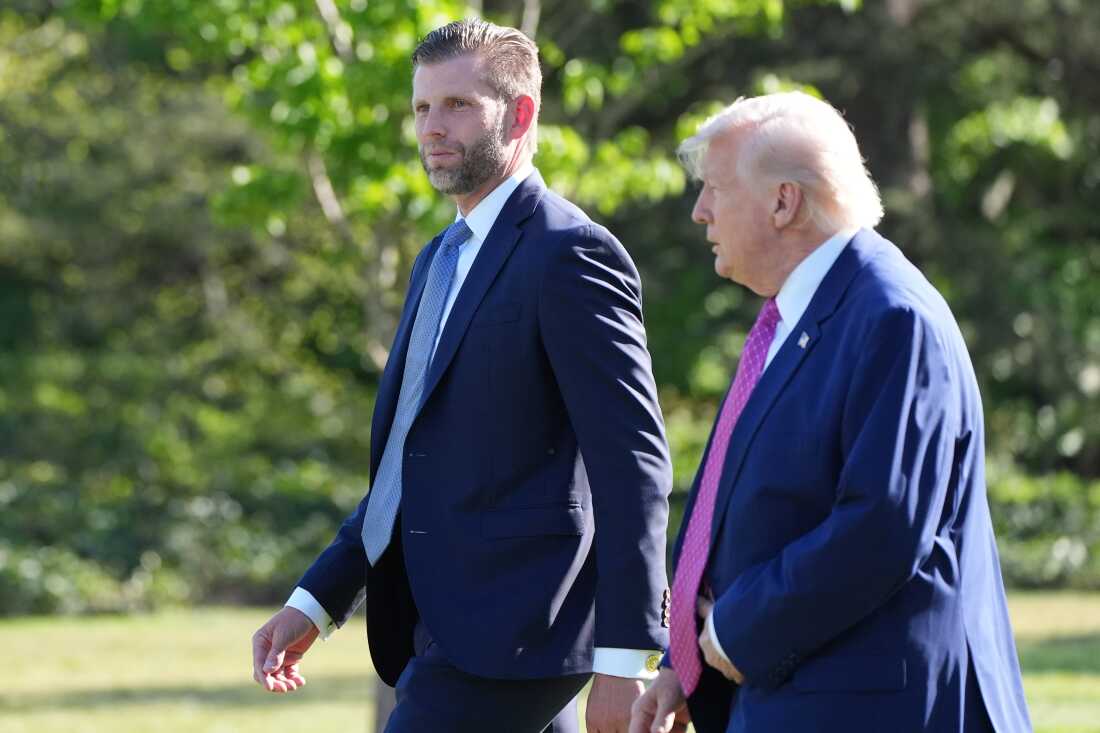
President Donald Trump, accompanied by Eric Trump, departed the White House on Marine One in Washington on April 10, 2026. Meanwhile, Capital One is contesting a lawsuit from the Trump Organization regarding the closure of numerous bank accounts in 2021. The bank’s recent filings in a Florida federal court argue that the closure resulted from a thorough anti-money-laundering review, rather than retaliation for the January 6 Capitol riot, as claimed by the Trump family businesses.
Capital One’s legal team has moved to dismiss the case, asserting that evidence shows the accounts were closed for anti-money-laundering reasons. The review was conducted by the bank’s financial-crimes team, which includes personnel with extensive law enforcement experience.
According to the filings, the Trump Organization and related entities were not offered a chance to address alleged money-laundering or compliance issues before the accounts were shut down. It remains uncertain whether subsequent banks raised similar concerns or what actions the organization took in response to Capital One’s claims. The Trump Organization has not commented.
A Yearslong Dispute Over Numerous Accounts
The lawsuit involves approximately 385 accounts connected to the Trump Organization, Eric Trump, and others, including businesses such as a winery, bottled-water company, and a golf course developer. These entities banked with Capital One for over a decade before the accounts were closed in mid-2021.
In a revised complaint from July, the Trump-affiliated companies assert the closures were politically motivated, unrelated to financial corruption or money-laundering. They contend Capital One decided to distance itself from Donald Trump after the Capitol riot, with the anti-money-laundering rationale fabricated subsequently.
Capital One denies these accusations, claiming the Trump companies’ theory relies on selective quotations without full context. The bank’s legal team maintains that the complaints do not demonstrate an invented cover story for the closures.
At the time, Capital One kept its reasoning confidential, allowing the Trump companies ample time, including extensions, to transfer their funds elsewhere, which they accomplished.
Contractual Rights and Court Ruling
Capital One reiterates in its court filing that it had the contractual right to close any account “at any time, for any or no reason and without notice.” This language is undisputed by the Trump companies.
Judge Roy Altman previously dismissed the lawsuit’s earlier version on similar grounds, highlighting that a bank’s choice to close an account under such a clause cannot be contested in court. Capital One now requests the court to permanently dismiss the latest complaint.
The bank challenges a new claim from the plaintiffs, alleging Capital One defrauded them by withholding its reasoning. The bank’s attorneys argue they had no obligation to disclose their reasoning, citing federal banking-secrecy laws that would prevent sharing anti-money-laundering findings.
Secrecy Laws and Confidentiality
Secrecy laws are central to a separate dispute over public records access. Capital One filed a motion requesting the court seal parts of an exhibit featuring information protected under the Bank Secrecy Act, along with employee names, customer account numbers, and unrelated compensation data.
While the Trump companies do not dispute account number sealing, they contest other redactions Capital One seeks to maintain.
Parallel lawsuits involving JPMorgan Chase reflect similar claims regarding accounts closed during the same timeframe. President Trump directed regulators last year to address what he and conservatives consider politically motivated ‘debanking.’
Capital One had previous legal confrontations with Trump; in 2019, he sued the bank and Deutsche Bank to prevent them from sharing his financial records with a congressional inquiry.