
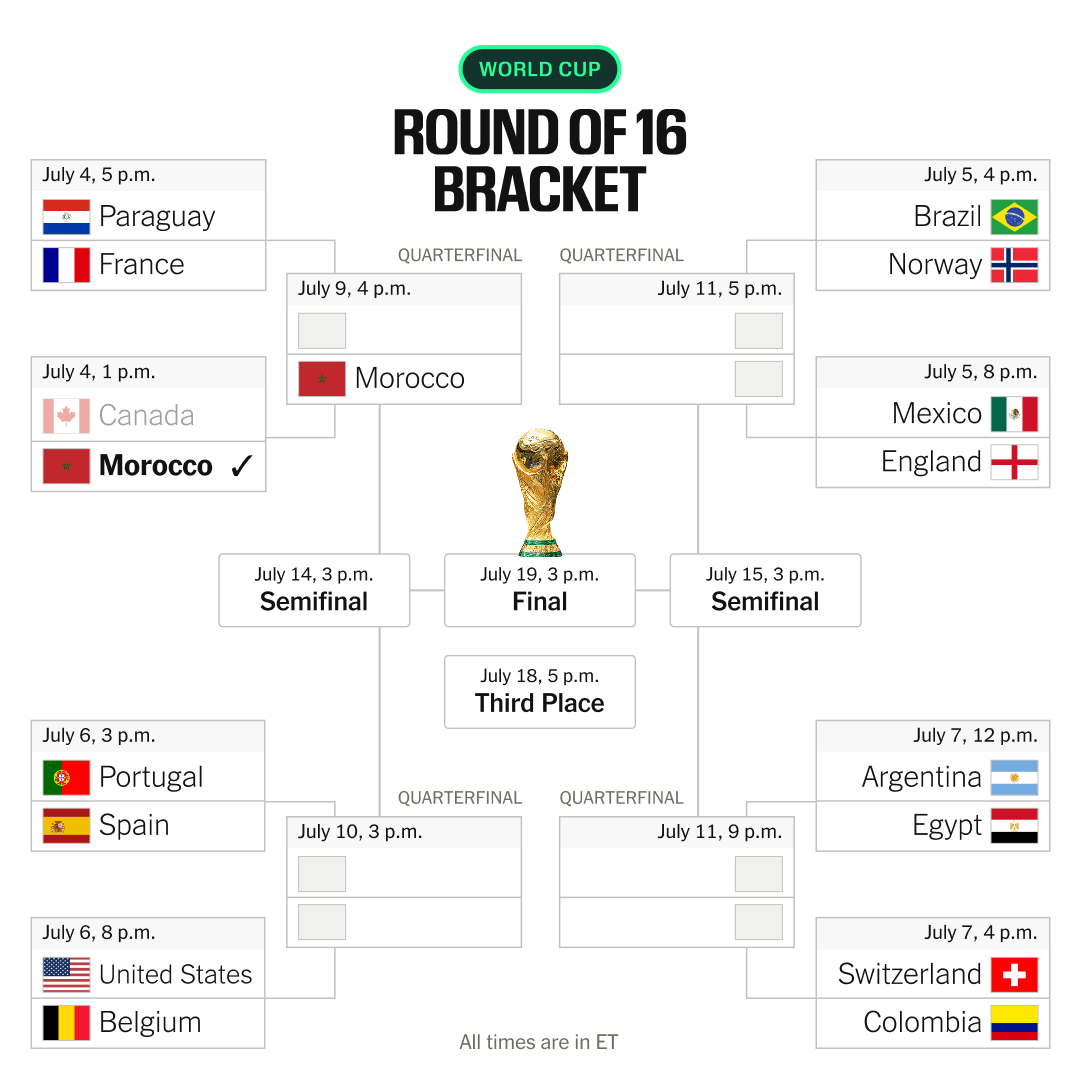
Canada’s Exit from the World Cup
Canada’s World Cup aspirations concluded on Saturday with a 3-0 loss to Morocco, marking their departure in the round of 16. In its first appearance as a World Cup co-host, Canada had previously never secured a point in the tournament until this edition.
Canada managed to draw against Bosnia and Herzegovina in its opening match, clinching this milestone. Further victories against Qatar and South Africa propelled Canada to the round of 16, only to face Morocco.
Morocco, a formidable team that reached the semi-finals in 2022, proved challenging for Jesse Marsch’s squad. The team is poised to play in the quarter-finals on July 9.
Canada’s Performance Against Morocco
During the first half, Canada displayed dominance but failed to create decisive opportunities. An injury to Morocco’s Ismael Saibari in the 22nd minute momentarily disrupted their gameplay.
Morocco rebounded in the second half. A free kick in the 50th minute enabled Azzedine Ounahi to score from the edge of the box, putting Morocco ahead. Ounahi increased the lead in the 82nd minute, and Soufiane Rahimi finalized the score in added time.
Canada’s dynamic tactics kept Morocco on edge in the first half. Despite the result, Canada’s spirited style offers hope for future World Cups.
Morocco’s Strong Performance
Morocco, with a stronger and deeper squad since their 2022 semi-finals journey, continues to impress with a 3-0 win over Canada. The team’s success follows a commendable AFCON campaign and their ongoing development of youth squads.
Morocco may face France next, a formidable opponent in the quarter-finals. Despite Morocco’s strategic talents, defeating France remains a daunting task.
Criticism of Alphonso Davies’ Absence
Questions remain regarding Alphonso Davies’ limited participation in the World Cup. Entering the tournament with a hamstring injury, Davies appeared as a substitute in only one of five games.
With Davies being a pivotal figure in Canadian soccer, his absence from significant matches prompts inquiries about his fitness and selection. Canada misses his impactful pace, particularly after conceding the first goal to Morocco.
Physicality in the Match
Canada’s gameplay under Jesse Marsch is characterized by intensity and physicality. This was evident as Canada committed 15 fouls in the first half, the highest by a team since the 2010 World Cup.
The match was marked by a record of fouls and yellow cards, raising questions about the extent this aggressive style can benefit Canada.
Handling Saibari’s Injury
Ismael Saibari, a key player for Morocco, exited the field due to a muscle injury early in the match. His replacement, Soufiane Rahimi, contributed a goal, yet Saibari’s absence posed challenges.
Canada effectively nullified Morocco’s attempts in the first half, using multiple defensive strategies.
Missed Opportunities in First Half
Canada showcased remarkable dominance in the first half, reminiscent of tactical plays opposed to the Netherlands’ earlier strategies. Yet, despite territorial control, Canada’s efforts did not translate into scoring, leading to Morocco’s control in the second half.
The failure to capitalize on initial dominance reflects the limitations in Canada’s offensive strategies during one of their best tournament halves.