
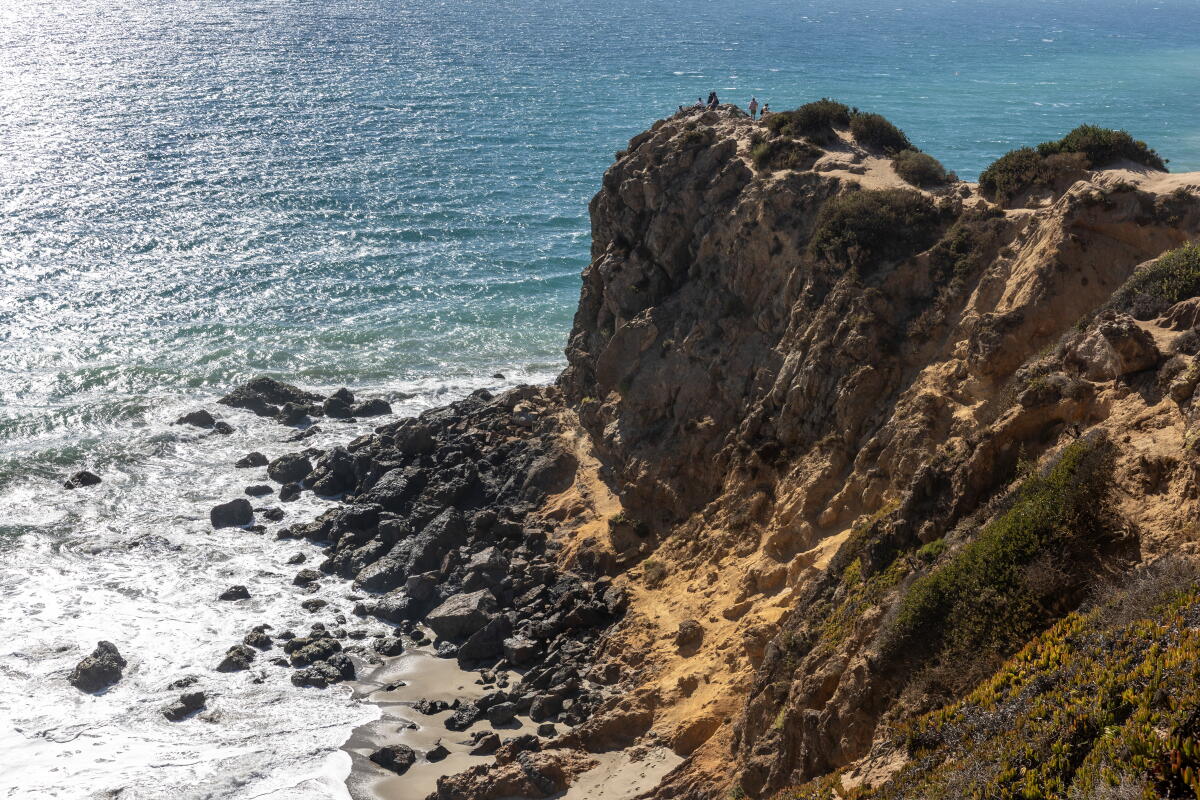
California’s coastline is facing severe erosion, exacerbated by El Niño. Rising ocean temperatures have elevated tide lines, while Pacific hurricanes have battered the shore with intense waves. This has led to crumbling infrastructure and diminished beaches. The anticipated strong El Niño this winter may worsen these conditions.
From Carlsbad to Malibu to Santa Cruz, erosion is rapidly changing the landscape of popular beaches. At Point Dume Beach in Malibu, severe erosion almost destroyed a crucial road needed for beach access. According to Warren Ontiveros, deputy director of the L.A. County Department of Beaches and Harbors, a distant hurricane caused the loss of significant sand, threatening the roadway. Emergency efforts to reinforce the shoreline with rocks aim to protect this essential access route to Westward Beach.
Coastal communities face similar issues. For instance, access to Pirates Cove at Westward Beach is under threat. Strong eastern Pacific hurricanes related to El Niño have significantly eroded several beaches. Jonathan Warrick, a research geologist with the U.S. Geological Survey, highlights concerns about the powerful waves expected this winter that could further damage the coast.
“We’re observing extreme erosion and expect larger waves in the upcoming winter,” Warrick stated. “This is concerning for coastal residents.”
Historically, strong El Niños have severely impacted California’s coast. In 1982-83, and again in 1997-98, coastal structures suffered extensive damage, such as the wrecking of piers in Santa Monica and Seal Beach. The 2015-16 El Niño also led to exceptional beach erosion, reported at 76% above average levels.
Research by U.S. Geological Survey and an Australian university in 2023 suggests that without measures, significant segments of California’s beaches could erode by 2100 due to sea-level rise. A warming climate contributes to rising sea levels, with data showing a one-foot increase in San Diego and San Francisco since the 20th century began.
Andrew Leising, a research oceanographer at NOAA’s Southwest Fisheries Science Center, expresses concern over the persistent marine heat wave affecting the coast. This heat wave has warmed deeper ocean waters, contributing to increased sea levels.
Across California, coastal infrastructure has suffered damage from natural events even without El Niño. Significant restorations are being planned or are underway to safeguard roads and properties. Areas like Santa Cruz have faced repeated damages, particularly from strong storm events.
Daniel Swain, a UC climate scientist, remarked, “Coastal flooding is a major risk this winter along both the ocean and bay shores.”
Authorities in vulnerable areas are mobilizing efforts to strengthen infrastructure. In Ventura County and Orange County, officials are assessing and improving vulnerable locations. Long Beach crews are focused on maintaining storm drains, while other counties are preparing for potential mudslides in areas affected by previous fires.
Some coastal areas, like Oceanside, have long experienced beach erosion, compounded by historical developments such as the Camp Pendleton Boat Basin. Projects like RE:BEACH aim to construct offshore reefs to shield sand from direct wave impact.
However, advocates like Zach Plopper from the Surfrider Foundation argue for more sustainable long-term solutions, including rerouting infrastructure to allow beaches to expand naturally as sea levels rise.
Efforts continue as communities adapt to the pressures of climate change on the coastline. The challenges posed by natural forces and human activity demand urgent and integrated measures to protect California’s cherished beaches.