
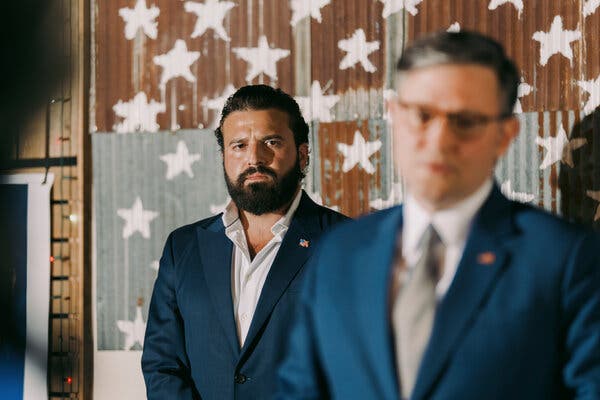
Brandon Herrera, a Republican House candidate in Texas, has emerged as a divisive figure within the political landscape. Known for his bold and unconventional approach, Herrera is vying to help the Republican Party maintain control of a West Texas district that leans heavily Republican. However, his campaign represents a complex challenge.
At a recent campaign event in San Antonio, Speaker of the House Mike Johnson emphasized the choice faced by voters in the sprawling West Texas border district. He praised Herrera as the candidate representing ‘common sense’ against his Democratic rival’s ‘crazy’ positions. Yet, Herrera himself was once the target of Republican criticism.
Herrera, a 30-year-old self-proclaimed gun-rights absolutist and popular YouTuber, has built a reputation for his incendiary humor. This persona was initially received with skepticism, even opposition, by establishment Republicans, including both Speaker Johnson and former President Trump. They backed Herrera’s opponent, incumbent Tony Gonzales, portraying Herrera as extreme due to his provocative online content.
Gonzales and his supporters invested heavily in painting Herrera as a radical, drawing attention to videos where Herrera made offensive jokes. These included calling a Nazi-era submachine gun ‘the original ghetto blaster’ and ‘Hitler’s street sweeper.’
However, political dynamics shifted dramatically when Gonzales exited the race following a sexual misconduct scandal. As a result, Republican leaders quickly rallied behind Herrera. This turnaround highlights a broader trend in modern politics where outsider candidates find themselves unexpectedly aligned with the establishment they once criticized.
Herrera’s campaign raises critical questions about the public’s tolerance for candidates with controversial pasts, especially in an era where digital missteps are permanent records. It also underscores the ongoing influence of anti-establishment sentiments across both major political parties as they vie for control of Congress.