
Updated on: June 2, 2026 / 3:15 PM EDT / CBS News
Jeff Bezos’s rocket company, Blue Origin, announced plans to resume launches of its New Glenn rocket by the end of the year despite a recent explosion at the launch pad. CEO Dave Limp shared on the social media platform X that the damage at Cape Canaveral Space Force Station’s launch pad 36 was not as severe as initially feared.
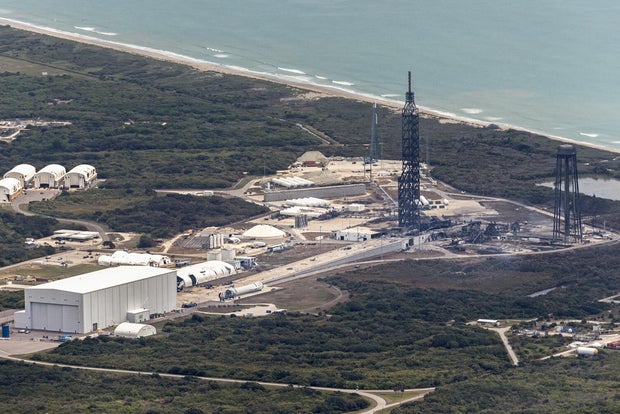
Limp stated that propellant tanks and a nearby processing hangar survived the blast in good condition. Though the main support gantry was damaged, repairs can be made without dismantling the structure. “The propellant farm, oxygen, liquid hydrogen, and LNG tanks are all in good shape,” Limp said, adding that fixing the support tower would not require replacement.
An aerial view of launch complex 36 showing the aftermath of the explosion revealed the New Glenn rocket was destroyed. Limp noted that other components stored in the integration facility were unharmed, including another first stage booster and upper stages. Blue Origin is moving forward with a new vertical rocket assembly method, eliminating the need for the damaged transporter-erector.
Despite the explosion, Limp remained optimistic, promising a return to flight operations before the year’s end. The cause of the malfunction remains unclear, but Limp closed with a commitment to recovery: “We will fly again before the end of this year. Gradatim Ferociter.” This motto means “step by step, ferociously.”
Blue Origin had planned to launch its third New Glenn rocket to deploy Amazon Leo satellites later this month. During a hot-fire test on Thursday, engineers loaded the rocket with supercold liquid methane and oxygen. The test was disrupted when igniting engines caused a fire, leading to a significant explosion visible across Florida.
The incident was the first such mishap at the site since a similar SpaceX explosion occurred. The damaged lightning tower and bent support beams demonstrated the explosion’s intensity. Blue Origin’s sole launch pad in Florida necessitates repair before further launches, affecting NASA’s Artemis program.
Nasa and the Chinese space program are both aiming for lunar missions by the decade’s end, intensifying competition. NASA plans to launch new moon landers for docking tests with Artemis astronauts. Success could lead to astronaut moon landing missions in 2028 and subsequent lunar base assembly.
Blue Origin provides NASA with an alternative to SpaceX’s Starship rocket. SpaceX faces challenges with its Super Heavy-Starship system, raising doubts about readiness for planned tests. Blue Origin’s New Glenn is also critical for testing lunar rovers and science experiments under new NASA contracts.
NASA Administrator Jared Isaacman expressed optimism for a 2028 moon mission. He noted Blue Origin’s swift response and affirmed NASA’s support for identifying explosion causes and expediting launch pad repairs. Kennedy Space Center Director Brian Hughes emphasized the commitment to the lunar mission.
The potential swift resolution suggests the explosion might not be related to major engine design faults. This would be a relief to United Launch Alliance, relying on Blue Origin’s BE-4 engines for its Vulcan rocket. While investigations continue, the BE-4 engines have not been implicated in the explosion.
In: Elon Musk, Jeff Bezos, Blue Origin, Space, NASA