
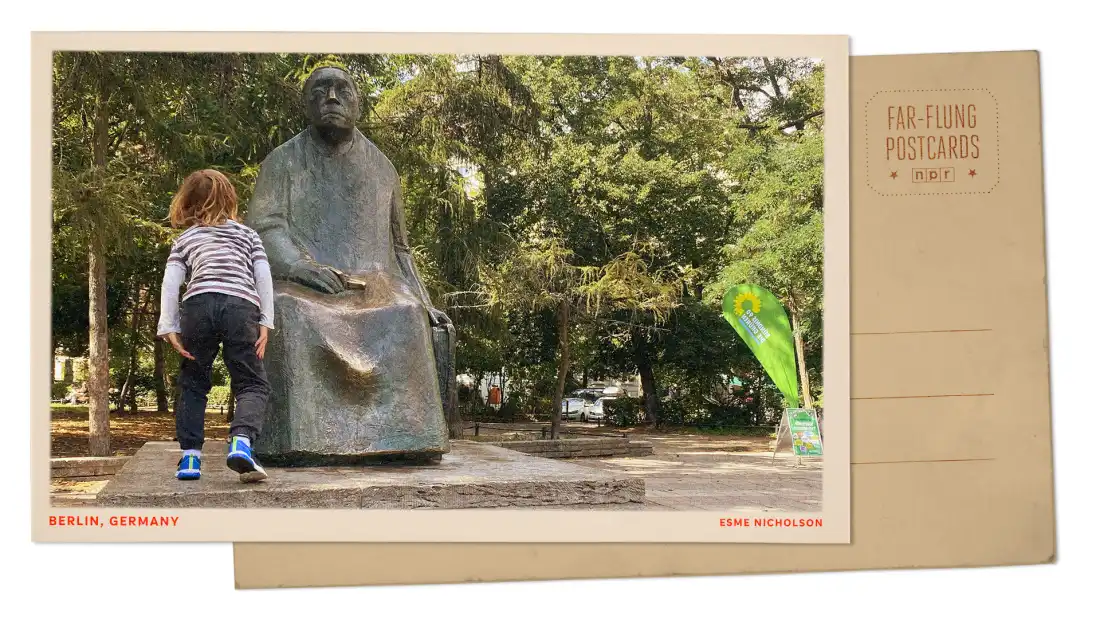
At Berlin’s Kollwitzplatz, children play energetically among swings and slides. Overseeing them is a bronze statue of Käthe Kollwitz, known for depicting the lives of children in the aftermath of World War I.
Käthe Kollwitz, a German expressionist, lived near this square. She often captured the themes of war and its impact on society, focusing on the suffering and innocence of children. Her works, including lithographs and sculptures, frequently featured children in the care of anguished mothers.
One of her famous sculptures, The Grieving Parents, stands in Belgium. It pays tribute to her son, Peter, who died in the war at the age of 18.
As the children play, an onlooker watches a boy incorporate the Kollwitz statue into a game of hide-and-seek. The boy hides behind the statue, embodying the childhood innocence portrayed in Kollwitz’s art. The calm presence of the bronze figure reflects a scene from her lithographs.
The statue holds charcoal, as if ready to sketch the lively scene of children growing up in peace. Yet, with global conflicts ongoing and Germany reinstating military service, the observer feels a protective impulse, reminiscent of the maternal instincts Kollwitz captured in her work.