
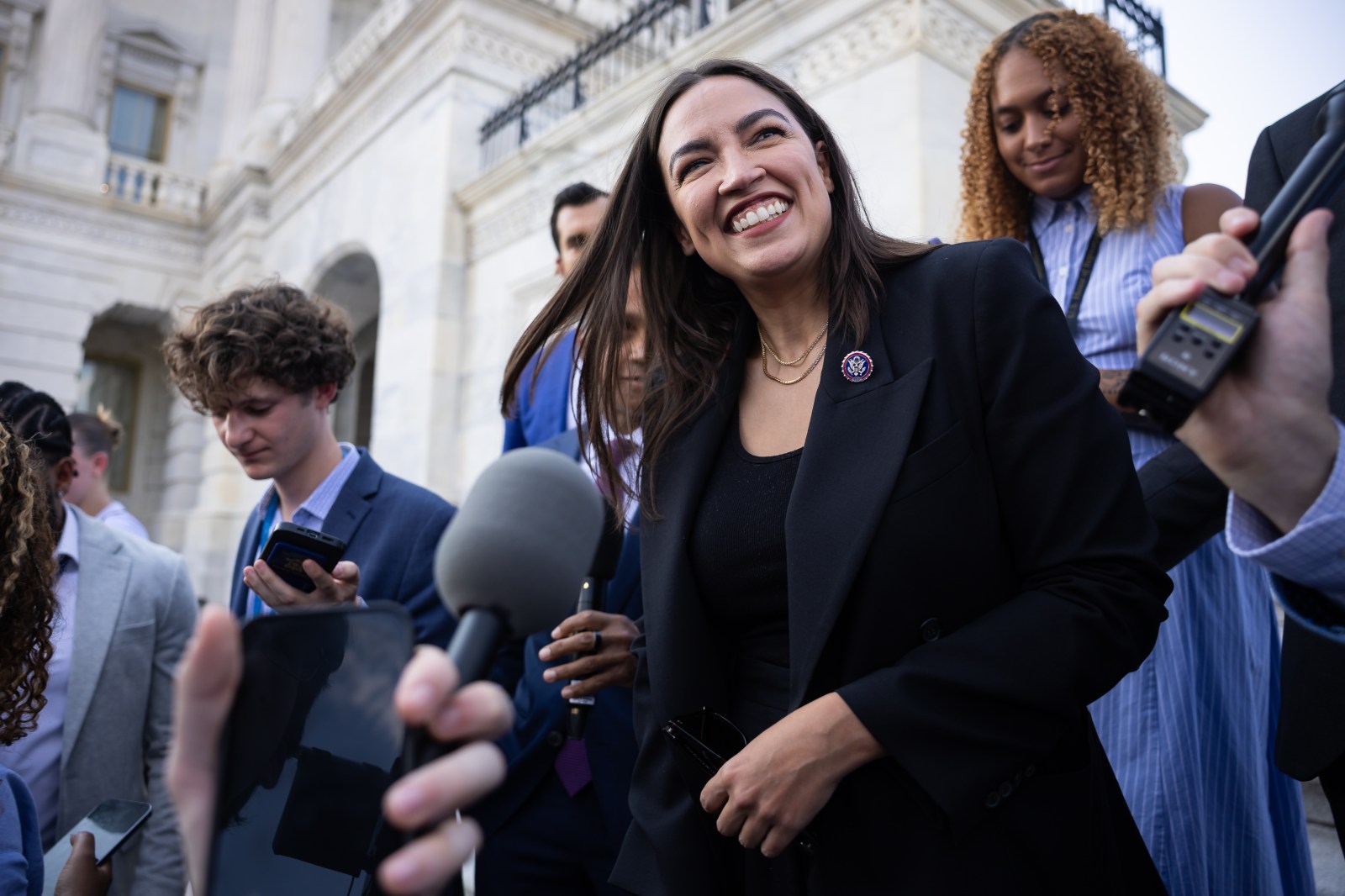
Representative Alexandria Ocasio-Cortez has surpassed California Governor Gavin Newsom in prediction market odds for the 2028 Democratic presidential nomination, highlighted by data from Polymarket as noted by InteractivePolls. The market showed Ocasio-Cortez at 18 percent, slightly ahead of Newsom at 17 percent. Georgia Senator Jon Ossoff follows closely at 16 percent, with former Vice President Kamala Harris at 8 percent. Former Transportation Secretary Pete Buttigieg and Pennsylvania Governor Josh Shapiro both hold 5 percent each.
This shift marks a notable event in the early race to shape the Democratic field for the 2028 election. Neither Ocasio-Cortez nor Newsom has officially declared a presidential campaign, yet both are seen as potential contenders representing different sectors of the Democratic Party. Ocasio-Cortez stands as a prominent progressive voice in Congress, while Newsom is recognized as a significant establishment figure within the party. He is frequently mentioned as a possible presidential candidate.
Prediction markets do not function as scientific opinion polls and do not directly measure voter support. They reflect traders’ wagers on future political outcomes. Market movements often respond to news events, perceptions of candidate viability, and speculation about potential contenders.
The latest developments are significant because Newsom had earlier been perceived as the front-runner in discussions about the 2028 Democratic race. Ocasio-Cortez’s rise suggests traders now increasingly view her as a viable contender for the nomination, even though the primary season is more than two years away. Kalshi, another prediction market, still ranks Newsom as the favorite, with Ocasio-Cortez in the second spot.
How Ocasio-Cortez’s Rise Highlights Democratic Party Divisions
Ocasio-Cortez’s ascent in the Polymarket standings likely intensifies discussions on the Democratic Party’s ideological path toward 2028. The New York congresswoman has gained recognition as a leading progressive, advocating for policies like Medicare for All, aggressive climate initiatives, and expanded social programs. In contrast, Newsom is seen as a leading establishment Democrat with executive experience managing the nation’s most populous state.
The emergence of Ocasio-Cortez, Newsom, and Ossoff as top contenders in prediction markets indicates a perceived competitive struggle between different wings and generations within the party. Although the final field remains uncertain, the current odds show no clear favorite among Democratic observers nearly two years before the nomination race begins.
The Role of Prediction Markets in Political Campaign Sentiment
Political prediction markets have become a closely watched measure of campaign sentiment, updating in real time as traders respond to news and political developments. These markets differ from traditional polls, which survey voters; instead, platforms like Polymarket show where participants are willing to place bets on future outcomes. Analysts, however, warn against viewing prediction markets as direct forecasts of election results. Prices can shift swiftly owing to media attention, emerging narratives, or speculation about new potential candidates entering the race. Ocasio-Cortez’s lead on Polymarket, while Newsom remains ahead on Kalshi, underscores how different prediction platforms can provide varied perspectives on the political scene.