
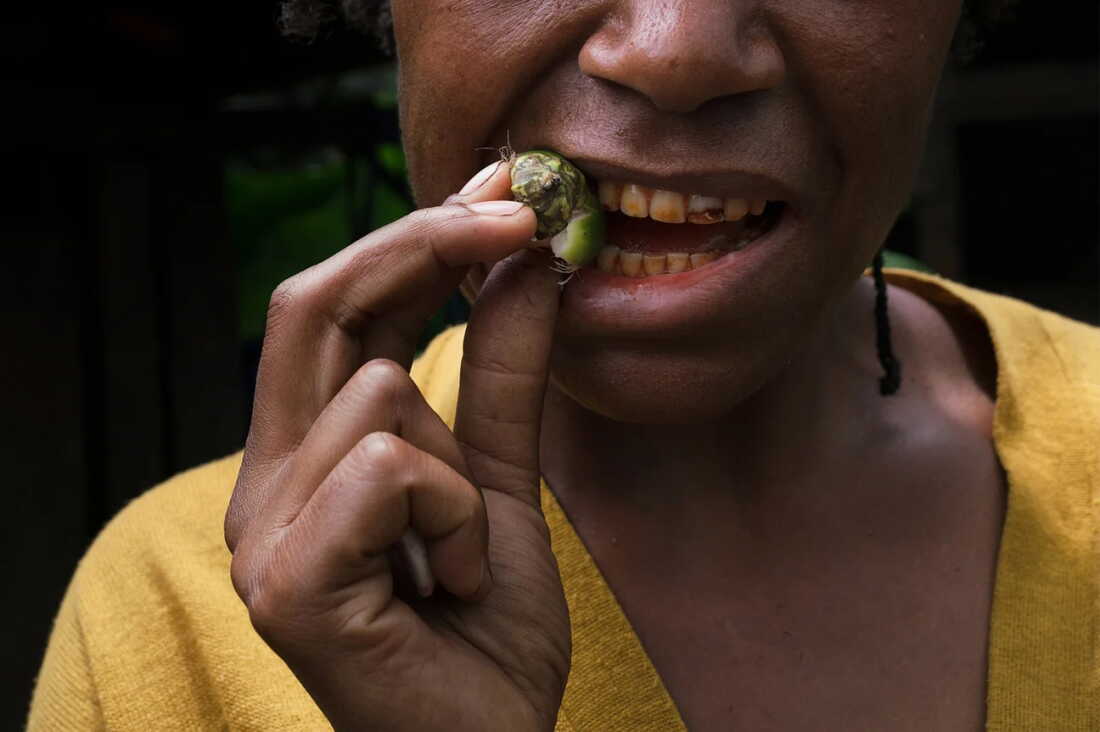
Approximately 600 million people today chew betel nuts, the seeds of certain palm trees. These nuts are about walnut-sized and found in Asia and the Asian Pacific. Users claim benefits like fresh breath and an energy boost. However, the medical community highlights potential risks. Prolonged betel nut use can damage teeth, increase heart disease risk, and lead to oral cancer.
Betel nuts rank as the fourth most commonly used mind-altering substance globally, following tobacco, alcohol, and caffeine. A new study in Science Advances uncovers the ancient roots of this practice. Examining old teeth suggests early humans might have used betel nuts for pain relief.
Research Findings and Ancient Practices
According to Adam Brumm, an archaeology professor at Griffith University, the discovery illustrates an early stage of betel nut use. Researchers suggest hunter-gatherers may have sucked on these nuts similarly to gobstoppers.
José Capriles, an anthropology professor at Penn State University, emphasizes the long history of human drug use. He notes that humans have always explored new substances, a part of our nature.
The Scientific Investigation Process
Discovered in Sulawesi, Indonesia, teeth from a 25,000-year-old hunter-gatherer revealed enigmatic grooves. Nearby, another set, aged 8,000 years, displayed similar marks. Adam Brumm connected these findings to historical pipe-smoking wear.
The grooves’ unusual patterns suggested use over decades. Due to cultural practices in the Asia-Pacific, Brumm associated these tooth marks with betel nut sucking, not chewing.
Unraveling Betel Nut Use
To investigate, Brumm collaborated with Roger Papke, a neuropharmacological researcher at the University of Florida. Experiments revealed betel nut extracts activate brain receptors, confirming ancient human’s physiological reactions.
Testing dental tissues for arecoline traces, a chemical unique to betel nuts, supported their theory. Brumm personally experimented, noting the powerful numbing effect of betel juice.
The pattern suggests a cycle of relief and addiction,Brumm commented.Nerve exposure likely increased betel nut use for pain relief.
Views from the Academic Community
External scholars find the evidence persuasive. Peter Ungar, an anthropology professor at the University of Arkansas, considers the chemical evidence significant. Agustín Fuentes of Princeton University agrees but calls for further verification.
Capriles desires more direct proof, such as discovering betel nuts alongside human remains in cultural contexts. Additionally, archaeological professionals urge caution in attributing contemporary health perspectives to ancient practices.
Despite challenges, Brumm asserts the research’s value. Loss and ambiguity are inherent in archaeology, yet methodical analysis informs understanding of ancient drug use.