
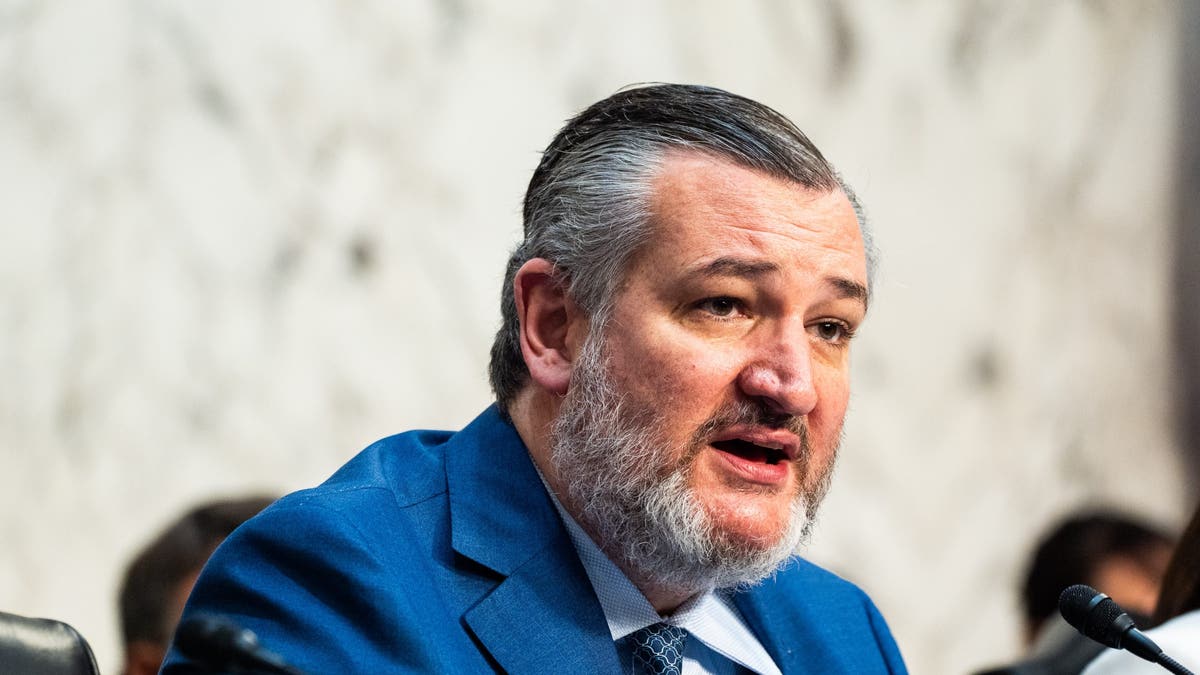
The ongoing race between the United States and China in the field of artificial intelligence has raised significant concerns. As midterm elections approach, this issue has become a central debate point. Senator Ted Cruz, a Republican from Texas, has warned about the coordinated propaganda campaigns involved in this race.
Recently, discussions surrounding data centers and AI policy have captured the attention of both Congress and American households. Cruz, who leads the Senate Commerce Committee, highlighted a well-funded initiative aimed at opposing data centers. He compared the situation to past foreign-funded movements against fracking, where countries sought to benefit economically by discouraging U.S. energy development.
“It’s the same reason we saw Middle Eastern countries paying for anti-fracking movements,” Cruz stated. “If they convince America to rely on others for resources, it benefits them but harms us.”
During a Senate hearing, where notable figures like OpenAI CEO Sam Altman and AMD CEO Lisa Su attended, concerns on this topic were further discussed.
The Chinese government’s direct involvement in U.S. data center policies has not been conclusively proven. However, OpenAI’s recent move to ban specific ChatGPT accounts, believed to be from China, suggests foreign attempts to sway American public opinion. These accounts allegedly promoted narratives criticizing data centers for increasing electricity costs.
OpenAI confirmed shutting down these accounts, describing them as part of an effort to manipulate debates on American AI and technology policies.
Senator Cruz labeled America’s AI policy as key to its economic future. He highlighted the detrimental effects of a scenario where China leads in AI, leveraging it for surveillance and control, versus an American lead, which could use AI for free enterprise and privacy.
Within the U.S., Cruz views opposition to AI progress and data centers as prevalent among Democrats, who Cruz suggests are aligned with major tech companies. These companies allegedly seek government collaboration to dominate AI development.
He linked these tech giants with the philosophy known as “effective altruism,” which Cruz criticized for its leftist ideology. This philosophy reportedly uses AI to further a particular agenda. According to Parker Thayer, from the Capital Research Center in Washington, D.C., this movement ties into the “AI doomerism” perspective.
Facebook co-founder Dustin Moskovitz and his wife, Cari Tuna, are prominent backers of effective altruism organizations. They established Coefficient Giving, previously Open Philanthropy, where AI safety and policy advocacy have seen significant financial commitments.
In 2024, Coefficient Giving dedicated $168 million to AI-related efforts, with $351 million planned for 2025, aiming to surpass $1 billion in 2026.
The organization’s focus expands across effective altruism, global risks, and AI epistemics, as outlined in a 2021 grant application. Initiatives like “Project Tailwind” exemplify their efforts to launch ambitious AI safety projects.