
The term “Lower 48” is often used in Alaska politics as a derogatory reference to influences from the contiguous United States. This has become a central theme in Alaska’s U.S. Senate race, which could impact control of the Senate in the upcoming November elections. Republican Senator Dan Sullivan has made accusations against Democrat Mary Peltola, claiming she aligns with “Lower 48 liberals” opposed to oil and gas expansion, impacting Alaska’s economy.
Peltola, an Alaska Native, counters by highlighting her efforts to win approval for the Willow oil project despite environmental opposition. She emphasizes her willingness to challenge Democrats and others unfamiliar with Alaska’s needs.
Alaska is viewed by outsiders as “The Last Frontier,” known for its beauty and vast landscapes. Many communities are isolated, accessible only by air or water, fostering self-reliance among residents. People often hunt and fish to stock up for winter, taking pride in their independence.
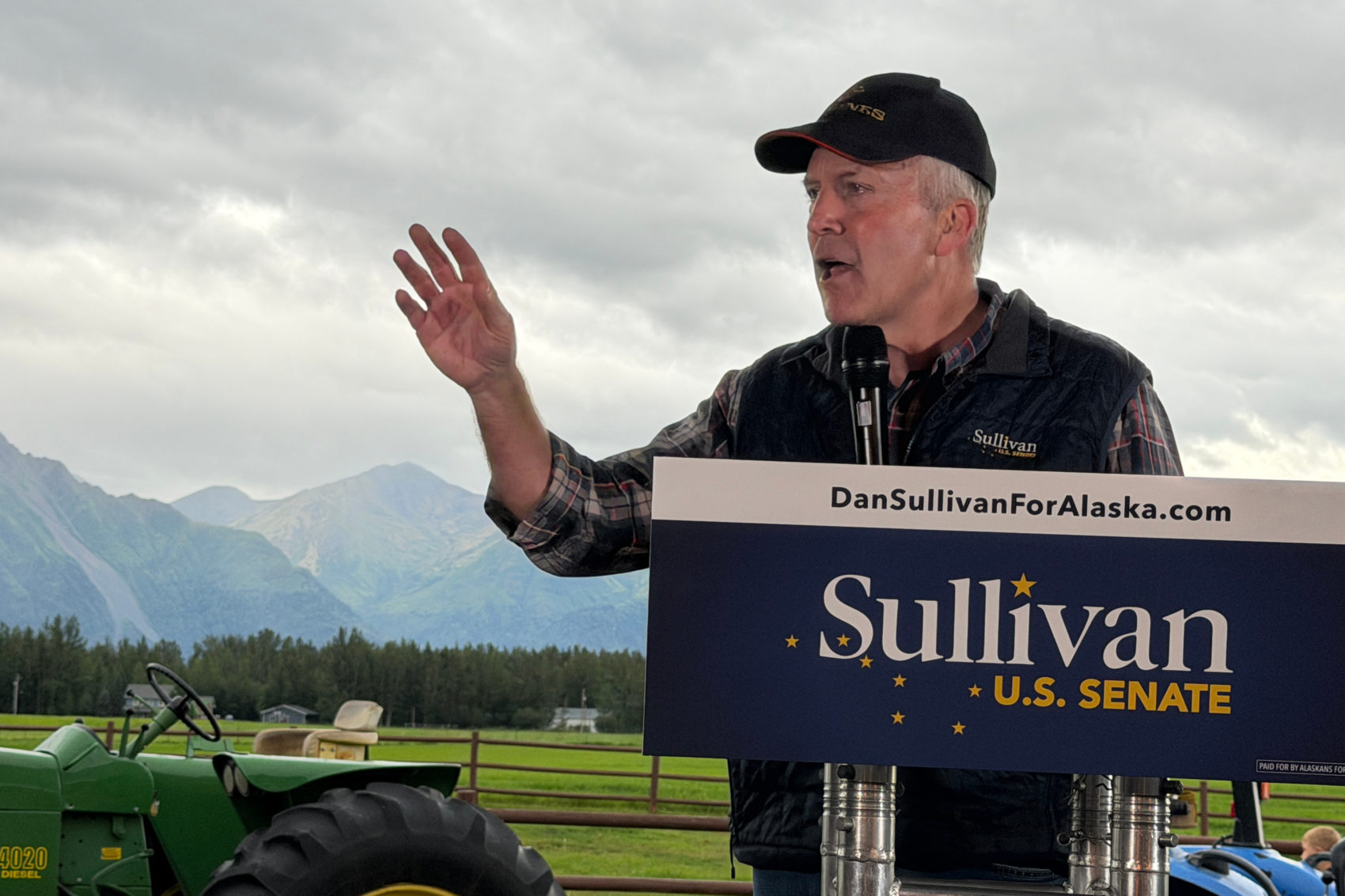
Sen. Dan Sullivan addressed voters at a rally on a farm in Palmer, Alaska, this August. Photo by Mark Thiessen/AP.
Both major campaigns, along with some third-party groups, emphasize Alaska’s distinctiveness. Former lawmaker Andrew Halcro, who also hosts a political podcast, noted the state’s persona as a challenging place to live.
Reserves of oil and minerals have led to tension with the federal government, which owns 60% of Alaska’s land. Under Democratic administrations, restrictions on oil and gas development have increased. Decisions often swing with new administrations; Obama and Biden imposed restrictions, whereas Trump focused on expanding oil and gas development.
Alaska’s royalty revenue share from federal land has been another point of contention, with some lawmakers claiming that promises made at statehood have not been met. Despite declining oil production, there are signs of renewed interest from oil companies, especially concerning leases in the National Petroleum Reserve-Alaska.
Fuel price spikes from the Iran conflict have hit remote communities hard, adding urgency to the development debates. In the North Slope community of Anaktuvuk Pass, individual support hinges on oil revenue’s role in funding crucial services.
Robert Sewell, an independent from Juneau, views the “Lower 48” rhetoric and Peltola’s distance from national Democrats as strategies in the battle to determine the “real spokesperson for the real Alaska.” During her congressional campaign, Peltola avoided endorsement of national Democratic figures while her campaign rebuffed support from Kamala Harris.
Peltola, in videos about the Willow project, emphasized bipartisan cooperation, claiming she would work with Trump to advance future projects. Sewell, supporting her, argues that she does not endorse Trump’s wider agenda.
Among Alaskans, roughly 43% were born in the state. Peltola, identifying as Yup’ik, promotes the ethos of shared local values through her slogan, “Fish, Family, Freedom.” Sullivan hails from Ohio and moved to Alaska in the late ’90s, serving under various state and federal roles.
Sullivan’s campaign defends local decision-making against “Lower 48 liberals.” The SLF PAC supports this narrative, hinting at disconnects between Peltola’s outer Alaskan image and Washington activities.
Peltola’s campaign counters Sullivan’s ties to special interest funds. Halcro comments on the flood of related advertisements, questioning their relevance amidst voter desires for stability.
Press freedom remains essential to democracy’s health. Uphold journalistic integrity and civil discourse.