
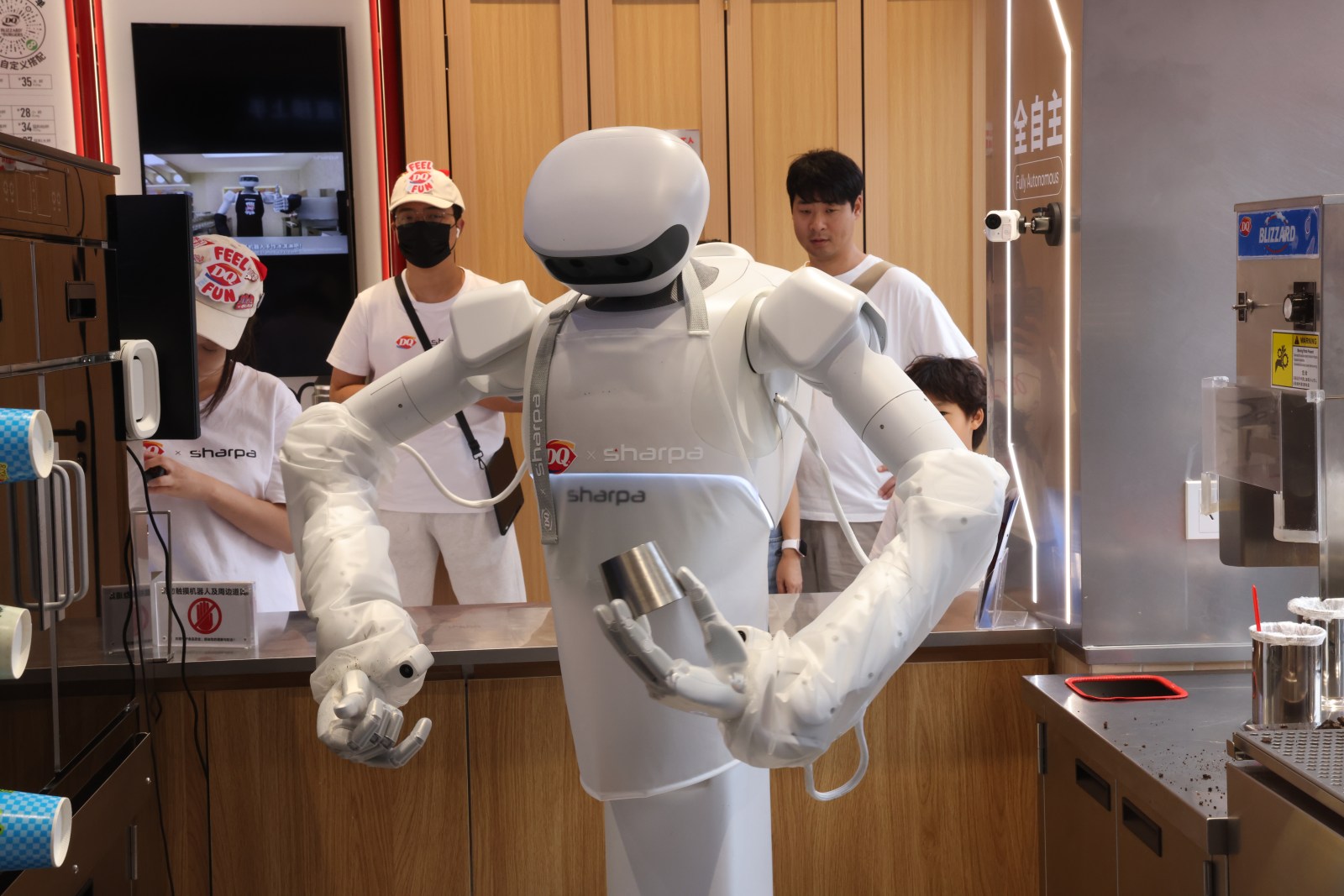
In recent years, technology has significantly transformed the restaurant experience. Customers used touch screens to place orders, personalize them, pay, and then wait for their order numbers. The counter, once the central point of interaction, began to resemble an unmanned airport gate.
However, something interesting is happening now. As artificial intelligence (AI) becomes more capable, major restaurant chains in the U.S. like McDonald’s, Burger King, Wendy’s, and Starbucks are focusing once more on hospitality and customer experience. After years of encouraging automated ordering, these chains are bringing back human interaction.
Some customers in Burger King’s AI-driven drive-through trials decide to leave instead of interacting with a bot.
This shift isn’t simply a reaction against technology. AI appears to be increasing the value of human service.
The Counter’s Enhanced Role
Consider McDonald’s plans as an example. The company’s new strategy, McDonald’s > NEXT, includes deploying its generative AI system, ArchIQ, to enhance restaurant efficiency. Additionally, the ‘People > NEXT’ initiative aims to empower workers to provide improved hospitality. This is complemented by the ‘Make It Golden’ program, which emphasizes both food and service quality. This approach highlights the integration of both AI systems and human interaction.
AI technology performs tasks that are predictable and repetitive, often more efficiently than humans. However, hospitality begins where predictability ends. Charan Nukathoti, creator of the AI-based service Savor Scout, runs into this boundary. While AI can process menu data extensively, it cannot account for the ever-changing physical environment of a restaurant—like a late oven or unexpected substitutions.
Invisible AI Integration
Starbucks takes a similar approach. The company invests in AI but also emphasizes human interactions through its Green Apron Service program. This program focuses on personal customer engagement while AI stays behind the scenes, aiding employees without disrupting customer experiences. Early indicators, such as positive sales growth, suggest this balance might be effective.
Dan Jin, a hospitality and tourism management professor, studies the interface between humans and machines. Her research indicates that automation success depends on distinguishing tasks better suited for technology from those that require human involvement.
‘Is this a predictable task, or does someone need to understand an individual guest?’—Dan Jin
Customers may appreciate quick responses, but they need to feel understood by a human, especially when issues arise.
The Role of Kiosks
Automation provides conveniences, like kiosks that facilitate browsing menus without affecting other customers. Yet, the highest form of hospitality might be delivering a meal quickly without unnecessary interaction. AI can also enhance operational efficiency, such as forecasting demand to prevent overburdening staff.
While Burger King continues testing voice AI, it plans to ensure customers can easily contact a human, acknowledging that some prefer direct human interaction over automated service.
Balancing AI with Human Service
The future of restaurants may include advanced automation, not to eliminate human interaction but to improve it. AI can handle logistical tasks, while humans focus on personal engagement, exception management, and customer reassurance.
Nukathoti notes that verifying real-world facts often requires human intervention. In some cases, the role of AI might be to direct customers to the appropriate human service as efficiently as possible. This integration of advanced technology with traditional values offers a new direction for the restaurant industry.