
Cognisee, an AI company led by Founder & CEO Ahmer Inam, offers a solution to the skilled labor gap in America. By digitally capturing the expertise of retiring employees, Cognisee uses AI to create digital mentors for sectors such as manufacturing, aviation, and healthcare. This approach allows knowledge to be transferred without replacing human roles, enhancing workforce efficiency.
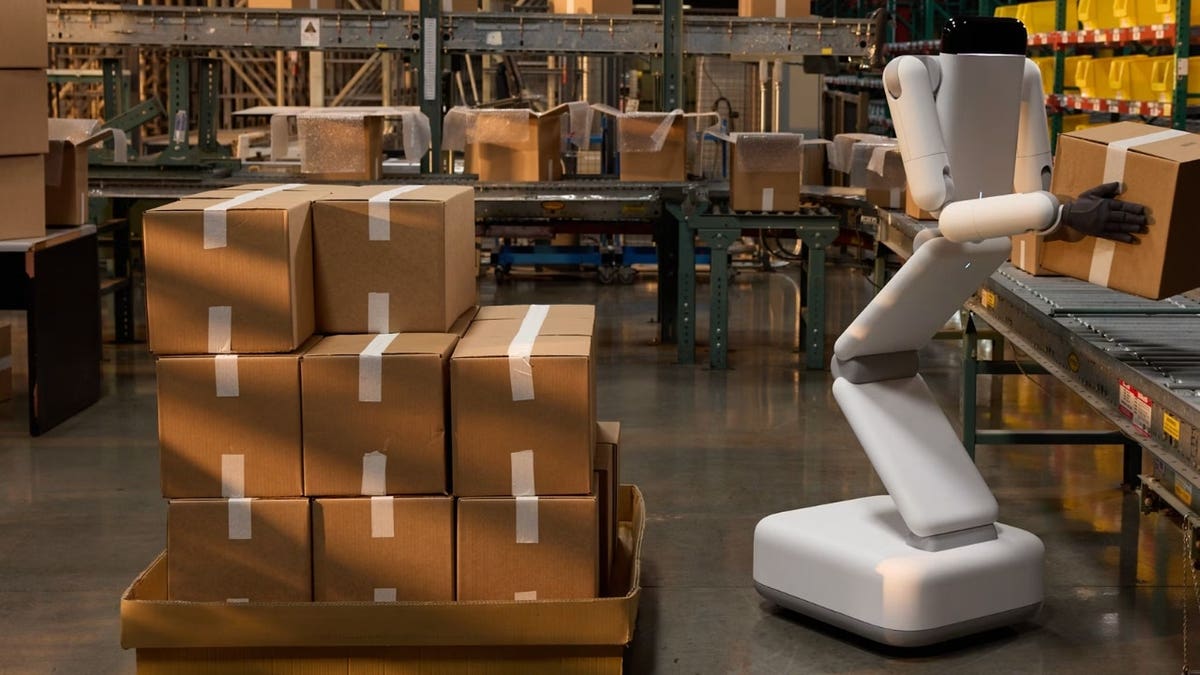
Meanwhile, Genesis AI is developing its general-purpose robot, Eno, with an aim to transform workplaces. With a significant investment of $500 million, backed by prominent tech investors, the company is focusing on robots that can learn physical skills by observing human workers. Workers use electronic gloves to perform tasks, capturing data that trains these robots. This technology aims to have robots perform complex tasks autonomously. Genesis plans to introduce Eno into customer sites by 2027, initially targeting industrial environments.
Genesis AI’s Eno Robot
The Eno robot differentiates itself from humanoid robots by emphasizing practical functionalities over mimicking human appearance. Its dexterous hands and a robust body are designed for handling tools and various physical tasks. The AI foundation model, GENE, acts as the robotic brain, enabling Eno to interpret surroundings and control movements. Current capabilities demonstrated by a test robot include meal preparation and laboratory work.
An important aspect of learning involves electronic gloves that capture detailed finger movements during tasks. Combined with cameras capturing the worker’s perspective, these tools help GENE develop advanced skills. Genesis AI also uses a simulation platform, Genesis World, allowing robots to practice tasks in a virtual environment. This method accelerates learning while reducing reliance on costly physical training.
Challenges and Future Prospects
One of the main challenges for Genesis AI lies in ensuring that robots perform reliably in dynamic work environments. Employees help train these robots by participating voluntarily, with the company owning the training data. While Genesis AI aims for increased productivity, the potential impact on employment is a significant concern.
The deployment of Eno robots in workplaces will begin in 2027, focusing initially on manufacturing, logistics, and laboratories. A partnership with LG CNS suggests further industrial applications. Although Genesis envisions robots assisting in hospitality and healthcare, a clear timeline for these sectors is yet to be announced.
The potential for robots like Eno to handle repetitive tasks offers a glimpse into future workforce changes. However, the implications for employee roles and job security remain open for discussion. As technology progresses, conversations about the balance between human and robotic labor become increasingly relevant.