
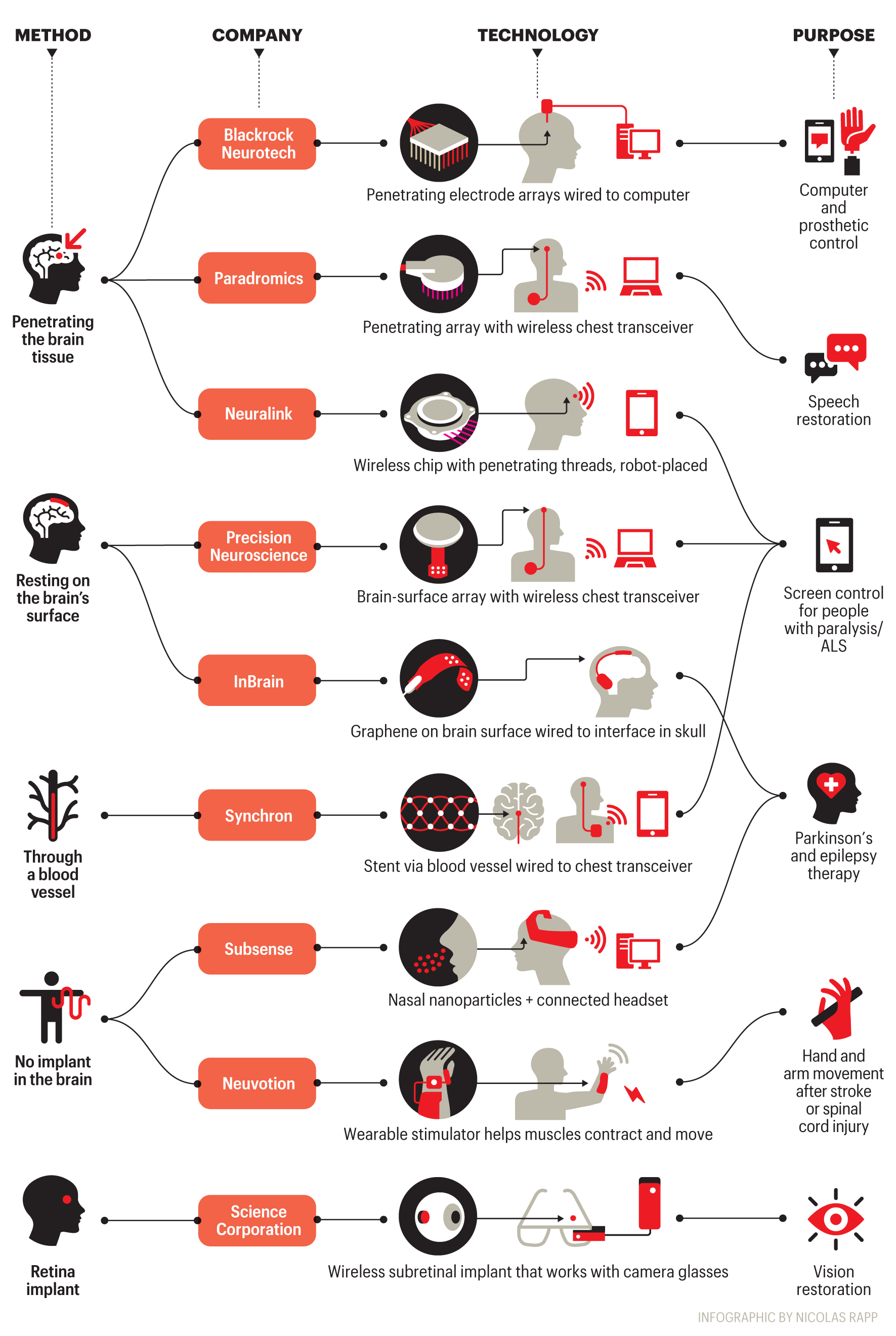
A robotic arm efficiently drills a circle into a patient’s skull, positioning a device onto brain tissue. This device, about the size of a quarter, connects to 64 ultra-thin wires. Electrodes on these wires capture electrical signals from neurons. Data from the implant is transmitted to a phone or tablet, enabling patients to text friends, post on social media, and play video games—all without any physical effort. This is the promise of the N1 implant, developed by Neuralink, a brain-computer interface (BCI) company founded by Elon Musk.
The N1 implant has turned science fiction into reality for approximately 26 individuals using the device during its testing phase. All users have significant disabilities. Musk, who established the company in 2016, envisions broader application of this technology. In 2017, he highlighted the necessity of connecting human brains to technology to compete with artificial intelligence and prevent humans from becoming obsolete.
By 2025, Neuralink was valued at around $9.7 billion. No brain implants are yet commercially available in the U.S., but the approval of the first such device will be highly significant. This event could initiate a prolonged period of integrating human minds with machines. BCIs are expected to blend into everyday life, leading to new businesses and requiring innovative regulations.
For companies pioneering these devices, a potential substantial market awaits. The devices will also collect extensive data. For society, the benefit of allowing corporations access to our innermost thoughts and possibly influencing them remains a key question.
“What you’re thinking and feeling is your last space of true privacy.”
Nita Farahany, a Duke University professor, warns of the move toward brain transparency, where entities might access our thoughts. As of now, companies like Neuralink and more are racing to gain Food and Drug Administration (FDA) approval for public sale. Competitors include firms like Paradromics and Precision Neuroscience, focusing on speech restoration and interfaces for paralysis patients, respectively.
Neuralink, with its significant funding of $1.3 billion, faces strong competition from Synchron, a rival BCI company. Synchron’s device is less invasive, making it potentially the first to market. Firmly embedded in the FDA approval process, both companies acknowledge the competition’s intensity.
Advancements in AI, exemplified by the release of applications like ChatGPT in 2022, could enhance BCI functionality. The ability to interpret thoughts might eventually lead to controlling robots or AI agents through mere thought.
In work settings, BCIs could influence employee monitoring, potentially expanding productivity. Farahany cautions against punitive monitoring yet observes society’s acceptance of new workplace tracking methods already.
Some argue that humanity’s integration with technology, even externally, has already started. In 2017, OpenAI CEO Sam Altman remarked on technology’s control over our emotions and thoughts.
As BCIs await FDA approval, companies undergo rigorous testing phases. The journey involves animal testing, preliminary human implants, and pivotal studies. Achieving FDA approval will open pathways for selling BCIs to patients with certain medical conditions, supported by insurance.
Neuralink’s advances are evident in patients’ experiences, such as Noland Arbaugh, who continues his life post-paralysis with the aid of the implant. Similarly, Synchron’s devices are gaining user traction though less powerful than Neuralink’s.
Surgery for Synchron’s Stentrode involves inserting a device through blood vessels to access brain signals. Although its functionality differs from Neuralink’s direct control, it still offers distinct benefits.
Globally, competition intensifies, notably from China, where commercial BCI offerings have recently launched. Concerns about supply chain risks reminiscent of other tech sectors persist.
As more nations develop BCIs, international standards discussion has begun. In 2025, Unesco endorsed ethical guidelines for BCIs, aiming to ensure technologies aid without infringing on autonomy or privacy.