
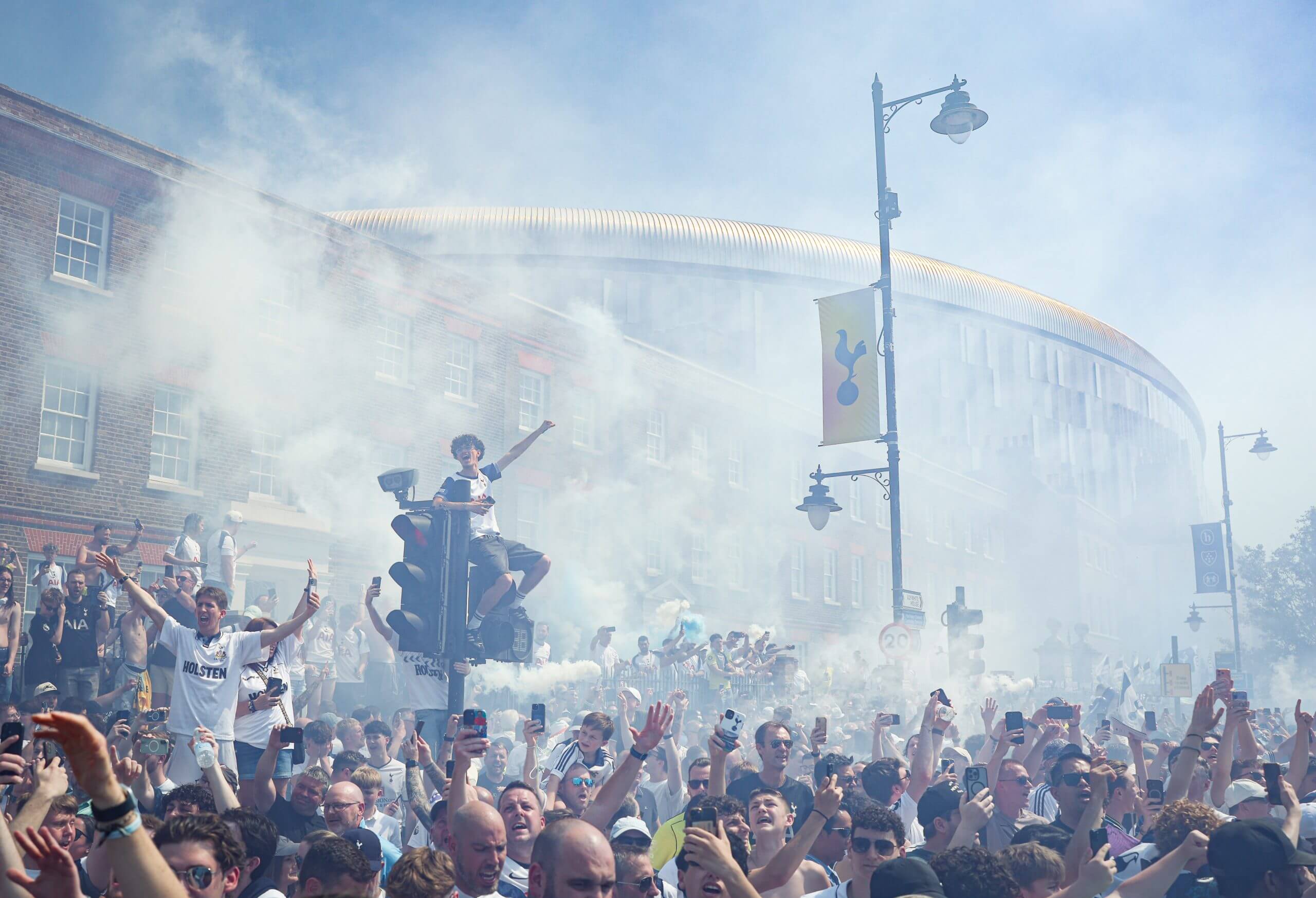
The scene at Tottenham Hotspur Stadium on Sunday was strikingly reminiscent of the previous year. While there wasn’t an open-top bus parade, by 2 pm, throngs of Spurs fans filled the area. People climbed lamp posts and bus stops, releasing blue and white smoke. Children perched on their fathers’ shoulders, eager to provide a warm welcome to the team.
No trophy was presented at the end, yet every Spurs supporter remained to cheer. Manager, staff, and players were deeply moved by the passionate support. Such moments of unity have been rare since the stadium opened in 2019. The loudest ovations were for manager Roberto De Zerbi, who appeared overwhelmed by the supporters as he faced the South Stand. Currently, De Zerbi is seen as the vital figure in Tottenham’s future planning.
De Zerbi is credited with saving Tottenham from relegation. Accumulating 11 points from their final six games, despite injuries and declining confidence, marked a managerial triumph. His leadership has rekindled the club’s unity and hope for upcoming seasons. On Sunday evening, he declared this his greatest managerial achievement.
Many associated with Tottenham feared the consequences of relegation. Concerns included financial losses, player sales, and potential humiliation. De Zerbi’s warning, highlighting the risk to the club’s “dignity,” underscored the gravity of the situation.
Despite the threat now gone, these challenges serve as a reminder. Tottenham, with its rich history and one of Europe’s top revenues, narrowly avoided a crisis. Such an outcome would have stained many careers. Yet, the fear is over for now. Spurs will continue in the Premier League, maintaining vital fixtures and revenue streams.
However, the past season was disastrous for Spurs. Fighting relegation in May is a severe concern. Depending on other teams’ losses to ensure their safety is embarrassing. Despite a top-tier stadium and significant resources, Tottenham’s performance was subpar. Mismanagement and internal conflicts surfaced, and unity was often lacking until De Zerbi’s March arrival.
The irony lies in the fact that the season was meant to signify renewal. With recent Europa League wins, the focus in the summer was on regeneration. Thomas Frank replaced coach Ange Postecoglou to instill defensive strength. Yet, moving away from Postecoglou’s promising style removed the club’s binding identity.
Tottenham won only seven of Frank’s 26 Premier League matches. Off the field, changes were significant: the Lewis family recognized Tottenham’s underperformance in recent years. Management consultants were engaged to review operations, leading to Vinai Venkatesham’s appointment as CEO.
Despite initial unity, cultural differences at Spurs were pronounced. Brentford’s culture, which Frank tried to integrate, was challenging. Issues with discipline and player attitudes affected performance.
The squad’s lack of quality was evident. Key players like Harry Kane and Son Heung-min had departed, leaving no world-class talents. Pressure was high for new signings, yet crucial targets like Antoine Semenyo and Eberechi Eze were missed.
During the transfer window, last-minute deals attempted to bolster the squad. However, significant structural change occurred in September with Daniel Levy’s departure. His unexpected exit marked a turning point.
Without Levy, Tottenham faced profound changes. New leadership, including Venkatesham as CEO, attempted to modernize. Changes included new appointments in leadership and structural transformations.
Despite efforts, Frank struggled to implement his vision. Early promise faded, and poor performances led to fan and player disillusionment. Leadership was sorely lacking.
Spurs needed positive leadership. Coaches and players did not meet expectations. Attempts to bring unity and confidence included temporary measures. Yet, these were insufficient until De Zerbi’s arrival.
In March, Tottenham revisited De Zerbi as a managerial candidate. His role became crucial for restoring team morale and unity. He inspired and transformed Spurs at their lowest point, delivering results when needed most.
De Zerbi’s leadership enabled a resurgence. With organization, courage, and unity, Spurs revived, avoiding a disastrous season end. While admired, De Zerbi’s influence highlights the need for ongoing reform and caution.