
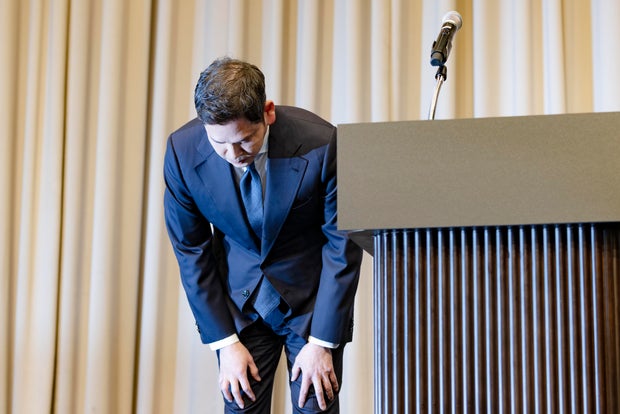
Seoul, South Korea — The chairman of Shinsegae Group, Chung Yong-jin, has publicly apologized for the second time within two weeks due to the backlash against a controversial marketing campaign by Starbucks Korea. The campaign was perceived as offensive to victims of a military crackdown on pro-democracy protests in 1980.
During a televised statement, Chung, whose company owns 67.5% of Starbucks Korea, expressed remorse to the families of those killed by the former military dictatorship and to the general public. He apologized while bowing three times at the Josun Palace Luxury Collection Hotel in Seoul.
“I take very seriously the fact that many people felt deep pain and anger because of Starbucks Korea’s inappropriate marketing campaign,” Chung stated.
The controversy erupted when Starbucks Korea promoted a large-sized tumbler named “tank,” coinciding with May 18, the anniversary of the Gwangju Democratization Movement. This movement was violently suppressed, leading to hundreds of casualties. The campaign’s slogan, “Thwack it on the table!,” was criticized for seemingly referencing a police statement from 1987 related to the torture death of student activist Park Jong-chol.
The swift public outrage resulted in Shinsegae cancelling the promotion and replacing Starbucks Korea’s chief executive. An investigation was launched following complaints by families affected by the Gwangju incident.
Chung emphasized that the responsibility lies with management and urged the public not to target Starbucks employees. There have been no significant reports of incidents at stores.
Shinsegae executive Jeon Sangjin noted a lack of evidence suggesting intentional ridicule by Starbucks Korea staff, although some refused management’s requests for smartphone checks during an internal review. Jeon stated that any proven intent to mock the protesters would lead to dismissal.
The campaign’s fallout has led to public calls for boycotts, supported by government figures like Interior and Safety Minister Yoon Ho-jung, who announced a halt in using Starbucks products at official events. Sales have reportedly dropped significantly following the controversy.
President Lee Jae Myung criticized the campaign, calling it “inhumane and disgraceful behavior by cheap profiteers who deny the values of the South Korean community, basic human rights and democracy.”
The 1980 crackdown occurred shortly after General Chun Doo-hwan seized power. Government records note around 200 deaths in Gwangju, though activists suggest the toll was higher. Public discontent with Chun’s regime spurred nationwide protests in 1987, leading to constitutional changes and the country’s shift towards democracy.