
WASHINGTON, D.C. — The U.S. Treasury Department is investigating Hasan Piker for potentially violating U.S. laws by engaging with Cuba’s communist regime. According to Fox News Digital, this probe is part of a wider federal investigation into an alleged Cuban influence operation in the U.S. This operation appears to be led, in part, by a senior Cuban diplomat.
Investigation Into Cuban Influence
The investigation involves the Justice, State, and Treasury departments and examines a network that brought Piker to Cuba in March as part of the “Nuestra América Convoy” or “Our America” Convoy. Piker mentioned in a podcast that “the Cuban government actually hit my contact from the embassy” and offered him “consistent internet access” if he visited Cuba. He did not name his embassy contact.
The probe also led to Machinists Hall in Wilmington, California, where on May 9, pro-communist activists gathered. The event saw participants tread past folding tables laden with pins commemorating Che Guevara, copies of Karl Marx’s “Communist Manifesto,” and stacks of “The Militant” newspaper. A banner with the slogan “U.S. HANDS OFF CUBA!” covered one wall, highlighting Cuba’s foreign policy and national security priorities.
Influential Networks and Individuals
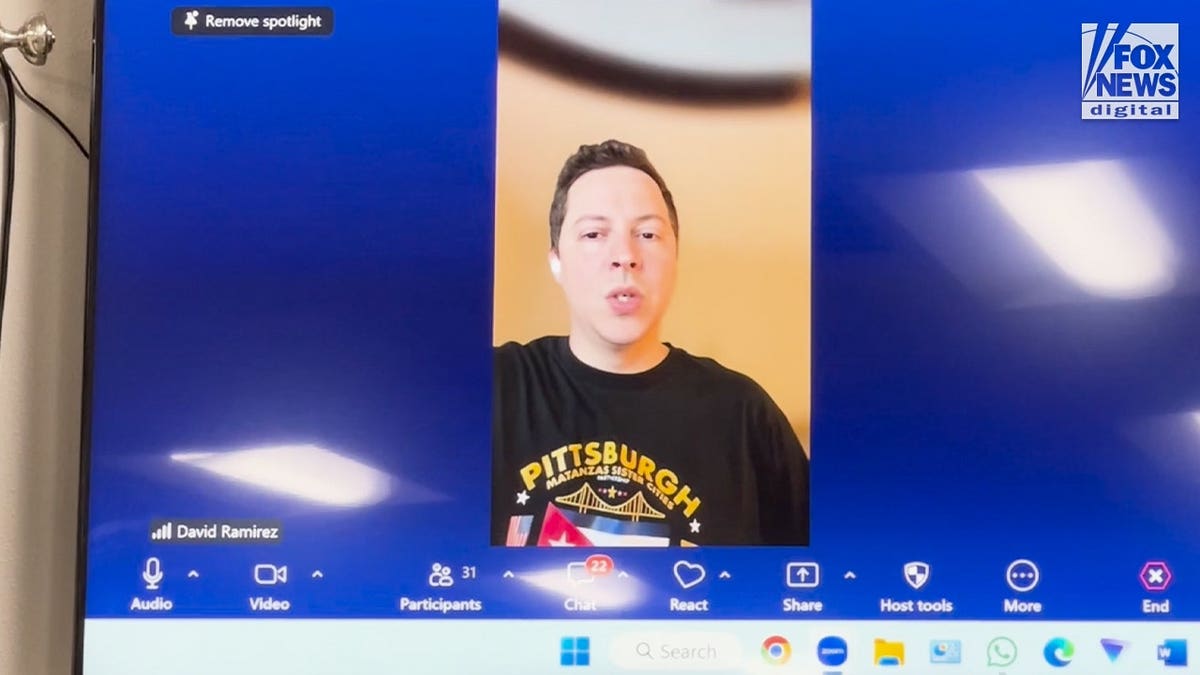
The event was organized by the U.S. Hands Off Cuba Committee, a coalition of 23 groups, including CodePink. Individuals such as Susan Medea Benjamin were subpoenaed by the Treasury Department for their trips to Cuba. Attendees were provided insights by David Ramírez Álvarez, second secretary at the Embassy of Cuba. Alvarez is under scrutiny for allegedly leading a malign influence campaign within the U.S.
A spokesperson for the Embassy of Cuba, based in Washington, D.C., denied any wrongdoing. They asserted that Cuban diplomats adhere to the Vienna Convention’s rules, which require respect for the laws of the host nation.
Network’s Global Reach
The U.S. Hands Off Cuba Committee is part of a wider pro-communist network with about 145 organizations, boasting $1 billion in collective annual revenues. These span labor unions, university groups, anti-war coalitions, and other activist entities. Notable groups in this network include People’s Forum, CodePink, and the ANSWER Coalition. This network is allegedly funded by Neville Roy Singham, a tech tycoon based in Shanghai.
Investigators are assessing how Ramírez Álvarez and other Cuban officials establish ties between U.S.-based activists and the Cuban Institute of Friendship with the Peoples (ICAP). Initially formed by Fidel Castro in 1960, it arranges foreign delegations and solidarity campaigns. ICAP has faced accusations of being a proxy for Cuban intelligence, although it denies these claims.
Solidarity Movement’s Historical Roots
Since Castro’s rise in 1959, Cuba has reportedly fostered a sophisticated American solidarity infrastructure. This evolved from Cold War-era movements to modern nonprofit networks. Historical records illustrate relationships nurtured by Cuba’s intelligence apparatus through organizations like ICAP.
In 1969, the Students for a Democratic Society (SDS) launched the Venceremos Brigade, aimed at political solidarity work in Cuba. This movement eventually fragmented into the Weather Underground, known for bombings in the U.S. during the 1970s.
The Continued Cuban Influence
Currently, public records place Ramírez Álvarez at events in various U.S. cities, promoting the lift of the embargo, removal of Cuba from terrorism listings, and calls for wider American activism. At the Wilmington meeting, Destiny Rivera-Gome encouraged broad outreach to schools, churches, and unions to promote pro-Cuba narratives.
Federal investigators are scrutinizing whether these gatherings crossed into foreign political activity, meriting registration under the Foreign Agents Registration Act.
The Broader Impact
Despite public descriptions of their work as “solidarity” activism, investigators are probing possible connections between activists and Cuban officials. These organizations refute claims they operate as foreign agents, highlighting their advocacy as constitutionally protected.
This ongoing investigation offers a rare glimpse into how connections between U.S. activist groups and the Cuban state have developed. One organizer summing up the meeting stated, “Please put us in front of a group, and we got you.”