
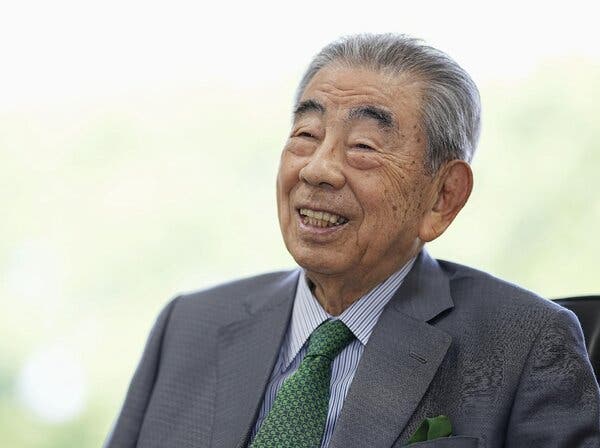
Toshifumi Suzuki, a key figure in the convenience store industry, passed away last week at the age of 93 due to heart failure. His contributions to Japan’s retail sector have left a lasting impact, with Seven & i, the company operating the 7-Eleven franchise, confirming his passing on Monday.
For over four decades, Mr. Suzuki led 7-Eleven Japan, transforming it from a humble store situated on Tokyo’s eastern bay into an extensive empire with tens of thousands of locations. Renowned as a relentless innovator, he introduced elements like in-store banking and seaweed-wrapped rice balls, which have become beloved staples in Japan and have influenced international tastes.
Since his resignation in 2016, 7-Eleven Japan has faced numerous challenges. The company has struggled with stagnant profitability and encountered difficulties with a takeover bid from a Canadian competitor. Additionally, there’s been the task of appointing a new chief executive to reinvigorate growth. Many within the company express concern over a perceived decline in the culture of innovation that was prevalent during Mr. Suzuki’s tenure.
Born in Nagano Prefecture, northwest of Tokyo, Toshifumi Suzuki initially embarked on a career in publishing sales. His path shifted when Masatoshi Ito, the founder of the retail chain Ito-Yokado, personally recruited him. By 1971, Mr. Suzuki had become a director within the company. A few years later, he identified an opportunity in the form of an American convenience store chain, 7-Eleven, operated by the Southland Corporation based in Dallas, Texas. Despite skepticism within Japan that this American concept could compete against the traditional mom-and-pop shops, Mr. Suzuki’s vision prevailed and led to the widespread success of 7-Eleven in Japan.