
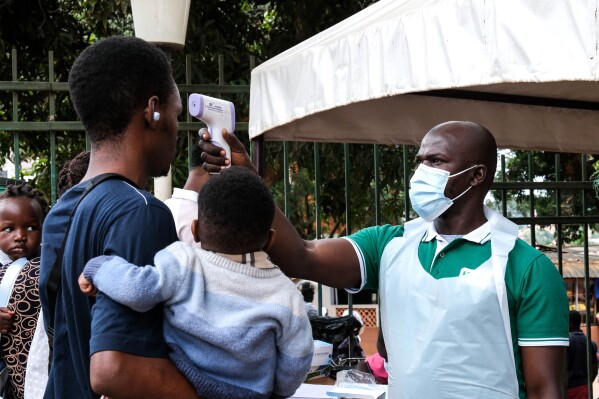
Arson attacks on Ebola treatment centers in eastern Congo highlight significant obstacles for authorities—problems like local community resistance—during efforts to control the Ebola outbreak, which has been declared a global health emergency. The recent burning of centers in two towns central to the outbreak illuminates frustration in a region plagued by violence from armed rebel groups, displacement of people, government failure, and international aid cuts that have compromised healthcare facilities in vulnerable areas.
A devastating set of emergencies are converging.
This statement by Physicians for Human Rights underscores the complex crises in eastern Congo, which have contributed to one of the world’s worst humanitarian disasters. Understanding these long-term issues and their impact on responding to a rare type of Ebola aids comprehension of the situation.
Violence Threatens Eastern Congo
For years, eastern Congo has suffered attacks from numerous rebel and militant groups, some with international links. The M23 rebels, backed by Rwanda, occupy parts of the region, while the Congolese government maintains a tenuous control over northeastern Ituri Province, the epicenter of the Ebola outbreak. The Allied Democratic Forces, an Islamist group from Uganda affiliated with IS, continues to dominate and target civilians with violence.
Prior to the outbreak, Doctors Without Borders reported worsening insecurity in Ituri, prompting medical professionals to flee, leaving healthcare facilities overwhelmed and in some areas, conditions described as catastrophic.
Nearly One Million Displaced in Ituri
The U.N. humanitarian office reports that almost a million people have been displaced by conflict in Ituri. This Ebola outbreak is occurring in communities already dealing with insecurity, displacement, and fragile healthcare systems, noted Gabriela Arenas from the International Federation of Red Cross and Red Crescent Societies.
Concerns loom over the disease spreading to large displacement camps near Bunia, where initial cases emerged. Authorities have reported over 700 suspected Ebola cases and more than 170 deaths, primarily in Ituri. Cases have also been identified in North Kivu, South Kivu, and neighboring Uganda, where the M23 rebels hold control. Thus, the outbreak response involves both government and rebel authorities, with numerous aid agencies participating.
Devastating Aid Cuts for Eastern Congo
International aid cuts by the U.S. and other wealthy nations last year severely impacted eastern Congo due to its multifaceted issues. These cuts diminished the ability to detect and respond to infectious disease outbreaks, according to Thomas McHale, public health director at Physicians for Human Rights. Congo has faced more than a dozen previous Ebola outbreaks.
Aid groups currently combating the outbreak on the ground are short on essential equipment like face shields, protective suits, testing kits, and materials for safely burying Ebola victims, whose bodies can be highly infectious. Julienne Lusenge, president of Women’s Solidarity for Inclusive Peace and Development, expressed the inadequacy of resources, stating, “We only have hand sanitizer and a few masks for the nurses.” The Bundibugyo Ebola virus type, responsible for this outbreak, lacks an approved vaccine or treatment.
Local Community Resistance
The attacks on treatment centers in Rwampara and Mongbwalu, regions with high Ebola case counts, illustrate local community backlash further complicating the response. Colin Thomas-Jensen from the Aurora Humanitarian Initiative noted the attacks might reveal intrinsic skepticism and anger among eastern Congo’s residents over years of mistreatment, persistent violence from foreign-backed rebel groups, and government and peacekeeper failures.
Another point of contention is the strict protocols surrounding the burial of suspected Ebola victims, which authorities enforce to prevent disease spread during traditional burials. In Rwampara, witnesses saw local young men burning a center attempting to retrieve a friend’s body, accusing foreign aid workers of deception regarding Ebola.
Authorities in northeastern Congo have now prohibited funeral wakes and gatherings exceeding 50 people, with armed forces guarding burials conducted by aid workers.