
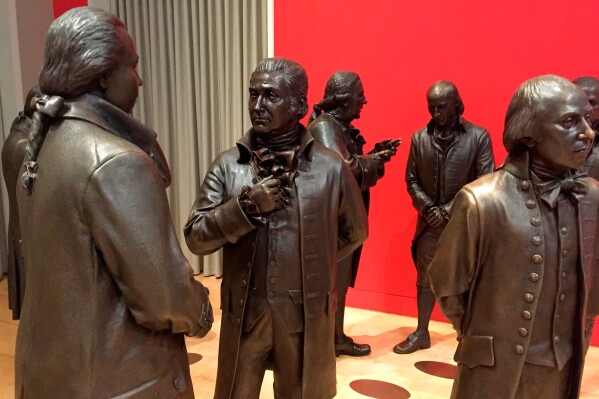
Historian Gregg Frazer, a professor at The Master’s University, speaks on the role of religion in the founding of the United States. His views often face skepticism from both sides of the debate. According to Frazer, the founders did not establish a Christian republic. Key figures like Thomas Jefferson and Benjamin Franklin did not adhere to core Christian doctrines, and this tends to disappoint Christian audiences.
Conversely, Frazer argues the founders were not purely rationalist deists or anti-religious skeptics. This disappoints those who prefer a separation between church and state. While most founders held some form of religious belief, the notion of a Christian nation at birth is contested.
As the 250th anniversary of the Declaration of Independence approaches, the debate intensifies. Some Christian activists claim a Christian foundation for the U.S., supported by figures such as President Donald Trump. Trump has promoted “America Prays,” reflecting a narrative of Christian origins.
Opposition comes from groups like Americans United for Separation of Church and State. They argue that no meaningful legal or constitutional evidence supports the U.S. as a Christian nation. A 2022 Pew Research Center report reveals that 60% of surveyed Americans believed the founders intended a Christian nation.
“Everyone’s looking for what we historians call a usable past,” says historian John Fea. He notes that historical nuances are often overlooked to support political agendas.
Fea highlights that while prayers and religious gestures occurred during significant moments, the core issues of independence revolved around taxation and political representation. Historian Mark David Hall suggests Christianity influenced the founders, citing evidence of values like human dignity and checks and balances reflecting Christian teachings.
Proclamations for prayer by early presidents and congresses show religion’s influence despite opposition. Some state-sponsored churches lingered post-Constitution, suggesting religion played a role in public life.
Frazer’s work underscores that the Constitution lacks explicit religious content, highlighting Enlightenment influences instead. References to God in foundational documents, such as the Declaration of Independence, reflect broad religious language rather than specific Christian doctrines.
America never had a purely Christian founding. Colonial religious diversity, the Great Awakening’s influence, and shifting Protestant beliefs complicate interpretations. Rationalism and Freemasonry also shaped many founders, including Jefferson and Adams.
Frazer challenges misconceptions, arguing most founders were theistic rationalists, believing in an active God. George Washington, noted for his belief in divine Providence, exemplifies this. Despite skepticism, religion’s role in cultivating virtue was valued.
The First Amendment created a religious free market, promoting diversity. Frazer warns against misrepresenting America’s origins as Christian, muddying the understanding of Christianity’s essence.
The Associated Press supports this content as part of The Conversation US, funded by Lilly Endowment Inc. The AP holds responsibility for the material.